The Japan Times - Top oil producers hold course despite Ukraine war

EUR -
AED 4.270947
AFN 76.18563
ALL 96.874219
AMD 444.574157
ANG 2.08175
AOA 1066.427975
ARS 1637.35366
AUD 1.781406
AWG 2.093316
AZN 1.978972
BAM 1.958643
BBD 2.341089
BDT 142.038632
BGN 1.954238
BHD 0.438463
BIF 3424.246335
BMD 1.162953
BND 1.509691
BOB 8.060701
BRL 6.162256
BSD 1.162332
BTN 103.054586
BWP 16.499952
BYN 3.96551
BYR 22793.882501
BZD 2.337693
CAD 1.631862
CDF 2485.808465
CHF 0.920592
CLF 0.027581
CLP 1081.988121
CNY 8.271795
CNH 8.255915
COP 4356.399386
CRC 583.870162
CUC 1.162953
CUP 30.81826
CVE 110.916632
CZK 24.182041
DJF 206.679949
DKK 7.468067
DOP 74.893923
DZD 151.313404
EGP 54.893946
ERN 17.444298
ETB 178.631813
FJD 2.646823
FKP 0.880375
GBP 0.882827
GEL 3.142826
GGP 0.880375
GHS 12.733908
GIP 0.880375
GMD 84.895469
GNF 10100.248406
GTQ 8.910279
GYD 243.173
HKD 9.039455
HNL 30.596848
HRK 7.536745
HTG 151.87883
HUF 384.454868
IDR 19442.193263
ILS 3.762737
IMP 0.880375
INR 103.20281
IQD 1523.468677
IRR 48974.864912
ISK 147.02028
JEP 0.880375
JMD 186.510746
JOD 0.824566
JPY 179.832684
KES 150.251191
KGS 101.700532
KHR 4650.43322
KMF 494.254557
KPW 1046.683118
KRW 1695.29537
KWD 0.356619
KYD 0.968606
KZT 607.825864
LAK 25230.269646
LBP 103702.641219
LKR 355.339575
LRD 211.657251
LSL 19.863383
LTL 3.433898
LVL 0.703459
LYD 6.349479
MAD 10.795116
MDL 19.562398
MGA 5233.289601
MKD 61.475479
MMK 2441.699687
MNT 4161.119938
MOP 9.304206
MRU 46.343902
MUR 53.088689
MVR 17.915254
MWK 2018.886932
MXN 21.328444
MYR 4.808232
MZN 74.382129
NAD 19.863626
NGN 1676.747481
NIO 42.761352
NOK 11.702839
NPR 164.887738
NZD 2.047722
OMR 0.447115
PAB 1.162287
PEN 3.918021
PGK 4.792091
PHP 68.677012
PKR 326.498745
PLN 4.225585
PYG 8187.885859
QAR 4.234195
RON 5.084083
RSD 117.186128
RUB 94.436641
RWF 1686.282124
SAR 4.360837
SBD 9.579678
SCR 16.148656
SDG 699.513242
SEK 10.976304
SGD 1.513066
SHP 0.872516
SLE 27.183971
SLL 24386.544729
SOS 664.625824
SRD 44.87716
STD 24070.783015
STN 24.945346
SVC 10.170764
SYP 12860.947071
SZL 19.862896
THB 37.647091
TJS 10.763124
TMT 4.070336
TND 3.433624
TOP 2.800112
TRY 49.225722
TTD 7.858712
TWD 36.225412
TZS 2831.79103
UAH 48.88276
UGX 4254.175529
USD 1.162953
UYU 46.217091
UZS 13961.252589
VES 271.276915
VND 30646.723908
VUV 141.718535
WST 3.267641
XAF 656.910597
XAG 0.022061
XAU 0.000279
XCD 3.142939
XCG 2.094922
XDR 0.819619
XOF 657.069026
XPF 119.331742
YER 277.367975
ZAR 19.868718
ZMK 10467.976735
ZMW 26.064837
ZWL 374.470452
  • RBGPF

    -2.8200

    75.65

    -3.73%

  • RYCEF

    -0.0500

    14.91

    -0.34%

  • CMSC

    -0.2500

    23.83

    -1.05%

  • VOD

    0.0400

    12.41

    +0.32%

  • BTI

    -1.3400

    54.48

    -2.46%

  • SCS

    -0.1300

    15.62

    -0.83%

  • RELX

    0.0600

    41.42

    +0.14%

  • RIO

    -0.0700

    71.04

    -0.1%

  • NGG

    0.0600

    78.09

    +0.08%

  • GSK

    0.0700

    48.14

    +0.15%

  • BCC

    -1.1000

    69.18

    -1.59%

  • BCE

    0.3400

    23.11

    +1.47%

  • CMSD

    -0.3400

    24.21

    -1.4%

  • AZN

    0.9300

    88.61

    +1.05%

  • JRI

    -0.1000

    13.77

    -0.73%

  • BP

    -0.3700

    36.49

    -1.01%

Top oil producers hold course despite Ukraine war


Top oil producers hold course despite Ukraine war

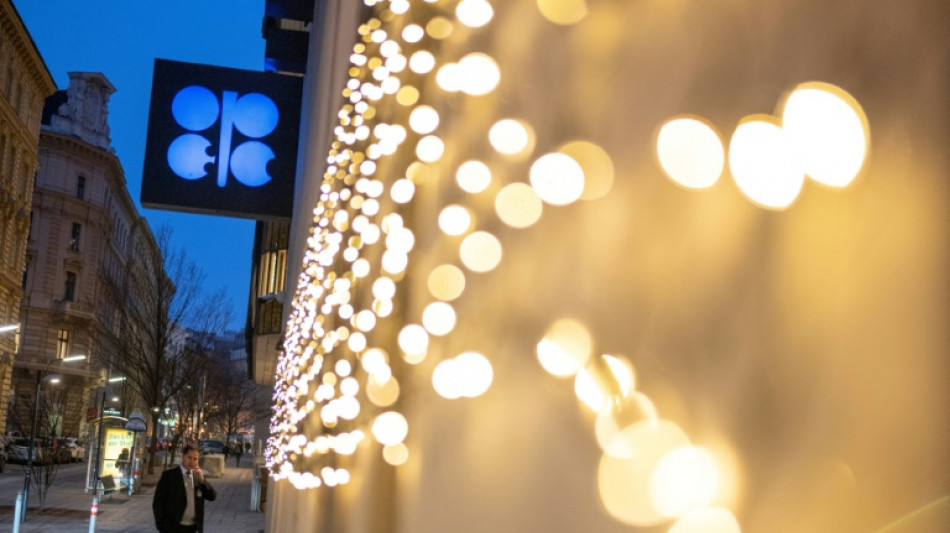
Saudi Arabia, Russia and other top oil producers on Wednesday agreed to hold firm on only gradually opening the taps despite Russia's assault on Ukraine sending prices spiralling.

Text size:

Both WTI crude and Brent broke above $110 a barrel Wednesday. Brent is at a high last seen in 2014, while WTI is at levels not seen since 2013.

OPEC+ -- at monthly back-to-back meetings that lasted less than an hour -- decided to stick to a decision from last year for an output target of 400,000 barrels per day for April as well, the group said in a statement.

Analysts had widely expected the 23-member group to stick to its guns. A next meeting will be held on March 31, the group said.

On Sunday, OPEC leader Riyadh confirmed the commitment of the 13-country group to the agreement with its 10 partners, led by Moscow, which faces international criticism and sanctions over its invasion of Ukraine.

Crown Prince Mohammed bin Salman "affirmed the kingdom's keenness on the stability and balance of oil markets," according to the Saudi Press Agency.

- 'Risk for disruptions' -

Wednesday's meetings, held via video conference, come a day after International Energy Agency (IEA) countries agreed to release 60 million barrels of oil to stabilise global markets.

The United States will contribute half of the amount, President Joe Biden announced.

But the move has failed to assure markets, and analysts had low expectations that OPEC+ would take any decision to rein in surging prices.

"The war in Ukraine is getting very ugly and destructive and hostilities between the West and Russia are intensifying. High risk for disruptions to both crude and natural gas," Bjarne Schieldrop of Seb said ahead of the meeting.

- 'Paper promise' -

OPEC+ has so far resisted pressure from major oil consumers, such as the US, to open the taps more as some of its members, including Nigeria and Angola, struggle to meet quotas.

Between December and January, OPEC members boosted their production by 64,000 barrels per day (bpd), far below their 400,000 bpd agreement, according to the organisation's last monthly report.

"The pledge from OPEC+ to increase supply is so far a paper promise... adding to the shortness in the supply market and further stoking the bullish price environment," Louise Dickson of Rystad Energy said.

The Organization of the Petroleum Exporting Countries (OPEC), whose secretariat is based in Vienna, had drastically slashed production in 2020 as the Covid-19 pandemic began to spread through the world, pummelling demand and prices.

Wednesday's meeting takes place at a key moment as negotiations to revive the 2015 Iran nuclear deal are widely expected to come to a head in the coming days.

The deal provided sanctions relief for Tehran in return for strict curbs on its nuclear programme but has been disintegrating since former US president Donald Trump withdrew from it in 2018 and reimposed sanctions, including on Iran's oil exports.

If an agreement were to be found and sanctions lifted again, it could unlock the Iranian exports.

M.Saito--JT