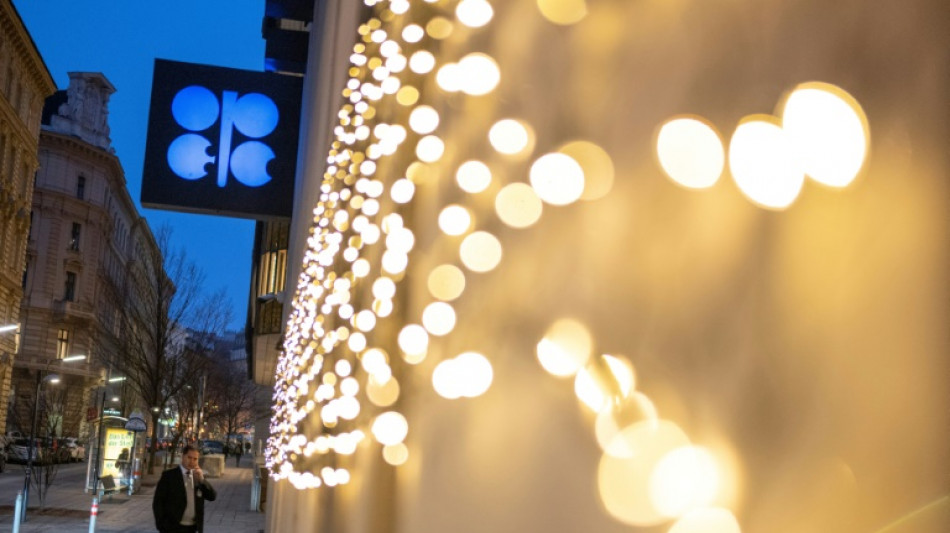
OPEC+ powerless as Ukraine conflict pushes up prices

The OPEC+ cartel of top oil producers at their monthly meeting on Wednesday are likely to be powerless to rein in prices, which have soared above $100 after member Russia's invasion of Ukraine.
With some members failing to meet their monthly production quotas, the group is not expected to be able to control the wild swings in oil prices, analysts say.
"Only Saudi Arabia and the UAE, and maybe Kuwait would be able to increase production in the short-term," Tamas Varga from PVM Energy told AFP.
But group leader Saudi Arabia reiterated at the start of this year its policy of strict adherence to the terms of OPEC+ agreements and the quotas agreed in them.
It confirmed its commitment to the OPEC+ agreement with Russia on Sunday, according to the Saudi Press Agency, as Moscow faces international criticism over the Ukraine conflict.
Crown Prince Mohammed bin Salman during a conversation with French President Emmanuel Macron "affirmed the kingdom's keenness on the stability and balance of oil markets and the kingdom's commitment to the OPEC+ agreement," the agency added.
- Underinvestment, instability -
While Saudi Arabia is seen as the kingpin of the 13 OPEC member states, Russia is the major player among the 10 other countries that make up OPEC+.
The 23 countries will gather via teleconference on Wednesday, facing prices not seen since 2014.
They will aim to live up to their mission of "stabilisation of oil markets", particularly at this time of "extreme oil price volatility", according to Stephen Brennock, analyst at PVM Energy.
Between December and January, OPEC members boosted their production by 64,000 barrels per day (bpd), reaching a total of some 27,981 million bpd, according to the organisation's last monthly report.
But this is far below the target of a 400,000-bpd increase that the group has been aiming for since May 2021, when it embarked on a gradual re-opening of the taps to accompany the global economic recovery after the shock of the first waves of Covid-19.
"Covid has hit African economies the hardest and Nigeria and Angola have struggled to keep up investment in infrastructure with both existing and new wells," Edward Moya, analyst at Oanda, told AFP.
"Years of underinvestment and political instability have lent themselves to severely limited spare capacity in the likes of Nigeria, Angola, and Libya," according to analyst Han Tan from Exinity.
OPEC's latest report says that Congo and Equatorial Guinea produced much less than expected in January.
Since May 2021, the level of crude produced by OPEC members has been just shy of 750,000 bpd under the authorised limit.
According to Carsten Fritsch, quoted in an analysis from Commerzbank, the gap will only widen unless Saudi Arabia and other countries with spare capacity step in with increased production.
- Iranian production 'unlocked'? -
"Right now, there is seemingly no desire to ease market conditions either, with producers capitalising on high prices which they don't deem to be overly harmful for the economy after years of very low prices," Craig Erlam at Oanda told AFP.
Wednesday's meeting also takes place at a key moment for negotiations to revive the 2015 Iran nuclear deal which are widely expected to come to a head in a matter of days.
The deal provided sanctions relief for Tehran in return for strict curbs on its nuclear programme but has been disintegrating since former US president Donald Trump withdrew from it in 2018 and reimposed sanctions, including on Iran's oil exports.
If an agreement were to be found and could "unlock the Iranian exports in the coming weeks, that would add some 800,000 barrels of extra supply per day," Ipek Ozkardeskaya, analyst at the Swissquote bank, told AFP.
That would greatly increase the amount of crude on global markets and act as a considerable brake on price rises.
H.Hayashi--JT