Food shock: Crop-battering disasters highlight climate threat / Photo: Rizwan TABASSUM - AFP/File

Rolling crises linked to war, weather disasters and the pandemic have shaken global food systems and tipped millions into hunger and poverty.
Climate change is already playing a role, as floods, droughts and heatwaves batter harvests from Europe to Asia and threaten famine in the Horn of Africa.
And experts warn this could be just the beginning.
"If we don't act now, this is just a sample of what may happen in the coming years," said Mamadou Goita, an expert with sustainability group IPES-Food, which works with farmers' organisations in Africa and around the world.
This issue will be in focus as never before at high-stakes UN climate negotiations, to be held in Egypt next month.
Food production is both a key source of planet-warming emissions and highly exposed to the effects of climate change.
Some risks are slow-burning -- falling yields, warming oceans, seasonal mismatches between pollinators and plants, and heat threats to farm workers.
Others, like floods, can cause sudden "devastation of livelihoods and infrastructure", said Rachel Bezner Kerr, professor at Cornell University and a lead author of the UN's landmark IPCC report on climate impacts.
These can reverberate through interwoven global supply chains, intersecting with other crises.
Climate extremes and Covid-19 had already pushed food costs close to record highs early this year, when Russia invaded Ukraine -- a key grain and sunflower oil exporter.
Since then, record temperatures withered crops across South Asia, the worst drought in 500 years savaged Europe's maize and olive crops, heat scorched cabbages in South Korea sparking a "kimchi crisis", and floods swamped Nigeria's rice fields.
In China, as a punishing dry spell parched the Yangtze river basin where a third of its crops are grown, authorities sent up cloud-seeding drones to try and coax rain.
- 'Persistent peril' -
Those most vulnerable are hit hardest.
The UN's World Food Programme has said some 22 million people are at risk of starvation across Kenya, Somalia and Ethiopia, after an unprecedented four failed rainy seasons.
Globally, one person is estimated to starve to death every four seconds, nearly 200 aid groups reported in September, while a record 345 million people are suffering from acute hunger.
"It does feel like our report is being lived out in real time," said Bezner Kerr.
Fifty countries are severely affected by the global food crisis, according to the International Monetary Fund.
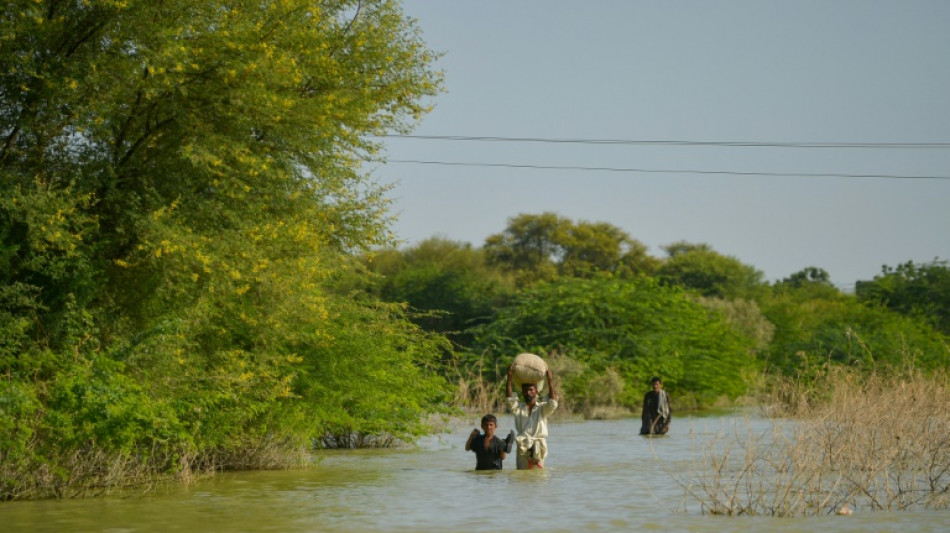
Among them is flood-hit Pakistan, where deadly monsoon inundations engulfed vast swathes of farmland, ravaging staple crops such as rice, tomatoes and onion. Two percent of the country's livestock perished.
In Mirpur Khas district of agricultural powerhouse Sindh province, water swallowed Akbar Rajar's cotton crop and pooled for weeks on his fields.
"We are in persistent peril," the heavily indebted farmer told AFP, preparing to plant wheat in sodden ground.
Up to nine million people could be dragged into poverty by the disaster, the World Bank says.
- 'Betting frenzy' -
The world grows plenty of food for everyone, but lack of access and affordability prevent its distribution, experts say.
"Once there is any problem, like Covid-19, they have been closing doors to everybody," Goita told AFP.
Changes to global food systems in recent decades mean countries rely less on stocks of staple crops, with about a third of food and agricultural production now traded internationally.
That is cost-effective when things go well, but is "highly vulnerable" to major shocks, said Elizabeth Robinson, who leads the Grantham Research Institute at the London School of Economics.
"Who gets harmed? You're looking at countries where people spend a lot of money on food, where countries are highly dependent on imports."
Shocks can lead to export restrictions, like those imposed by India this year when its wheat harvest was hit by the heat wave.
Importers have also been hammered by surging energy and transport costs and a strong US dollar, while the UNCTAD trade and development agency has warned of "betting frenzies" in commodities markets.
Fertiliser prices have surged, raising concerns for future harvests.
The last time the UN Food and Agriculture Organization's food price index was this high was in 2008, when a global food crisis drove riots and instability in countries across the world.
So what should be on the table at the Egypt climate talks?
One answer is money, particularly for smallholder farmers on the climate change and food insecurity "frontlines", said Claire McConnell of think tank E3G.
Just two percent of climate finance reaches them, she said, adding that in Africa and the Middle East alone there is a $1.7 billion funding gap for the support and technology needed.
- Strength in diversity -
Another is emissions cuts. Food production will become "impossible" in some regions, and both hunger and malnutrition will deepen if warming continues its current trajectory, the IPCC has said.
Redirecting billions of dollars of agricultural subsidies that incentivise environmental harm would also make a big difference, said Bezner Kerr.
People in richer nations could cut their meat consumption to reduce the grain needed to feed livestock, while nations everywhere could consider broadening their taste for staples beyond rice, maize, wheat and potatoes.
That may resonate in COP host Egypt, where most of the wheat for cheap state-subsidised flatbread -- a lifeline for around 70 percent of the population -- is ordinarily imported from Ukraine and Russia.
Facing surging inflation, the government has ramped up purchases from domestic farmers, and is even running a trial adding sweet potato to bread flour.
Diversifying crops and using more drought- or flood-resilient strains could also help farmers improve soils and spread risk.
But such solutions have limits.
Pakistan's floods tore over fields, ripping plants up by the root, said Nabeel Munir, the country's ambassador to Seoul and chair of the largest negotiating bloc of developing nations at the climate talks.
"How can you produce a crop that, even after being blown away and submerged in water for a few days, is still resistant?" he said.
klm-burs/mh/jv/dhc
M.Matsumoto--JT