The Japan Times - 'Extreme healt belt' to cover middle of US by 2053: report

EUR -
AED 4.302619
AFN 72.638318
ALL 95.603094
AMD 431.878807
ANG 2.097662
AOA 1075.507446
ARS 1630.8359
AUD 1.615579
AWG 2.110304
AZN 1.99945
BAM 1.956238
BBD 2.359669
BDT 143.812209
BGN 1.95644
BHD 0.441978
BIF 3486.028541
BMD 1.171577
BND 1.490921
BOB 8.096055
BRL 5.888817
BSD 1.171582
BTN 112.066143
BWP 15.783006
BYN 3.264603
BYR 22962.916957
BZD 2.356308
CAD 1.60594
CDF 2625.505158
CHF 0.91581
CLF 0.026408
CLP 1039.329512
CNY 7.956124
CNH 7.950219
COP 4445.398123
CRC 533.328553
CUC 1.171577
CUP 31.046801
CVE 110.655135
CZK 24.327919
DJF 208.212632
DKK 7.472548
DOP 69.416143
DZD 155.118147
EGP 61.994247
ERN 17.573661
ETB 184.376952
FJD 2.560893
FKP 0.866041
GBP 0.866089
GEL 3.139424
GGP 0.866041
GHS 13.242448
GIP 0.866041
GMD 85.525666
GNF 10283.522856
GTQ 8.938002
GYD 245.111173
HKD 9.172924
HNL 31.1758
HRK 7.533714
HTG 153.009493
HUF 358.229119
IDR 20516.663355
ILS 3.410104
IMP 0.866041
INR 112.115446
IQD 1534.766388
IRR 1538281.120455
ISK 143.612268
JEP 0.866041
JMD 185.285963
JOD 0.830666
JPY 184.939933
KES 151.344328
KGS 102.454005
KHR 4699.197143
KMF 493.234395
KPW 1054.43934
KRW 1745.468735
KWD 0.361116
KYD 0.976348
KZT 549.878462
LAK 25716.123453
LBP 105150.026727
LKR 380.231651
LRD 214.57466
LSL 19.226057
LTL 3.459363
LVL 0.708675
LYD 7.410193
MAD 10.747758
MDL 20.0931
MGA 4891.33573
MKD 61.635919
MMK 2459.473576
MNT 4193.865493
MOP 9.450699
MRU 46.863218
MUR 54.84144
MVR 18.053649
MWK 2040.295627
MXN 20.113167
MYR 4.599628
MZN 74.860808
NAD 19.225688
NGN 1605.623002
NIO 43.002772
NOK 10.739627
NPR 179.312517
NZD 1.975525
OMR 0.450414
PAB 1.171602
PEN 4.016757
PGK 5.108019
PHP 71.952469
PKR 326.382702
PLN 4.2477
PYG 7164.604642
QAR 4.268647
RON 5.208363
RSD 117.382677
RUB 86.904361
RWF 1710.502998
SAR 4.402872
SBD 9.410412
SCR 16.330594
SDG 703.542135
SEK 10.926465
SGD 1.490557
SHP 0.874701
SLE 28.823398
SLL 24567.394667
SOS 669.559557
SRD 43.575646
STD 24249.286687
STN 24.89602
SVC 10.251296
SYP 129.551813
SZL 19.313411
THB 37.889169
TJS 10.971838
TMT 4.112237
TND 3.374732
TOP 2.820877
TRY 53.230856
TTD 7.948916
TWD 36.980249
TZS 3043.348516
UAH 51.5192
UGX 4393.058898
USD 1.171577
UYU 46.541218
UZS 14150.311878
VES 595.237083
VND 30868.721224
VUV 138.221382
WST 3.166467
XAF 656.120751
XAG 0.013399
XAU 0.00025
XCD 3.166246
XCG 2.111455
XDR 0.81421
XOF 654.332389
XPF 119.331742
YER 279.567675
ZAR 19.234782
ZMK 10545.588979
ZMW 22.113613
ZWL 377.247443
  • RBGPF

    0.0000

    61

    0%

  • BCC

    -0.9500

    66.98

    -1.42%

  • CMSD

    -0.0400

    23.56

    -0.17%

  • NGG

    -0.2600

    86.98

    -0.3%

  • CMSC

    -0.0600

    23.05

    -0.26%

  • VOD

    0.4150

    15.51

    +2.68%

  • RYCEF

    -0.0800

    16

    -0.5%

  • BCE

    -0.0800

    24.39

    -0.33%

  • RIO

    2.5400

    112.04

    +2.27%

  • RELX

    -1.1500

    31.62

    -3.64%

  • JRI

    -0.0100

    13.13

    -0.08%

  • BP

    -0.2600

    44.14

    -0.59%

  • AZN

    3.1800

    187.72

    +1.69%

  • GSK

    0.0900

    50.99

    +0.18%

  • BTI

    1.7100

    65.35

    +2.62%

'Extreme healt belt' to cover middle of US by 2053: report
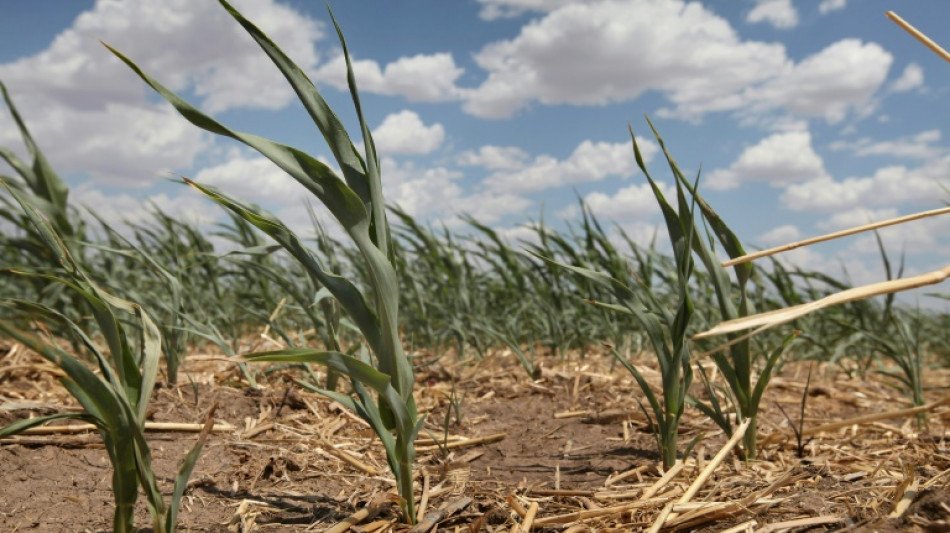
'Extreme healt belt' to cover middle of US by 2053: report / Photo: SCOTT OLSON - GETTY IMAGES NORTH AMERICA/AFP/File

'Extreme healt belt' to cover middle of US by 2053: report

An area of intensely warm weather -- a so-called "extreme heat belt" -- with at least one day per year in which the heat index hits 125 Fahrenheit (52C), is expected to cover a US region home to more than 100 million people by the year 2053, according to a new study.

Text size:

The research, carried out by nonprofit First Street Foundation, used a peer-reviewed model built with public and third-party data to estimate heat risk at what they called a "hyper-local" scale of 30 square meters.

First Street Foundation's mission is to make climate risk modeling accessible to the public, government and industry representatives, such as real estate investors and insurers.

A key finding from the study was that heat exceeding the threshold of the National Weather Service's highest category -- called "Extreme Danger," or above 125F -- was expected to impact 8.1 million people in 2023 and grow to 107 million people in 2053, a 13-fold increase.

This would encompass a geographic region stretching from northern Texas and Louisiana to Illinois, Indiana, and Wisconsin -- inland areas far from the more temperate weather often seen near the coasts.

Heat index, also known as the apparent temperature, is what the outside temperature really feels like to the human body when relative humidity is combined with air temperature.

To create their model, the research team examined satellite-derived land surface temperatures and air temperatures between 2014 and 2020, to help understand the exact relationship between the two measurements.

This information was further studied by factoring in elevation, how water is absorbed in the area, the distance to surface water and the distance to a coast.

The model was then scaled to future climate conditions, using a "middle of the road" scenario envisaged by the Intergovernmental Panel on Climate Change, in which carbon dioxide levels start falling by mid-century, but do not reach net zero by 2100.

Beyond "Extreme Danger" days, areas across the whole country are expected to experience hotter temperatures, with varying degrees of resilience.

"These increases in local temperatures result in significant implications for communities that are not acclimated to warmer weather relative to their normal climate," the report said.

For example, a 10 percent temperature increase in the northeastern state of Maine may be as dangerous as a 10 percent increase in the southwestern state of Texas, despite the higher absolute temperatures seen in Texas.

The biggest predicted shift in local temperature occurred in Miami-Dade County, Florida, which currently sees seven days per year at its hottest temperature of 103 Fahrenheit. By 2053, that number is expected to increase to 34 days at 103 degrees.

And the increase in air conditioning use that is likely to result from such temperature spikes will strain energy grids, the report warned, leading to more frequent, longer lasting brownouts.

S.Fujimoto--JT