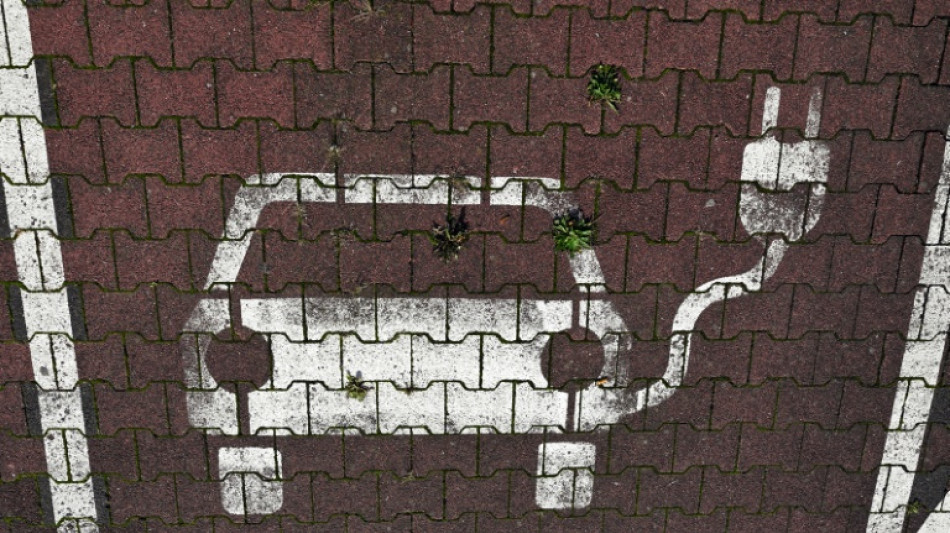
EU 2035 combustion-engine ban review: what's at stake / Photo: Ina FASSBENDER - AFP/File

The European Commission is expected to announce on Tuesday measures relaxing a 2035 ban on new petrol and diesel car sales.
While Europe's embattled auto industry and its backers have lobbied hard for Brussels to relax the ban, they are divided on exactly what measures to take.
- Why the 2035 target date? -
In 2023, despite the reluctance of Germany, the commission announced a ban on sales of new vehicles powered by internal combustion engines from 2035. Hybrids that use a combination of combustion engines and battery power are also included.
The ban is a key measure to help attain the EU's target of carbon neutrality by 2050.
The date is important as vehicles spend an average of 15 years on the road in the EU and thus would be expected to have largely stopped spewing planet-warming emissions by around 2050.
The 2023 announcement included a provision for a review in 2026 but, under pressure from carmakers and governments, the commission pushed forward announcing proposed adjustments to the end of 2025.
The proposals will go to the European Parliament for review.
- What adjustments are possible? -
For those against the ban, it's no longer just a question of shifting the 2035 date, but of relaxing certain provisions.
Carmakers would like to see continued sales authorised for hybrids with rechargeable batteries or those equipped with range extenders (small combustion engines which recharge the battery instead of powering the wheels).
Germany supports this option as do eastern European nations where German carmakers have set up factories.
The ACEA association of European carmakers doesn't criticise the goal of electrification, but it said "the 2035 CO2 targets for cars and vans are no longer realistic".
Another possible means to add some flexibility would be boosting the use of alternative fuels such as those derived from agricultural crops and waste products.
Italy supports this option.
But environmental groups are opposed to any massive turn to crop-based biofuels as it would likely boost the use of pesticides and aggravate soil depletion, and they are also sceptical about what emissions reductions can actually be achieved.
Moreover, as a majority of biofuels are imported, the EU wouldn't gain in autonomy, another objective of the shift to electric vehicles.
- Carmakers out of alignment? -
European carmakers -- BMW, Mercedes, Renault, Stellantis and VW -- are not always on the same page even if they all want the rules to be relaxed.
This is principally due to their varying progress in shifting to electric models.
The industry that has grown up around the electric car sector -- such as battery manufacturers, recharge stations and electricity companies -- wants to keep the 2035 target with no adjustments.
"Rolling back these objectives would undermine the EU’s energy sovereignty, industrial leadership, and climate credibility," said the UFE, a trade group for French electricity industry firms.
France, along with Spain and the Nordic countries, has long called for keeping to the trajectory to shift to electric vehicles in order to not harm firms that have made investments in the transition.
Paris has indicated it is open to some flexibility on the condition of local content being favoured, which pleases suppliers which have also come under intense pressure from cheaper Chinese competition.
- Is there a risk in backsliding? -
Yes, according to experts.
"What is considered a short-term advantage may not be one in the long term," said Jean-Philippe Hermine at the IDDRI think tank that focuses on the transition in the transport sector.
Bernard Jullien, an economist at the University of Bordeaux, said keeping several different technologies imposes extra costs for companies.
It can also create uncertainty for them if consumers adopt a wait-and-see attitude, he added.
"Between China and its electric vehicles and the oil that Saudi Arabia and the United States wants to sell us, is the right choice to stick with our old technology?" asked Diane Strauss, head of the French office of T&E, an advocacy group for clean transport and energy.
S.Suzuki--JT