Flood reckoning for Bali on overdevelopment, waste / Photo: BAY ISMOYO - AFP

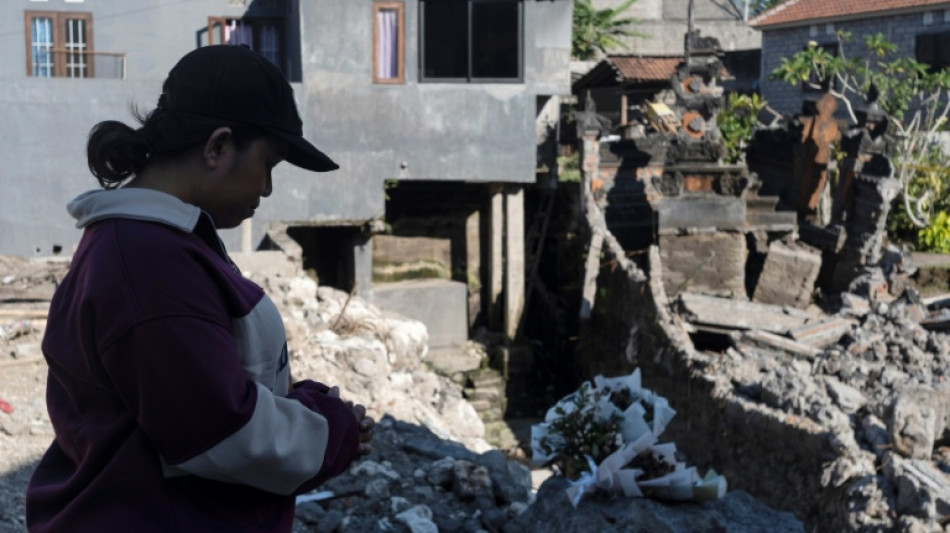
Standing where her family home once was, Ruth Deidree Boelan closed her eyes and prayed for relatives missing in devastating flash floods that swept resort island Bali this year.
The deluge that killed at least 18 people and left four missing was the island's worst in a decade, according to the Meteorology, Climatology and Geophysics Agency (BMKG).
It was caused partly by record rain, but was also a reckoning for years of rampant overdevelopment and a waste management system under enormous strain.
The island's formerly verdant south has been transformed by a tourism boom that brought jobs and economic benefits, but also paved over and built on paddy fields and coconut groves that once provided drainage.
The changes are made starkly clear in comparisons by conservation start-up The TreeMap's Nusantara Atlas project, which paired declassified Cold War-era US spy images of the island with recent satellite photos.
"All this land is now turned into roads or buildings, the soil doesn't have the same capability to absorb the water," The TreeMap founder David Gaveau explained.
More than 4.6 million foreign tourists visited Bali from January to August this year, outstripping the island's native population of 4.4 million.
The infrastructure that caters to them has prompted "land conversion, chaotic urban management and lax enforcement of spatial planning laws," said Made Krisna Dinata, executive director of NGO WALHI Bali.
In recent months, authorities have demolished illegal structures on a beach, and cracked down on construction along rivers and on hillsides.
The haphazard construction and land conversion has "put Bali in a very disaster-prone situation", said Krisna.
- 'It was terrifying' -
Ruth is a testament to that.
The home she and her family had occupied since 2020 on a riverbank collapsed during the flooding, with several relatives swept into the waters.
"I am still in shock. My brother, father, mother were swept away by the flood, and it turned out the house and its contents were all gone," the 28-year-old told AFP.
I Wayan Dibawa, who lives nearby, said his dog woke him in the middle of the intense downpour and he found water rising around his house "in a matter of minutes".
"It was terrifying. It was so horrific that we were speechless," the 52-year-old said.
Government data shows record rainfall fell on September 9, the day before the floods, in several locations including Badung district -- home to many of the most popular tourist resorts on the island.
"There has never been such high rainfall," Bali governor I Wayan Koster told AFP, while acknowledging that infrastructure issues also played a role in the disastrous flooding.
A review of building along four major rivers will be launched, along with a crackdown on construction that violates zoning regulations, Koster said.
"If rules are violated, there will be enforcement," he said.
Regulation to protect Bali's rice paddies from further development is also planned.
- 'Even bigger disaster' -
But there is another factor: waste management.
Research in 2019 found Bali produces 4,200 tons of waste daily, with less than half going to the landfill, said I Gede Hendrawan, associate professor at Udayana University who has researched waste issues.
Improperly disposed waste clogs waterways and drains, he told AFP.
Bali's government will close a major landfill on the island this year, and has urged households to manage their organic waste.
But many people have no alternative to dumping, Hendrawan said.
"We are all struggling with the waste issue due to the absence of a good waste management system," he said.
Koster said the local government wants to build a waste-to-energy plant, though that is not likely to materialise quickly.
And waste volumes are likely to only increase if a planned second airport brings more tourists to the island.
The government says the facility will spread development to the island's north.
But Krisna is concerned it will simply replicate the south's problems elsewhere.
"When today we see overtourism in south Bali, then we will see overtourism in north Bali in the future," he said.
Climate change means the record rains seen this year are more likely to occur more frequently, as a warmer atmosphere holds more moisture.
Hendrawan urged the government to move quickly on infrastructure issues, particularly waste management.
"If we cannot fix this, then in December and January, when the rainy season is at its peak, we are worried that an even bigger disaster will occur," he said.
M.Yamazaki--JT