Toxic Thailand rivers pinned on Myanmar mines / Photo: Manan VATSYAYANA - AFP

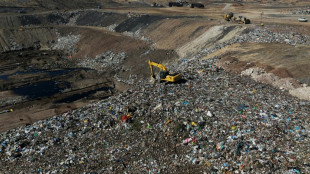
A sprawling new mine is gouged into the lush rolling hills of northeast Myanmar, where civil war has weakened the government's already feeble writ, and pollution levels are rising downstream in Thailand.
The complex is one of around a dozen extraction operations that have sprung up in Shan state since around 2022, in territory controlled by the United Wa State Army (UWSA), one of conflict-wracked Myanmar's largest and best-equipped ethnic armed groups.
A few kilometres away across the border, locals and officials in Thailand believe toxic waste is washing downstream from the mines into the Kok River, which flows through the kingdom's far north on its way to join the mighty Mekong.
Thai authorities say they have detected abnormally high arsenic levels in their waterways, which could pose a risk to aquatic life and the people further up the food chain.
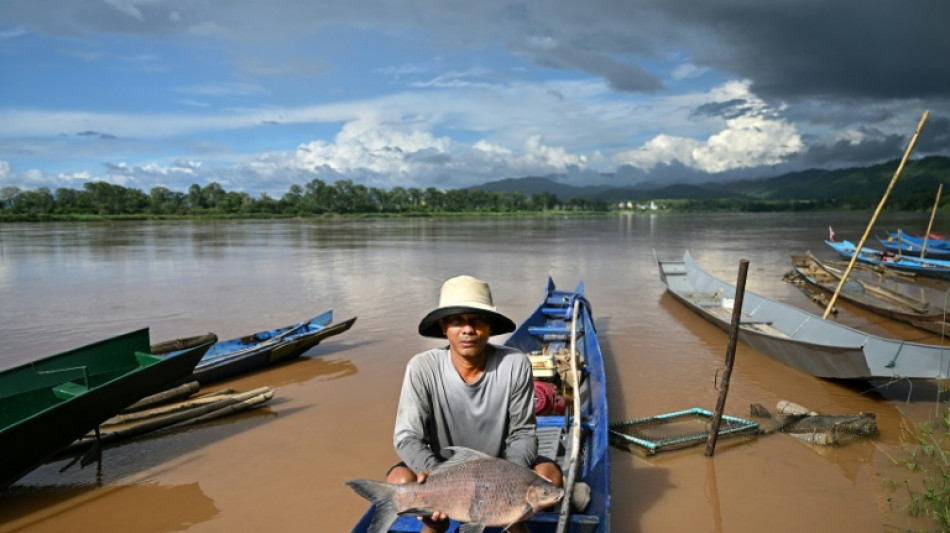
The price fisherman Sawat Kaewdam gets for his catch has fallen by almost half, he says, because locals fear contamination.
"They say, 'There's arsenic. I don't want to eat that fish'," he told AFP.
Tests in Chiang Mai and Chiang Rai by a government pollution agency found levels of the toxic element as high as 49 microgrammes per litre (mcg/l) of river water -- nearly five times international drinking water standards.
Experts say that while the effects on human health would not be visible immediately, the fish-heavy local diet risks a cumulative impact over several years.
"We already know where the contamination is coming from," says fisherman Sawat.
"They should go fix it at the source."
- Fivefold rise -
Pianporn Deetes, campaign director of the International Rivers NGO, blames the arsenic levels on Shan state's unlicensed mines, which operate outside any regulation or control by the central government.
It was Thailand's "largest-ever case of transboundary pollution", she added.
The mines are believed to be run by Chinese companies with close links to the UWSA, whose members themselves have longstanding ties to China, speak Mandarin and use China's yuan currency.
It is unclear whether the mines are digging for gold, rare earths or a variety of minerals, and it is also difficult to gauge the size of an industry operating in a secretive grey zone.
But videos on Chinese social media suggest much of what is produced in Myanmar ends up being sold to Chinese buyers.
In a report Tuesday citing Chinese customs data, think tank ISP-Myanmar said the country was the source of around two-thirds of China's rare earth imports by value.
The Asian giant had imported five times as much rare earths from Myanmar in the four years since the 2021 military coup than in the equivalent preceding period, it added.
Many modern mines use a system of tailing ponds to reuse leftover waste and water and stop it being released into rivers, said Tanapon Phenrat of Naresuan University's civil engineering department.
But "in Myanmar, they reportedly discharge it directly into natural waterways", he added, increasing the risk of contamination spreading into the food chain.
"What we need is for mines to treat their waste properly and stop discharging toxic substances into shared waterways."
AFP was unable to reach UWSA officials for comment.
- 'Legal and orderly' -
From its Myanmar headwaters, the 285-kilometre (177-mile) Kok River is a vital resource for thousands of people as it wends through Chiang Rai province on its way to feed the Mekong.
In Chiang Rai City, a tranquil place popular with tourists, environmentalists dressed as wart-afflicted fish dance in protest.
The Thai government has proposed building a dam to prevent contaminated water from entering the country, but campaigners say physical barriers alone cannot stop pollution.
Bangkok acknowledges that Myanmar's junta may be unable to stop Chinese companies operating mines in militia-controlled areas.
And Chonthicha Jangrew of Thailand's parliamentary foreign affairs committee met senior Beijing officials last month, urging them to supervise Chinese mining firms "in order to stop the impact on people downstream", she said.
The Chinese embassy in Bangkok posted on Facebook Sunday that it had instructed Chinese companies "to comply with the laws of the host country and to conduct their business in a legal and orderly fashion at all times".
The Myanmar junta did not respond to questions from AFP.
"The water isn't beyond saving yet," said Tanapon of Naresuan University.
"But this is a clear signal," he added. "We need to act now."
S.Yamamoto--JT