The Japan Times - Many animal 'geomorphs' under threat, study warns

EUR -
AED 4.306924
AFN 77.800612
ALL 96.290273
AMD 447.455848
ANG 2.099694
AOA 1075.411417
ARS 1700.779101
AUD 1.772061
AWG 2.110949
AZN 1.988177
BAM 1.952553
BBD 2.365276
BDT 143.51133
BGN 1.955558
BHD 0.44213
BIF 3482.009164
BMD 1.17275
BND 1.514082
BOB 8.114505
BRL 6.462082
BSD 1.174352
BTN 106.720516
BWP 15.510205
BYN 3.441491
BYR 22985.892779
BZD 2.361882
CAD 1.615644
CDF 2638.686581
CHF 0.934332
CLF 0.027329
CLP 1072.104138
CNY 8.258444
CNH 8.255383
COP 4504.50788
CRC 586.025397
CUC 1.17275
CUP 31.077865
CVE 110.081926
CZK 24.301712
DJF 209.123105
DKK 7.471107
DOP 75.454514
DZD 151.827002
EGP 55.592317
ERN 17.591244
ETB 182.304714
FJD 2.673278
FKP 0.876507
GBP 0.876073
GEL 3.160551
GGP 0.876507
GHS 13.505539
GIP 0.876507
GMD 86.199295
GNF 10212.016669
GTQ 8.993044
GYD 245.691397
HKD 9.122608
HNL 30.940544
HRK 7.53222
HTG 153.794229
HUF 385.778924
IDR 19582.573348
ILS 3.789201
IMP 0.876507
INR 105.893078
IQD 1538.448008
IRR 49399.146865
ISK 147.995144
JEP 0.876507
JMD 188.486533
JOD 0.831511
JPY 181.991394
KES 151.226201
KGS 102.55723
KHR 4702.179931
KMF 492.554939
KPW 1055.474962
KRW 1735.464253
KWD 0.359705
KYD 0.978677
KZT 605.335863
LAK 25442.795245
LBP 105164.352354
LKR 363.536961
LRD 207.864306
LSL 19.721186
LTL 3.462825
LVL 0.709385
LYD 6.362446
MAD 10.746727
MDL 19.776195
MGA 5305.177102
MKD 61.535274
MMK 2462.499847
MNT 4159.55763
MOP 9.41009
MRU 46.575541
MUR 54.005329
MVR 18.072469
MWK 2036.313462
MXN 21.065457
MYR 4.791838
MZN 74.950137
NAD 19.721186
NGN 1704.791285
NIO 43.218125
NOK 11.959003
NPR 170.753025
NZD 2.030505
OMR 0.450919
PAB 1.174347
PEN 3.955921
PGK 4.992697
PHP 68.680904
PKR 329.11566
PLN 4.216211
PYG 7887.915449
QAR 4.281779
RON 5.091849
RSD 117.371155
RUB 92.705885
RWF 1709.856384
SAR 4.398673
SBD 9.573626
SCR 16.573783
SDG 705.411284
SEK 10.921847
SGD 1.515386
SHP 0.879866
SLE 27.90959
SLL 24591.977696
SOS 671.183772
SRD 45.359637
STD 24273.549601
STN 24.459322
SVC 10.275954
SYP 12968.817782
SZL 19.704314
THB 36.88356
TJS 10.792352
TMT 4.116351
TND 3.429397
TOP 2.8237
TRY 50.099067
TTD 7.966785
TWD 37.020192
TZS 2899.859147
UAH 49.525635
UGX 4181.046614
USD 1.17275
UYU 45.943592
UZS 14239.318971
VES 320.446921
VND 30897.848168
VUV 142.444302
WST 3.259438
XAF 654.867907
XAG 0.017685
XAU 0.00027
XCD 3.169414
XCG 2.116489
XDR 0.814446
XOF 654.870694
XPF 119.331742
YER 279.524973
ZAR 19.649713
ZMK 10556.150373
ZMW 26.981243
ZWL 377.624903
  • SCS

    0.0200

    16.14

    +0.12%

  • CMSC

    0.0400

    23.34

    +0.17%

  • RBGPF

    0.4100

    82.01

    +0.5%

  • NGG

    -0.2600

    75.77

    -0.34%

  • RIO

    0.1700

    75.99

    +0.22%

  • BCC

    0.5100

    75.84

    +0.67%

  • CMSD

    0.0150

    23.38

    +0.06%

  • JRI

    -0.0500

    13.51

    -0.37%

  • BCE

    -0.2800

    23.33

    -1.2%

  • GSK

    -0.4600

    48.78

    -0.94%

  • AZN

    -0.2100

    91.35

    -0.23%

  • RYCEF

    -0.3100

    14.64

    -2.12%

  • RELX

    -0.2600

    40.82

    -0.64%

  • BTI

    -0.4500

    57.29

    -0.79%

  • BP

    -1.4900

    33.76

    -4.41%

  • VOD

    0.0000

    12.7

    0%

Many animal 'geomorphs' under threat, study warns
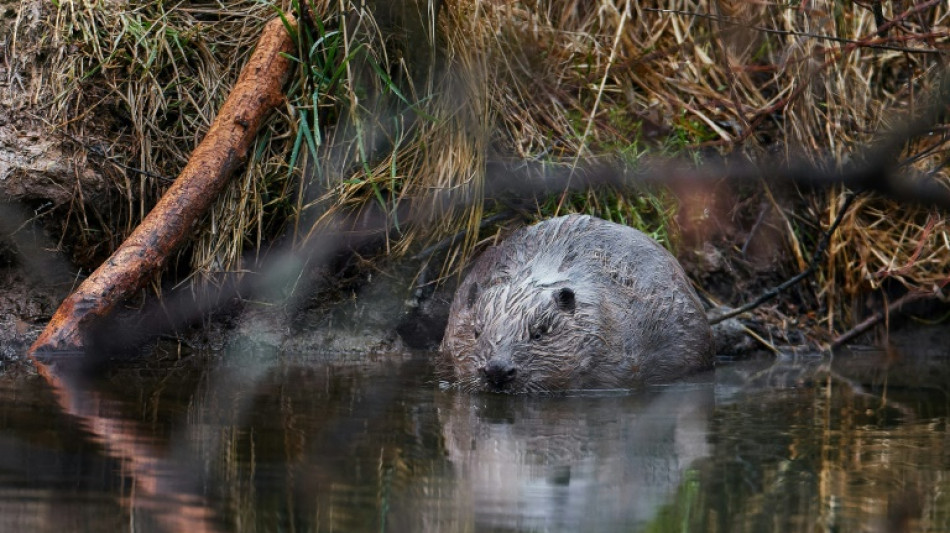
Many animal 'geomorphs' under threat, study warns / Photo: Bohumil FISER - AOPK CR/AFP/File

Many animal 'geomorphs' under threat, study warns

More than a quarter of our planet's natural "geomorphs" -- animals such as beavers and hippos that, collectively, can reshape entire landscapes -- are threatened or have shrinking populations, a new study says.

Text size:

The research, by Queen Mary University of London, found the scale of the impact these animals had on habitats -- by building dams, trampling new river courses, excavating earth and other activities -- rivals that caused by major floods.

Yet "more than a quarter (28 percent) of zoogeomorphic species are vulnerable to future population decline or regional or global extinction," the study's authors warned.

Their research, published mid-February, identified more than 600 species of land and freshwater animals that worked to redesign their ecosystems.

While beavers, of dam-building fame, and hippopotamuses and elephants, which in herds can flatten stretches of earth, are the best-known, there are many others -- often overlooked -- that could also be dubbed animal architects.

Among them are Brazilian termites, which have built high mounds connected by tunnels that cover an area larger than Iceland.

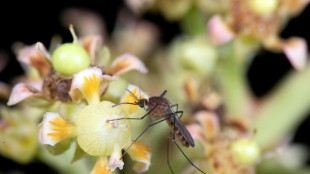
Others identified by the researchers included Australian marsupials, South American shrimp, Asian ants, as well as salmon, moles, earthworms and freshwater insects.

"What we tend to do is overlook the smaller animals that are less visible to us. Perhaps they're living underground or they're living underwater, but those animals can be really kind of important as well," one of the authors, Gemma Harvey, told AFP.

- 'Big cumulative effect' -

Harvey, a professor in biogeomorphology and landscape rewilding, said: "People can underestimate the effects of small animals, because individually their effects are small, but collectively they tend to be more abundant in the landscape so they can have a big cumulative effect."

She added that "it's the collective importance of the animals that is being discovered right now".

She noted the study did not look at marine ecosystems, and that "there will be many more animals that have not yet been studied or perhaps not even been discovered yet".

Of the more than 600 species identified in the research, 57 were classed as endangered, vulnerable or near-threatened on the International Union for the Conservation of Nature's Red List of Threatened Species.

Many others were at risk of declining populations.

"As we lose species from our landscapes, we lose those unique processes" of reshaping the habitats, Harvey said.

And the power these landscaping animals possess is staggering.

Harvey said her team's study estimated that the species they had identified together exerted 76,000 gigajoules of energy each year -- equivalent to that of "hundreds of thousands of extreme floods".

She said much was still unknown about the animals' geomorphing processes and she planned to further her research, notably by factoring in the effects of climate change.

"We're also interested in thinking kind of back in time in the past, about what we've already lost, you know, from our landscapes as species have become extinct or reduced a lot in terms of their population," she said.

M.Ito--JT