The Japan Times - Australia says reliance on coal-fired power drops to record low

EUR -
AED 4.314393
AFN 76.939193
ALL 96.39895
AMD 448.403333
ANG 2.103039
AOA 1077.124807
ARS 1689.430346
AUD 1.769643
AWG 2.117249
AZN 2.00152
BAM 1.954765
BBD 2.365048
BDT 143.504005
BGN 1.955623
BHD 0.442814
BIF 3483.916871
BMD 1.174618
BND 1.513898
BOB 8.143687
BRL 6.361611
BSD 1.174278
BTN 106.500601
BWP 15.508655
BYN 3.434081
BYR 23022.512028
BZD 2.361649
CAD 1.618582
CDF 2642.890545
CHF 0.935994
CLF 0.027368
CLP 1073.63589
CNY 8.277826
CNH 8.273762
COP 4491.77432
CRC 587.388938
CUC 1.174618
CUP 31.127376
CVE 110.651685
CZK 24.329154
DJF 208.752807
DKK 7.46998
DOP 74.412456
DZD 152.31039
EGP 55.710722
ERN 17.619269
ETB 182.764114
FJD 2.648
FKP 0.878906
GBP 0.878479
GEL 3.180687
GGP 0.878906
GHS 13.513925
GIP 0.878906
GMD 86.310048
GNF 10207.430237
GTQ 8.995236
GYD 245.671992
HKD 9.141259
HNL 30.93062
HRK 7.532001
HTG 153.858522
HUF 384.26099
IDR 19576.182932
ILS 3.773871
IMP 0.878906
INR 106.563514
IQD 1538.285374
IRR 49463.162696
ISK 148.201747
JEP 0.878906
JMD 187.660621
JOD 0.832783
JPY 182.410538
KES 151.42007
KGS 102.720408
KHR 4703.169944
KMF 493.339674
KPW 1057.155797
KRW 1725.9952
KWD 0.36042
KYD 0.978573
KZT 605.659263
LAK 25445.524879
LBP 105155.513068
LKR 363.087721
LRD 207.260242
LSL 19.701966
LTL 3.468342
LVL 0.710515
LYD 6.365629
MAD 10.778492
MDL 19.821335
MGA 5234.228123
MKD 61.541226
MMK 2465.835411
MNT 4165.037041
MOP 9.413295
MRU 46.711263
MUR 53.973669
MVR 18.089955
MWK 2036.221683
MXN 21.133222
MYR 4.807126
MZN 75.051531
NAD 19.701966
NGN 1705.932508
NIO 43.217114
NOK 11.934183
NPR 170.400761
NZD 2.029041
OMR 0.451648
PAB 1.174278
PEN 3.954306
PGK 4.990357
PHP 69.126548
PKR 329.087926
PLN 4.216238
PYG 7886.823395
QAR 4.279734
RON 5.091612
RSD 117.371285
RUB 93.383315
RWF 1709.709149
SAR 4.40741
SBD 9.604559
SCR 16.481849
SDG 706.530872
SEK 10.91862
SGD 1.515305
SHP 0.881268
SLE 28.337634
SLL 24631.155629
SOS 669.945219
SRD 45.351848
STD 24312.220241
STN 24.487032
SVC 10.274559
SYP 12987.377059
SZL 19.705565
THB 37.013971
TJS 10.797474
TMT 4.122909
TND 3.434181
TOP 2.828199
TRY 50.158656
TTD 7.969779
TWD 36.804069
TZS 2915.992834
UAH 49.634415
UGX 4182.784933
USD 1.174618
UYU 46.015632
UZS 14206.476713
VES 314.139533
VND 30915.944723
VUV 142.278694
WST 3.260132
XAF 655.60981
XAG 0.018504
XAU 0.000273
XCD 3.174464
XCG 2.116279
XDR 0.816821
XOF 655.60981
XPF 119.331742
YER 280.135575
ZAR 19.731984
ZMK 10572.956485
ZMW 27.213589
ZWL 378.226504
  • SCS

    0.0200

    16.14

    +0.12%

  • CMSC

    0.0100

    23.31

    +0.04%

  • RBGPF

    -3.4900

    77.68

    -4.49%

  • RYCEF

    0.3000

    14.9

    +2.01%

  • GSK

    0.2300

    49.04

    +0.47%

  • NGG

    0.6800

    75.61

    +0.9%

  • VOD

    0.1460

    12.736

    +1.15%

  • CMSD

    0.0800

    23.33

    +0.34%

  • BTI

    0.2500

    57.35

    +0.44%

  • RIO

    -0.2980

    75.362

    -0.4%

  • BCE

    0.3464

    23.7403

    +1.46%

  • BCC

    -1.1450

    75.365

    -1.52%

  • JRI

    0.0191

    13.5856

    +0.14%

  • RELX

    0.6550

    41.035

    +1.6%

  • AZN

    1.1200

    90.95

    +1.23%

  • BP

    -0.2800

    34.98

    -0.8%

Australia says reliance on coal-fired power drops to record low
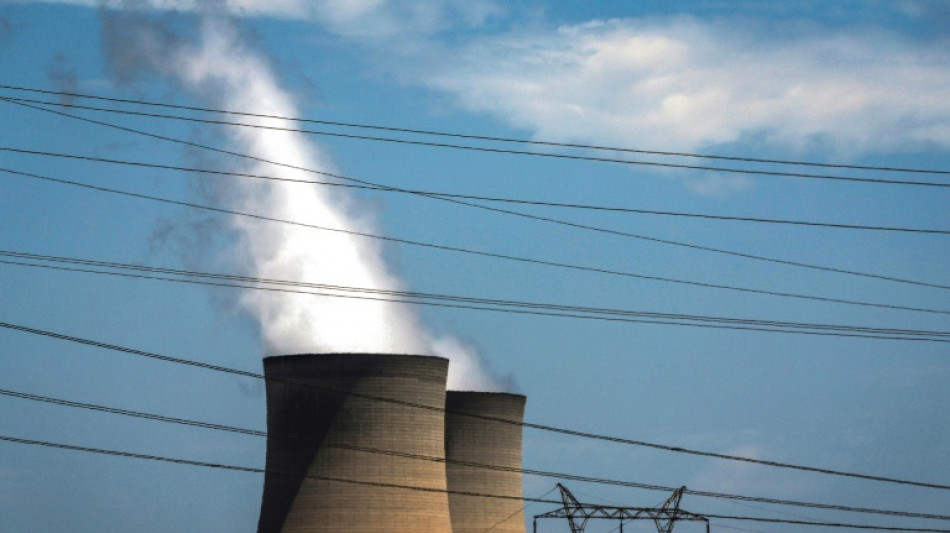
Australia says reliance on coal-fired power drops to record low / Photo: DAVID GRAY - AFP

Australia says reliance on coal-fired power drops to record low

Australia's reliance on coal-fired power stations has dropped to a record low, accounting for less than 50 percent of its electricity for the first time, the market operator said Thursday.

Text size:

Overall electricity demand hit a record high in the final quarter of 2024 as temperatures rose and people shifted away from gas, the Australian Energy Market Operator said.

At the same time, roof-top solar output surged 18 percent and grid-scale solar climbed nine percent -- both reaching record levels, it said in an update on the National Electricity Market (NEM).

"The rise in rooftop solar output, coupled with record low coal-generation availability, resulted in coal-fired generation contributing less than 50 percent of the NEM's total generation for the first time," said Violette Mouchaileh, a senior official at the market operator.

Renewable energy sources supplied a record 46 percent of electricity in the quarter, she said, peaking at 75.6 percent on November 6.

That drove greenhouse gas emissions in the period to record lows, the market operator said.

Australia's government last week announced an extra US$1.2 billion in clean energy financing to speed a transition from coal and other fossil fuels to renewables.

The country -- one of the world's leading coal exporters -- has vowed to reach net zero carbon emissions by 2050.

- Climate wars -

But energy authorities say quick action is needed to fill the gap left by shuttered coal-fired power stations.

Wholesale electricity prices surged 83 percent during 2024, the report noted, mostly due to high demand, the decline of available coal-fired power, and transmission constraints.

"The data confirms what we know -- unreliable coal is having a negative impact on energy prices, more renewables in the system bring wholesale prices down, and new transmission infrastructure is critical to keeping prices lower," said Chris Bowen, the minister for climate change and energy.

"We are building an energy grid so everyone, everywhere has access to the cheapest form of energy at any given time," he said in a statement to Australian media.

Over the past decade, an ideological brawl dubbed the "climate wars" has dominated Australian politics, repeatedly undermining attempts to reduce carbon emissions.

In the run-up to general elections that must be held by May 17, Australia's conservative opposition Liberal Party has announced plans to launch nuclear power so as to rely less on solar and wind.

The national science agency CSIRO said in a report last month that nuclear power would be 50 percent more expensive than renewables and would take at least 15 years to build.

Australia sits on bulging deposits of coal, gas, metals and minerals, with mining and fossil fuels stoking decades of near-unbroken economic growth.

But it has also begun to suffer from more intense bushfires and increasingly severe droughts, which scientists have linked to climate change.

K.Okada--JT