Who should get paid for nature's sequenced genes? / Photo: Menahem KAHANA - AFP/File

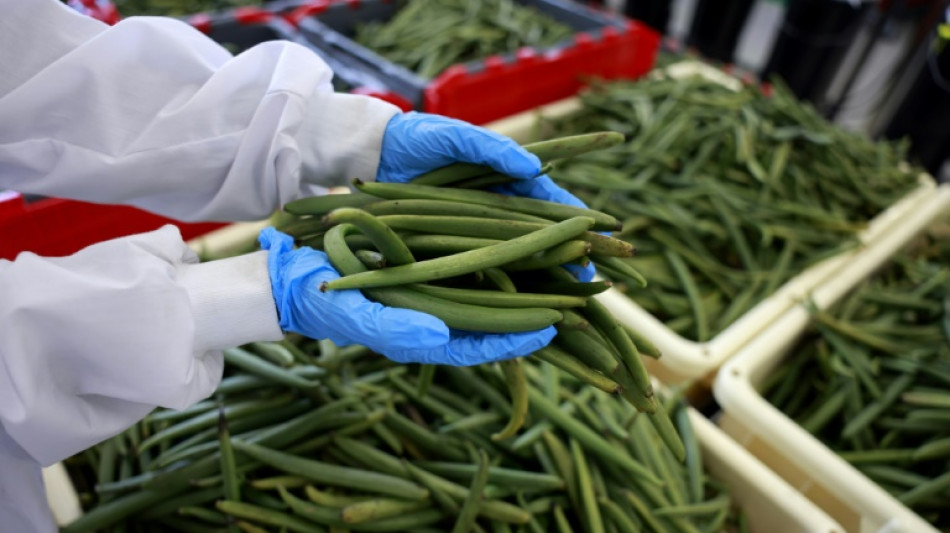
Much of the vanilla that flavors our ice cream today is artificial, derived from the genetic signature of a plant that hundreds of years ago was known only to an Indigenous Mexican tribe.
The plant's sequenced genomic information, available on public databases, was used as the basis for a synthetic flavoring that today competes with vanilla grown in several countries, mainly by small-scale farmers.
Few, if any, benefits of the lucrative scientific advance have trickled down to the communities that gave us vanilla in the first place.
"Wild genetic resources and pharmaceuticals ... are a multi-multi-billion dollar businesses. They clearly are profitable... that's not in dispute," Charles Barber of the World Resources Institute think tank told AFP.
"A great deal of really valuable information has fed into the system from research and utilization of wild genetic resources. And there is no mechanism currently to compensate the people where this information is coming from" in the form of digitally sequenced data, he added.
Much of the information comes from poor countries.
Fair sharing of the gains derived from digitally-stored genetic sequencing data has been a headache for negotiators at the COP16 biodiversity summit into its second week in Cali, Colombia.
At the last conference, in Montreal in 2022, 196 country parties to the UN's Convention on Biological Diversity (CBD) agreed to create a benefit-sharing mechanism for the use of digital sequence information (DSI).
Two years later, they still need to resolve such basic questions as who pays, how much, into which fund, and to whom does the money go?
- 'Cheap and very fast' -
The issue is a complex one.
There is little debate that genetic data-sharing on mostly free-access platforms is crucial for human advancement through medicine and vaccine development, for example.
But how to quantify the value of the sequenced information itself? And should the first people to discover a plant's particular usefulness be compensated?
"Sequencing technology has become so advanced that you can go with a... handheld device a little bit bigger than a cell phone and you can literally sequence a genome in an hour or two and upload it as you sequence it," Pierre du Plessis, a DSI expert and former negotiator for African countries at the CBD told AFP.
These gene sequences are then uploaded to databases which artificial intelligence can mine for potential leads for product development.
DSI is worth an estimated hundreds of billions of dollars a year. And there is a lot of it out there.
"Once the sequence is put into a public database, generally, no benefit-sharing obligations apply," Nithin Ramakrishnan, a researcher with the Third World Network, an advocacy NGO for developing countries, told AFP in Cali.
"Like when the sandalwood sequence information is available in the database whether India wants to share its sandalwood... with a cosmetic company or not, doesn't matter.
- Mandatory -
A point of contention in Cali is a demand from developing countries that payment for DSI use be mandatory, perhaps through a one-percent levy on profits from drugs, cosmetics or other products.
They also want guarantees of non-monetary benefits such as access to vaccines produced from genetic information sequenced from viruses and other pathogens.
"We want real understanding, sector-specific understanding of what non-monetary benefits will be shared and we want the system to be obligatory -- the users should have some form of obligation to share benefits," said Ramakrishnan.
Another sticking point is access for Indigenous people and local communities to DSI funds.
Developing countries want the information on genetic databases to be traceable and "answerable to governments" of the countries where it comes from, said Ramakrishnan.
But rich nations and many researchers oppose such a model which they fear will be too onerous, potentially putting the brakes on scientific pursuits that could benefit all humankind.
With such divergent points of view, observers are doubtful the Cali COP will emerge with any firm decisions on the outstanding questions by closing time on Friday.
The World Wildlife Fund has said "many more rounds of negotiations appear necessary" on DSI.
Added Barber: "I think it's not going to all get solved here."
K.Abe--JT