The Japan Times - Marine heatwaves last longer in deeper water: study

EUR -
AED 4.308166
AFN 77.493513
ALL 96.416224
AMD 447.045299
ANG 2.099893
AOA 1075.722267
ARS 1685.120948
AUD 1.758201
AWG 2.114493
AZN 2.015681
BAM 1.955123
BBD 2.358374
BDT 143.090483
BGN 1.954604
BHD 0.442184
BIF 3460.702414
BMD 1.173089
BND 1.514582
BOB 8.0912
BRL 6.345356
BSD 1.17089
BTN 105.690426
BWP 16.52821
BYN 3.435511
BYR 22992.545367
BZD 2.354975
CAD 1.614182
CDF 2621.853787
CHF 0.932647
CLF 0.027339
CLP 1072.497336
CNY 8.279721
CNH 8.273782
COP 4461.550927
CRC 583.100702
CUC 1.173089
CUP 31.08686
CVE 110.226856
CZK 24.227281
DJF 208.506957
DKK 7.469492
DOP 74.984371
DZD 152.147275
EGP 55.776628
ERN 17.596336
ETB 182.33418
FJD 2.665025
FKP 0.873747
GBP 0.876761
GEL 3.168098
GGP 0.873747
GHS 13.442348
GIP 0.873747
GMD 85.635638
GNF 10184.475634
GTQ 8.967897
GYD 244.935239
HKD 9.132281
HNL 30.827463
HRK 7.53299
HTG 153.345627
HUF 383.263446
IDR 19527.240315
ILS 3.753586
IMP 0.873747
INR 106.019684
IQD 1533.8692
IRR 49398.779765
ISK 148.207447
JEP 0.873747
JMD 187.594283
JOD 0.831683
JPY 182.756739
KES 150.999865
KGS 102.586892
KHR 4687.357948
KMF 492.697066
KPW 1055.775722
KRW 1731.561527
KWD 0.35981
KYD 0.975762
KZT 609.699012
LAK 25396.211572
LBP 104855.914324
LKR 362.104693
LRD 206.668482
LSL 19.829938
LTL 3.463827
LVL 0.70959
LYD 6.359772
MAD 10.770773
MDL 19.941099
MGA 5193.180751
MKD 61.566496
MMK 2463.801609
MNT 4161.388658
MOP 9.385052
MRU 46.416135
MUR 53.868474
MVR 18.077138
MWK 2030.388724
MXN 21.13483
MYR 4.797618
MZN 74.982217
NAD 19.829938
NGN 1700.592086
NIO 43.08509
NOK 11.824374
NPR 169.105201
NZD 2.016776
OMR 0.451054
PAB 1.170895
PEN 3.946434
PGK 4.96826
PHP 69.283242
PKR 329.319834
PLN 4.22776
PYG 8002.196711
QAR 4.267523
RON 5.090849
RSD 117.401581
RUB 93.700505
RWF 1704.302957
SAR 4.401882
SBD 9.655217
SCR 15.985985
SDG 705.628143
SEK 10.874453
SGD 1.514933
SHP 0.880121
SLE 28.255969
SLL 24599.088637
SOS 667.966001
SRD 45.26657
STD 24280.574864
STN 24.49142
SVC 10.245455
SYP 12972.465321
SZL 19.824055
THB 37.091875
TJS 10.795864
TMT 4.105812
TND 3.433212
TOP 2.824517
TRY 50.083471
TTD 7.94625
TWD 36.613871
TZS 2885.784946
UAH 49.424286
UGX 4163.559189
USD 1.173089
UYU 46.104046
UZS 14075.129263
VES 310.557571
VND 30859.280532
VUV 142.514088
WST 3.265817
XAF 655.727289
XAG 0.018305
XAU 0.000272
XCD 3.170332
XCG 2.11027
XDR 0.815514
XOF 655.727289
XPF 119.331742
YER 279.635057
ZAR 19.756169
ZMK 10559.204028
ZMW 26.843596
ZWL 377.734195
  • SCS

    0.0200

    16.14

    +0.12%

  • RIO

    0.5000

    76.74

    +0.65%

  • CMSC

    0.1300

    23.43

    +0.55%

  • BCC

    -0.7500

    76.26

    -0.98%

  • JRI

    0.0000

    13.72

    0%

  • BCE

    0.2100

    23.4

    +0.9%

  • RBGPF

    0.0000

    81.17

    0%

  • BTI

    -0.3900

    58.37

    -0.67%

  • RYCEF

    -0.1000

    14.64

    -0.68%

  • NGG

    0.0500

    74.69

    +0.07%

  • CMSD

    0.1200

    23.4

    +0.51%

  • BP

    -0.3500

    35.53

    -0.99%

  • RELX

    0.2000

    40.28

    +0.5%

  • GSK

    0.4700

    48.88

    +0.96%

  • VOD

    -0.0200

    12.54

    -0.16%

  • AZN

    -1.2200

    90.29

    -1.35%

Marine heatwaves last longer in deeper water: study
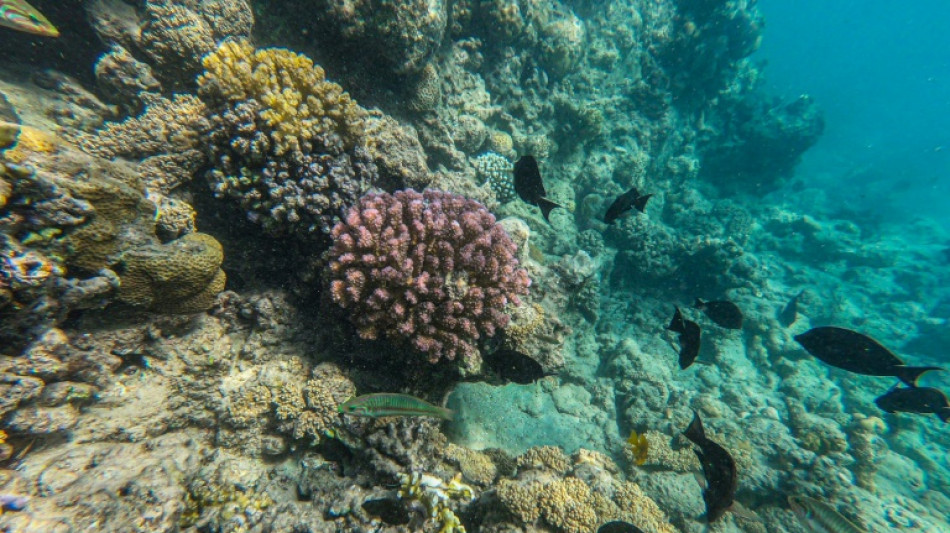
Marine heatwaves last longer in deeper water: study / Photo: Khaled DESOUKI - AFP

Marine heatwaves last longer in deeper water: study

Marine heatwaves may last longer and be more intense in deeper water, potentially threatening sensitive species as climate change makes the extreme events more frequent, researchers said on Monday.

Text size:

Oceans have absorbed 90 percent of the excess heat produced by the carbon pollution from human activity since the dawn of the industrial age.

Marine heatwaves -- episodes of abnormally high water temperatures -- have become more frequent and intense.

These can have a particularly severe impact on species that cannot migrate to escape intolerably warm waters, like corals in the Great Barrier Reef and kelp forests off southern Australia and the northeastern Pacific.

In a new study published in the journal Nature Climate Change, researchers looked at impacts of temperature spikes in deeper waters, which lead author Eliza Fragkopoulou said was "the first attempt to look into marine heatwaves below the surface".

"Marine heatwaves and their effects have been studied mostly at the ocean surface and we did not know much about their characteristics in the deep ocean," she told AFP.

Using on-site observations and modelling, researchers examined global marine heatwaves from 1993 to 2019, including data up to 2,000 metres (6,562 feet) below the surface.

They found the intensity was highest at 50 to 200 metres below the surface, occasionally up to 19 percent stronger than the surface heatwave.

The duration also increased with depth, with warming persisting up to two years after temperatures returned to normal on the surface, the study said.

The scientists looked at a proxy measure of thermal stress known as cumulative intensity and mapped that against distribution of biodiversity at the edge of their maximum heat limits to see areas where marine creatures are potentially more vulnerable to changes.

These high stress conditions overlapped in up to 22 percent of the global oceans, they found.

Regional variability of marine heatwaves makes measuring biodiversity exposure complex, and their duration varied by location due to different oceanic conditions.

In general, Fragkopoulou, of the Centre of Marine Sciences at Portugal's University of Algarve, said the impact on biodiversity was likely greatest from the surface to a depth of 250 metres.

The largest portions of the oceans categorised as highly exposed were found in the North Atlantic and Indian oceans, at depths between 1,000 and 2,000 metres.

- Better monitoring 'urgent' -

A separate study published last month in the journal Nature suggested that some marine creatures can withstand the heat better than others, with a finding that ocean fish can endure marine heatwaves with no major impact on their numbers.

Fragkopoulou told AFP that more research was needed on heatwaves in the deeper oceans to unpick the potential impacts on tourism and fisheries.

"Considering that marine heatwave impacts on deep-sea biodiversity are still largely unknown, there is an urgent need for more and better monitoring of the global ocean to understand their effects," she told AFP.

S.Fujimoto--JT