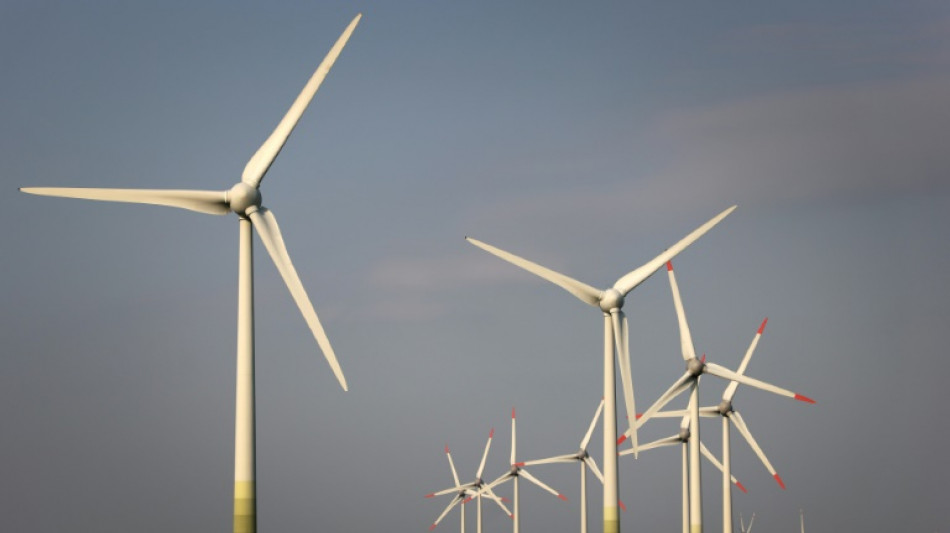
The tricky path to tripling renewable energy capacity / Photo: Daniel ROLAND - AFP

Significant hurdles lie ahead of the G20's renewable energy target agreed in New Delhi last weekend, but the ambitious goal is feasible, experts say.
G20 leaders pledged to triple global renewable energy capacity by 2030, in a bid to accelerate the clean energy transition and fight climate change.
That pledge by the group of wealthy nations -- responsible for around 80 percent of greenhouse gas emissions -- is in line with what experts say is possible and necessary to keep the world's climate goals in sight.
It adds to the momentum on renewables ahead of crunch UN climate talks beginning in Dubai on November 30.
But the group, which includes major oil and gas producers Saudi Arabia and Russia, failed to agree on phasing out fossil fuels.
- Why triple renewables? -
Boosting renewable energy capacity is essential to reduce fossil fuel consumption and achieve net-zero emissions, consistent with limiting global warming to 1.5 degrees Celsius above pre-industrial levels -- the more ambitious goal of the 2015 Paris agreement.
Tripling capacity by 2030 "is an ambitious yet achievable goal", according to the International Energy Agency (IEA), but it requires "stronger policy actions by governments".
This growth will be a key lever to slash fossil fuel demand, the IEA said, estimating it would avoid seven billion tonnes of CO2 polluting the atmosphere from 2023 to 2030.
It would also cover the growth of electricity demand linked to transport, heating and an expected surge in demand for air conditioning, the agency said.
The IEA added that the amount of electricity coming from coal -- the biggest source of CO2 -- could be halved.
For Dave Jones, an analyst at think tank Ember, the renewable energy pledge came as a pleasant surprise as previous discussion had focused on hydrogen or carbon capture and storage technology.
"It's a complete game changer for the possibility to be able to agree something" at the Dubai climate talks, he told AFP.
The other technologies are going to be useful, he said, "but they are not going to be the driving force behind the solution".
- What are the targets? -
Renewable energy production would need to soar from 3,600 Gigawatts (GW) as of late 2022 to 11,000 GW in 2030, said Jones.
The world installed 300 GW of new capacity last year and is aiming for up to an additional 500 GW in 2023, but annual growth must reach 1,500 GW by 2030.
And with fossil fuel prices and energy insecurity spiking after Russia's invasion of Ukraine, the IEA expects an unprecedented increase in new renewable energy capacity of around 30 percent in 2023.
Progress is already underway. Between 2015 and 2022, renewable energy facilities grew by 11 percent each year on average.
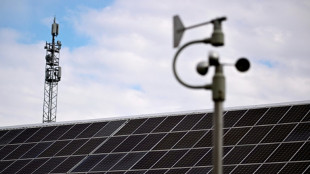
Solar energy has made great strides, with China potentially hitting its 2030 objective of 1,200 GW five years early.
The manufacturing of components is now outstripping demand and is due to reach 1,000 GW per year in 2024, with projects in China, the United States, Europe and India leading the way.
But wind power is going through a turbulent time, as rising costs and interest rates hamper the industry's ability to meet demand.
- How to get there? -
Solar, wind, hydroelectric power, geothermal and biomass are tried and tested technologies that can usually be deployed quickly.
But they also need investment, particularly in emerging and developing countries.
Supply chains must be made more resilient, while the integration of solar and wind needs to be secure and cost-effective, the IEA said.
Last year, one terawatt of global solar and wind capacity never came to fruition due to a lack of suitable electric networks and permits, according to international policy network REN21.
Its executive director Rana Adib said the world was a long way off raising the necessary cash, which she put at $4 trillion per year, adding that the G20 statement lacked concrete commitments.
In July, the UN's trade and development agency UNCTAD said that fossil fuel subsidies around the world amounted to a record $1 trillion in 2022 -- eight times the value of subsidies provided to renewable energy.
International investment in renewable energy has nearly tripled since the 2015 Paris climate accord, UNCTAD noted in its annual World Investment Report.
However, it said much of the growth was in richer nations.
S.Yamada--JT