The Japan Times - Top science publisher withdraws flawed climate study

EUR -
AED 4.266255
AFN 72.588455
ALL 96.289167
AMD 438.385165
ANG 2.079129
AOA 1065.068438
ARS 1622.422756
AUD 1.655696
AWG 2.090647
AZN 1.972535
BAM 1.962661
BBD 2.335796
BDT 142.296226
BGN 1.985312
BHD 0.438464
BIF 3443.759624
BMD 1.16147
BND 1.483742
BOB 8.014189
BRL 6.0789
BSD 1.159754
BTN 108.392327
BWP 15.847058
BYN 3.453123
BYR 22764.819101
BZD 2.332323
CAD 1.59395
CDF 2640.022192
CHF 0.913263
CLF 0.026802
CLP 1058.309044
CNY 7.991495
CNH 7.997165
COP 4309.275723
CRC 540.879207
CUC 1.16147
CUP 30.778965
CVE 110.630472
CZK 24.456386
DJF 206.416303
DKK 7.471507
DOP 69.543033
DZD 153.715001
EGP 60.777889
ERN 17.422055
ETB 182.786392
FJD 2.574862
FKP 0.870546
GBP 0.864656
GEL 3.153454
GGP 0.870546
GHS 12.665871
GIP 0.870546
GMD 84.78772
GNF 10197.710073
GTQ 8.883054
GYD 242.634488
HKD 9.098784
HNL 30.802152
HRK 7.531552
HTG 151.897747
HUF 387.966049
IDR 19592.843541
ILS 3.618735
IMP 0.870546
INR 108.872108
IQD 1521.526175
IRR 1527391.599878
ISK 143.627687
JEP 0.870546
JMD 182.670166
JOD 0.823503
JPY 184.012199
KES 150.412289
KGS 101.570229
KHR 4663.303228
KMF 493.6252
KPW 1045.327942
KRW 1727.082755
KWD 0.355933
KYD 0.966495
KZT 559.002548
LAK 25029.686265
LBP 104009.671646
LKR 364.167409
LRD 213.250726
LSL 19.663708
LTL 3.42952
LVL 0.702562
LYD 7.427595
MAD 10.87365
MDL 20.284261
MGA 4837.524034
MKD 61.66546
MMK 2438.451776
MNT 4142.906957
MOP 9.357354
MRU 46.586458
MUR 54.344886
MVR 17.944641
MWK 2017.474308
MXN 20.657445
MYR 4.575616
MZN 74.229517
NAD 19.535964
NGN 1601.411501
NIO 42.649316
NOK 11.311207
NPR 173.413288
NZD 1.983263
OMR 0.446588
PAB 1.159699
PEN 4.033775
PGK 5.000709
PHP 68.927463
PKR 324.3407
PLN 4.262074
PYG 7578.526251
QAR 4.232423
RON 5.096647
RSD 117.517834
RUB 95.142776
RWF 1695.746729
SAR 4.36034
SBD 9.351831
SCR 17.77294
SDG 698.043817
SEK 10.825194
SGD 1.480174
SHP 0.871404
SLE 28.5137
SLL 24355.465335
SOS 663.783979
SRD 43.365235
STD 24040.0915
STN 24.585419
SVC 10.147036
SYP 128.416864
SZL 19.570983
THB 37.53865
TJS 11.080856
TMT 4.065146
TND 3.374104
TOP 2.796541
TRY 51.500875
TTD 7.873321
TWD 37.023498
TZS 3014.015254
UAH 50.920416
UGX 4378.211468
USD 1.16147
UYU 47.255403
UZS 14175.745497
VES 530.216279
VND 30594.290813
VUV 138.477576
WST 3.16825
XAF 658.238287
XAG 0.016804
XAU 0.000264
XCD 3.138932
XCG 2.090016
XDR 0.82009
XOF 660.300037
XPF 119.331742
YER 277.184832
ZAR 19.575944
ZMK 10454.619728
ZMW 22.469939
ZWL 373.992983
  • RBGPF

    -13.5000

    69

    -19.57%

  • CMSC

    0.2300

    22.88

    +1.01%

  • CMSD

    0.0816

    22.74

    +0.36%

  • NGG

    0.0700

    82.06

    +0.09%

  • BP

    -1.2100

    43.57

    -2.78%

  • RYCEF

    0.7500

    16.05

    +4.67%

  • BTI

    0.5500

    57.92

    +0.95%

  • GSK

    0.1500

    51.99

    +0.29%

  • RELX

    0.4500

    33.81

    +1.33%

  • BCE

    -0.0300

    25.76

    -0.12%

  • RIO

    2.6900

    85.84

    +3.13%

  • AZN

    0.4700

    184.07

    +0.26%

  • VOD

    0.1500

    14.48

    +1.04%

  • BCC

    3.5800

    71.88

    +4.98%

  • JRI

    -0.0900

    11.68

    -0.77%

Top science publisher withdraws flawed climate study
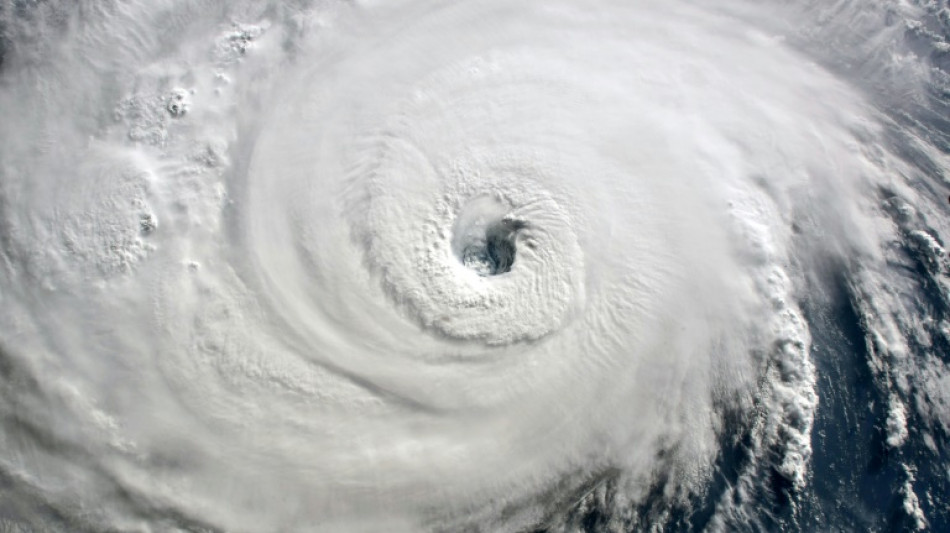
Top science publisher withdraws flawed climate study / Photo: NASA - GETTY IMAGES NORTH AMERICA/AFP/File

Top science publisher withdraws flawed climate study

Top science publisher Springer Nature said it has withdrawn a study that presented misleading conclusions on climate change impacts after an investigation prompted by an AFP inquiry.

Text size:

AFP reported in September 2022 on concerns over the peer-reviewed study by four Italian scientists that appeared earlier that year in the European Physical Journal Plus, published by Springer Nature.

The study had drawn positive attention from climate-sceptic media.

The paper, titled "A critical assessment of extreme events trends in times of global warming", purported to review data on possible changes in the frequency or intensity of rainfall, cyclones, tornadoes, droughts and other extreme weather events.

Several climate scientists contacted by AFP said the study manipulated data, cherry picked facts and ignored others that would contradict their assertions, prompting the publisher to launch an internal review.

"The Editors and publishers concluded that they no longer had confidence in the results and conclusions of the article," Springer Nature told AFP in an email late Wednesday.

The journal's editors published an online note stating that the paper was retracted due to concerns over "the selection of the data, the analysis and the resulting conclusions".

- Peer-review standards -

It said the paper had been freshly reviewed by experts and the authors invited to submit an addendum in response to the criticisms.

But a review found this "not suitable for publication and that the conclusions of the article were not supported by available evidence or data provided by the authors".

Springer Nature said in its email that the investigation was conducted by its Research Integrity Group in line with guidelines of the Committee on Publication Ethics (COPE).

The paper's authors were identified in order as Gianluca Alimonti, a physicist at a nuclear physics institute; Luigi Mariani, an agricultural meteorologist, and physicists Franco Prodi and Renato Angelo Ricci.

The latter two were named as signatories of the World Climate Declaration, a text that repeated various debunked claims about climate change, an AFP fact check article found.

Their study was "not published in a climate journal," Stefan Rahmstorf, Head of Earth Systems at the Potsdam Institute for Climate Impact Research, told AFP at the time.

"This is a common avenue taken by 'climate sceptics' in order to avoid peer review by real experts in the field."

Recent studies have indicated that climate misinformation has flourished online as governments push reforms to curb use of the fossil fuels that cause planet-warming carbon emissions.

A further investigation published by AFP in April 2023 showed that sceptics opposed to the scientific consensus on human-caused climate change had got other misleading studies published in peer-reviewed journals.

Experts pointed to widespread concerns about peer-review standards in the lucrative academic publishing industry.

Retraction Watch, a blog that tracks withdrawals of academic papers, counted 5,000 such cases in 2022 -- about a tenth of a percent of the total number of studies published, its co-founder Ivan Oransky told AFP.

K.Inoue--JT