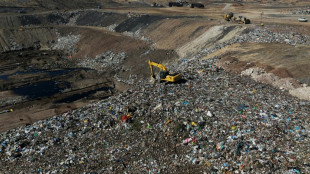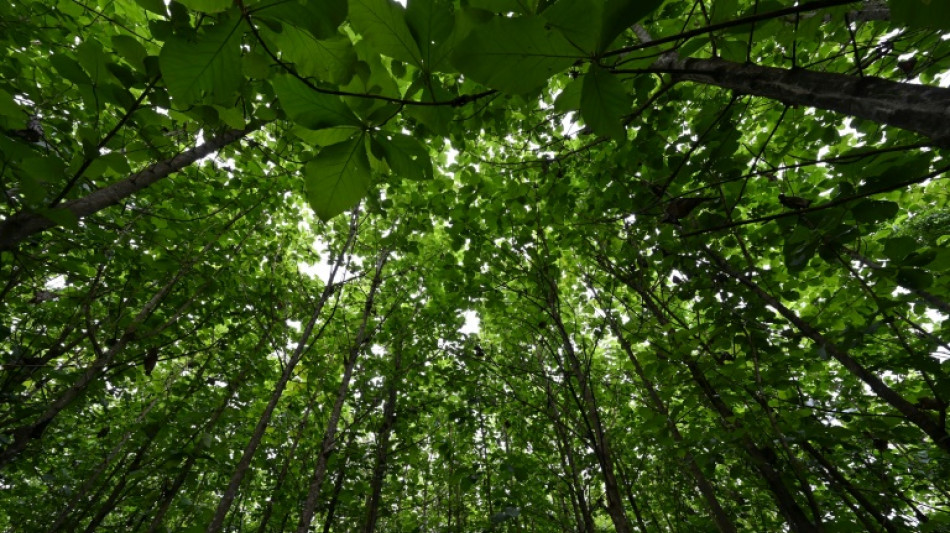
Nestle steps up reforestation project in Ivory Coast / Photo: Issouf SANOGO - AFP

Nestle is stepping up its project to combat deforestation in Ivory Coast caused by the growth of cocoa farming, bringing cocoa trading companies directly on board.
Ivory Coast is the world's largest cocoa producer, at 40 percent of the global market.
The west African country had 16 million hectares of forest in the 1960s -- a figure which is now down to less than three million, mainly due to cocoa plantations.
Nestle, the Swiss food giant behind chocolate brands like KitKat and Smarties, launched a project in 2020 aimed at restoring and protecting the Cavally Forest in southwest Ivory Coast.
One of the last remaining dense forests in the country, Cavally is a biodiversity reserve covering more than 67,000 hectares, but is threatened by deforestation linked to the cocoa industry and illegal gold panning.
The Nestle project was a partnership with the Ivorian government and the Earthworm Foundation, an NGO that led the project's implementation.
At a media briefing this week at its headquarters in Vevey on Lake Geneva, Nestle said the first phase had led to "a significant reduction in deforestation", with the natural regeneration of 7,000 hectares and the reforestation of almost 1,500 hectares.
- Plenty at stake -
For its second three-year phase, the Swiss trading company Cocoasource and the French firm Touton, which work directly with cocoa and rubber cooperatives in the area affected, have been brought on board.
The project has a budget of four million Swiss francs ($4.45 million).
It aims to strengthen the resilience of the communities on the edge of the forest, and improve the transparency and traceability of the cocoa and rubber supply chain.
Touton, which specialises in trading cocoa, coffee, vanilla and spices, wanted to join the project "because the first phase worked", deputy managing director Joseph Larrose told AFP.
"Collective effort makes it possible to protect the forest."
Restoring the Cavally Forest is in the cocoa industry's interests, he said.
"The very heart of our business is at stake. If tomorrow we no longer have an ecosystem favourable to the raw material we're trading, we no longer have access to this resource."
Julian Oram, the senior director for Africa at the NGO Mighty Earth, said the Nestle initiative was a valuable way of addressing deforestation.
However, "it's important that companies such as Nestle don't use agroforestry... as a way of avoiding changes to their core business practices: which is how they buy cocoa, including the prices they offer", he told AFP.
"Sustainability programmes are no substitute for fair cocoa purchasing practices."
- 'Imported deforestation' -
Global conservationist group WWF is a sharp critic of what it calls "imported deforestation".
It says that Swiss consumption of eight major raw materials -- including cocoa, coconuts, coffee and palm oil -- occupies more than twice the area of Switzerland's own forests.
The NGO says 54 percent of Switzerland's cocoa imports come from countries where the risk of deforestation is either high or very high.
In mid-April, the European Parliament adopted a regulation banning the import of products such as cocoa, coffee, palm oil or rubber if they came from land deforested after December 2020.
The objective is to curb deforestation outside the European Union, with the EU, according to the WWF, the second-biggest destroyer of tropical forests, after China. The NGO says the EU is responsible for 16 percent of global deforestation.
- Swiss ministry signs up -
Besides commodity traders, the Swiss economy ministry has joined the Cavally project.
Monica Rubiolo, head of trade promotion at the ministry, told the media briefing that Switzerland wanted to contribute to improving supply chains as the wealthy Alpine nation is "an important country" for trading and processing cocoa.
Nestle achieved a turnover of 8.1 billion Swiss francs in confectionery alone in 2022.
Switzerland has yet to follow its EU neighbours in terms of its legislation, lamented Romain Deveze, raw materials expert for the Swiss WWF.
"It would be good if we didn't have to wait 10 years for Switzerland to align itself with European regulations," he told AFP.
Y.Watanabe--JT