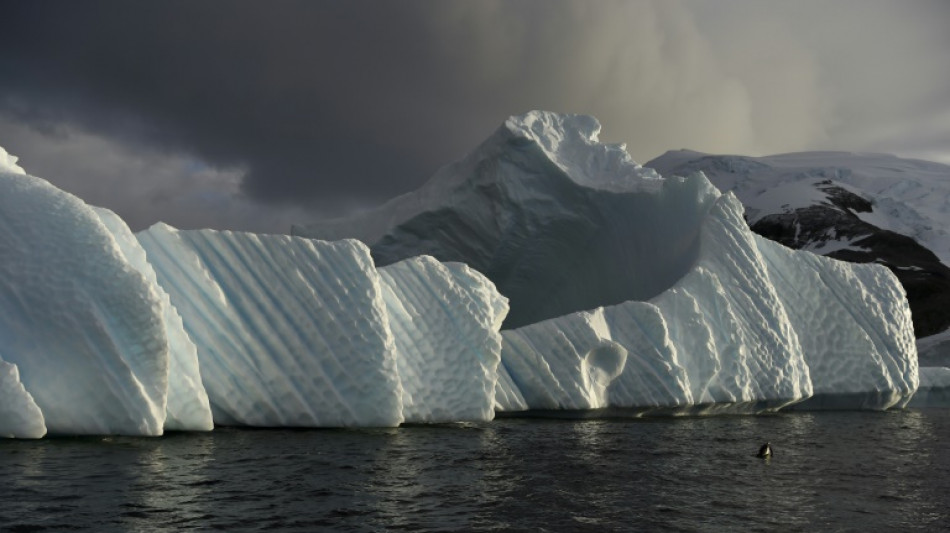
Dangerous slowing of Antarctic ocean circulation sooner than expected / Photo: EITAN ABRAMOVICH - AFP

Climate change-driven shifts in the circulation of waters to the deepest reaches of the ocean around Antarctica, which could reverberate across the planet and intensify global warming, are happening decades "ahead of schedule", according to new research.
Scientists have said that an acceleration of melting Antarctic ice and rising temperatures, driven by the emission of planet-warming gases, is expected to have a significant effect on the global network of ocean currents that carry nutrients, oxygen and carbon.
This could not only threaten marine life, but it also risks changing the ocean's crucial role in absorbing carbon dioxide and heat.
An earlier study using computer models suggested "overturning circulation" of waters in the deepest reaches of the oceans would slow by 40 percent by 2050 if emissions remain high.
But new research released on Thursday -- based on observational data -- found that this process had already slowed 30 percent between the 1990s and 2010s.
"Our data show the impacts of climate change are running ahead of schedule," said lead author Kathryn Gunn, of the Australian Science agency CSIRO and Britain's Southampton University.
The implications could be significant, with Antarctica's deep ocean acting as a key "pump" for the global network of ocean currents.
"As the ocean circulation slows, more carbon dioxide and heat are left in the atmosphere, a feedback that accelerates global warming," Gunn told AFP.
"In some ways, the fact that this is happening isn’t surprising. But the timing is."
Gunn said previously it had been difficult to understand the changes happening in the remote region because of a lack of data and a host of challenges for scientific research, from getting funding to facing extreme conditions at sea.
The authors used observational data gathered by hundreds of scientists over decades and then "filled in the gaps" with computer modelling.
- Carbon storage -
Oceans are a crucial regulator of the climate, absorbing large amounts of the additional planet-warming carbon that humans have pumped into the atmosphere since the mid-1800s, as well as more than 90 percent of the increased heat.
Sea surface temperatures have risen significantly -- hitting new records earlier this year -- while warming is also melting ice sheets in polar regions, spilling huge quantities of freshwater into the ocean.
This is disrupting the process that carries nutrient- and oxygen-rich warmer waters down into the deep ocean, a key life support function for marine life.
The new research, published in the journal Nature Climate Change, found that the oxygen reaching the deep ocean has decreased.
"Deep-ocean animals are adapted to low oxygen conditions but still have to breathe," said Gunn.
"These losses of oxygen may cause them to seek refuge in other regions or adapt their behaviour. Deoxygenation of this kind affects biodiversity and food webs."
Beyond the impact on animals, changes in these key ocean pumps are also expected to reduce the amount of carbon the ocean can absorb, as well as pulling up to the surface carbon that has been safely stored away in the ocean depths for hundreds of thousands of years.
Ariaan Purich, from the School of Earth, Atmosphere and Environment at Australia's Monash University, said the study was significant because "it provides further support -- including observational evidence -- that the melting Antarctic ice sheet and shelves will impact the global ocean overturning circulation".
Purich, who was not involved in the study, said this would have "important impacts on the ocean uptake of heat and carbon".
T.Shimizu--JT