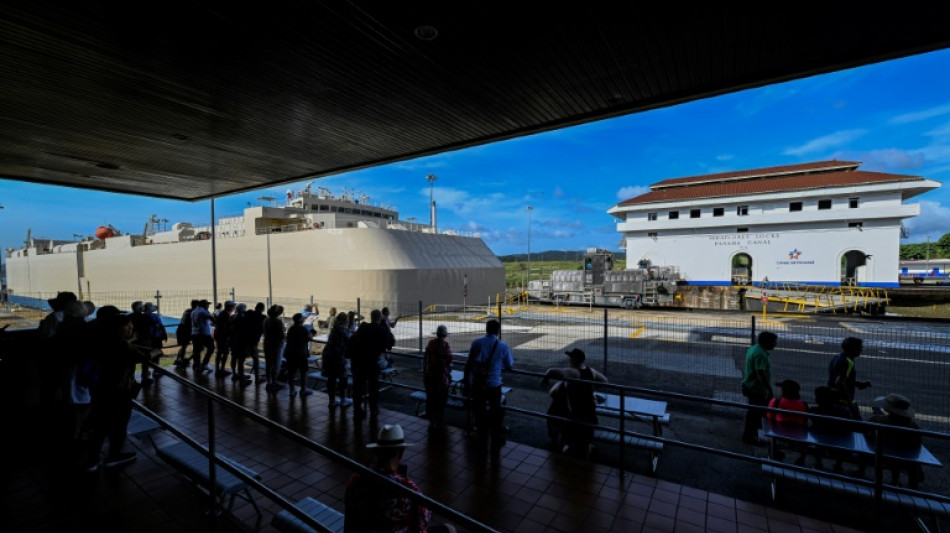
Drought threatens Panama Canal shipping traffic / Photo: Luis ACOSTA - AFP

Drought has forced Panama's authorities to reduce shipping traffic in the canal that links the Atlantic and Pacific as a water supply crisis threatens the future of this crucial waterway.
Two artificial lakes that feed the canal in the province of Colon have been depleted by lack of rain.
"This Lake Alhajuela has less water every day," Leidin Guevara, 43, who fishes in the lake, told AFP.
The Panamanian Canal Authority (ACP) has limited the largest ships passing through the canal for the fifth time during this drought season.
Some six percent of global maritime shipping passes through the canal, mostly from the United States, China and Japan.
Rain water is the energy source used in the Panama Canal to move ships through locks, up to as much as 26 meters above sea level.
The passage of each boat involves 200 million liters of fresh water flowing into the sea, which makes the Alhajuela and Gatun lakes vital.
According to the ACP, between March 21 and April 21, the Alhajuela level fell by seven meters -- more than 10 percent.
"The lack of rains impacts in various ways, firstly in the reduction in our water reserves," Erick Cordoba, the ACP water manager, told AFP.
That affects the canal's business with the largest vessels, which pay the highest fees, prevented from passing through, added Cordoba.
In the 2022 fiscal year more than 14,000 ships carrying 518 million tons of cargo passed through the canal, contributing $2.5 billion to the Panamanian treasury.
- 'Vital to find new water sources' -
Alarm bells were already set off in 2019 when the fresh water supplies dropped to just three billion cubic meters, some way short of the 5.25 billion needed to operate the canal.
Authorities fear that this operational uncertainty could lead some shipping companies to favor other routes, thus heightening the need to find solutions to guarantee the canal's operations over the long term.
Canal administrator Ricaurte Vasquez recently acknowledged to Panamanian website SNIP Noticias that water shortage was the main threat to shipping in the canal.
"Without a new reservoir that brings new volumes of water, this situation will remove the Canal's capacity to grow," former administrator Jorge Quijano told AFP.
"It is vital to find new water sources, especially faced with the climate change we are seeing, not just in our country but all over the world."
The Panama Canal basin also supplies water to more than half of the country's 4.3 million population.
The shortages have caused water supply problems in several parts of the country, provoking numerous protests.
Experts warn that water conflicts could arise between the canal and local populations given the disorderly urban sprawl developing around Panama City.
"We don't want to engage in a philosophical conflict over water for Panamanians or water for international commerce," said Vasquez.
The canal has suffered from "a lack of rain as we have had in the whole country, but within the parameters of what is a normal dry period," Luz de Calzadilla, general manager at Panama's meteorology and hydrology institute, told AFP.
However, the El Nino climate phenomenon will likely reduce rainfall in the second half of the year, added De Calzadilla.
"The truth is that the Canal administration is working magic to maintain business and fulfill a social responsibility such as drinking water for human consumption."
That is no solace to those facing water shortages on Lake Alhajuela.
"This year has been the most difficult I've seen for drought," said Guevara.
K.Inoue--JT