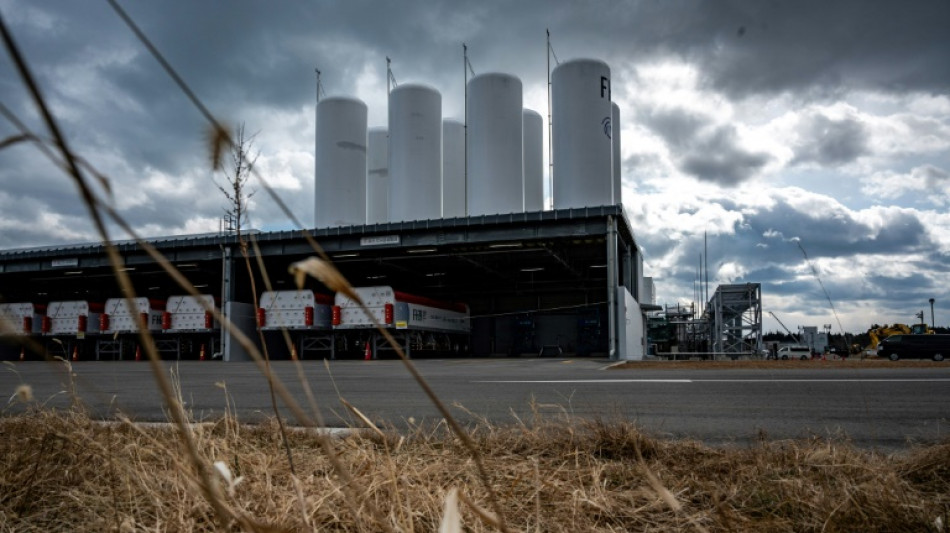
Fossil fuel pledges divide G7 in 'critical decade' for climate / Photo: Philip FONG - AFP/File

G7 allies meet this week for climate talks that are likely to urge more action in a "critical decade", but could also lay bare divisions on ambitious fossil fuel commitments.
The world's leading developed economies are all targeting net-zero emissions by 2050 or sooner after signing the Paris Agreement to cap global warming at well under two degrees Celsius.
But they differ on how to respond to the energy squeeze caused by Russia's war in Ukraine, with host Japan among those arguing for more leeway on fossil fuels to protect energy security.
Britain, backed by France, has proposed new targets on the phase-out of domestic coal power in a draft statement seen by AFP ahead of the minister-level talks, which kick off in Sapporo on Saturday.
Pushback from Japan -- which remains heavily dependent on imported fossil fuels after the 2011 Fukushima nuclear plant disaster -- could sink those efforts.
There are also divisions over natural gas, with Japan leading those pushing the group to recognise overseas investments in the fuel as a "necessary" step in the global transition to clean energy.
Campaigners say Japan's reluctance to embrace ambitious fossil fuel targets sends the wrong message.
Japan is "actively working to increase reliance on liquid natural gas and other kinds of gas-based fuels" in Asia, Susanne Wong, Asia Program Manager at Oil Change International, told AFP.
"While there's an urgent need to shift from fossil fuels, and the war has shown how risky the strategy is of relying so heavily on imported fossil fuels, they're encouraging governments to import LNG across the region."
- 'Exceptional circumstances' -
At last year's meeting in Germany, the G7 climate ministers pledged to largely decarbonise their electricity sectors by 2035.
They also agreed to end new direct public support in 2022 for overseas fossil fuel projects that take no steps to offset carbon dioxide emissions.
But this commitment was watered down the following month, when G7 leaders said the "exceptional circumstances" of the Ukraine war made gas investments "appropriate as a temporary response".
The language now sought by Japan -- with backing from G7 partners that include the United States, Canada, Germany and Italy -- would solidify that exception.
The meeting comes after a major UN climate report last month warned the world will see 1.5C of warming in about a decade, calling for "rapid and far-reaching" efforts to keep temperature increases within relatively safe limits.
And the draft final statement by the G7 environment ministers calls for all major economies to take action "in this critical decade".
It also urges a peak in global greenhouse gas emissions by 2025 at the latest -- language that experts say is aimed at China, the world's largest carbon emitter.
China is targeting a peak of its carbon emissions by 2030.
Other phrasing will be more contentious, including Japan's push for recognition of nuclear power and endorsement of its plan to start releasing treated water from the Fukushima plant into the sea this year.
It also wants G7 recognition for its controversial strategy of burning hydrogen and ammonia alongside fossil fuels to reduce carbon emissions, which climate activists say only serves to extend the lifespan of polluting plants.
- Japan 'biggest obstacle' -
Coal may prove the largest stumbling block, with Britain seeking a 2030 deadline to complete an "accelerated phase-out of domestic unabated coal power generation" to keep the 1.5C goal within reach.
But Japan's preferred language would be a more general pledge to prioritise "concrete and timely steps" towards the phase-out.
Friederike Roder, vice president of the NGO Global Citizen, warned the meeting's language would be critical ahead of the G20 summit in India and COP28 in Dubai.
"We're trying to avoid going backwards" on pledges, she told AFP.
"Japan is certainly the biggest obstacle -- and this year it is G7 president."
Governments around the world will also be looking for action on resilience funding for the developing nations most affected by climate change.
Multi-billion-dollar investment plans have been announced for countries such as South Africa and Indonesia to transition to clean energy from fossil fuels.
But these remain "very ad hoc", said Alex Scott from the climate think-tank E3G.
The G7 needs to "offer some credibility and clarity on what they're going to do to help countries adapt to climate change", she said.
H.Hayashi--JT