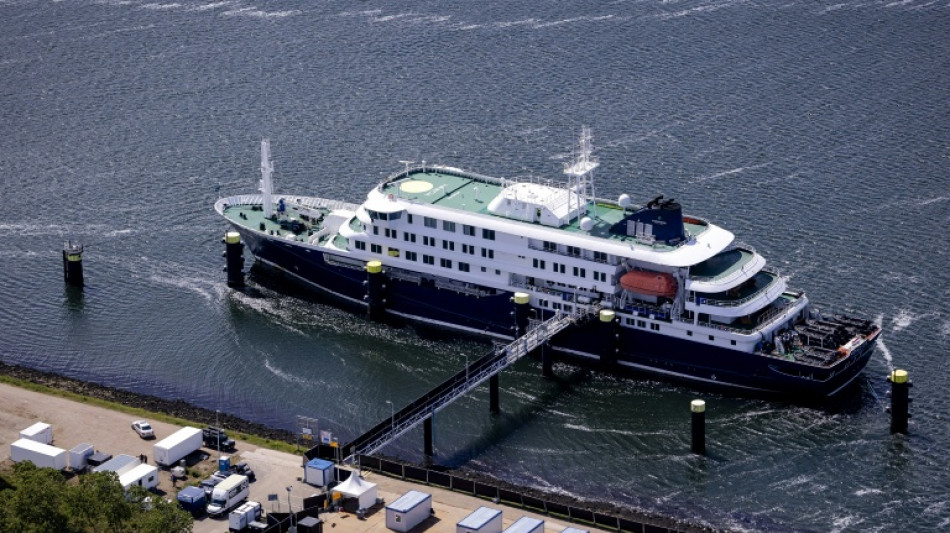
Hantavirus cruise operator says ship not source of outbreak / Photo: Robin VAN LONKHUIJSEN - ANP/AFP

The operator of the cruise ship hit by a deadly hantavirus outbreak said the virus was likely introduced before passengers boarded and did not originate on the vessel itself.
The MV Hondius, operated by Dutch company Oceanwide Expeditions, made headlines after three passengers died from hantavirus -- a rare virus for which no vaccines or specific treatments exist.
"The indications strongly suggest that the virus was introduced prior to embarkation and did not originate from the vessel itself," Oceanwide Expeditions CEO Remi Bouysset said in a statement.
He said this was based on the medical information currently available, including guidance from World Health Organization experts and health authorities.
"At this stage, there is no indication that the source of infection was linked to the vessel's condition or to Oceanwide Expeditions' onboard operations," he added.
The WHO has scrambled to reassure the world that the outbreak was not a repeat of the Covid pandemic, stressing that contagion was very rare.
The ship docked in Rotterdam harbour in the Netherlands on Monday, with the skeleton crew facing weeks of quarantine.
Everyone still on board is asymptomatic, according to Oceanwide Expeditions, and being closely monitored by two medics.
Hantavirus has been confirmed in seven patients, with one other probable case, according to an AFP tally from official sources.
The virus typically spreads from the urine, faeces and saliva of infected rodents and is endemic in Argentina, where the voyage began.
Those infected have the Andes virus -- the only strain of hantavirus that can spread between people.
The ship set off April 1 from Ushuaia, Argentina, taking in remote islands in the South Atlantic Ocean before steaming north to Cape Verde, then Spain's Canary Islands.
Officials in Argentina's Tierra del Fuego province have downplayed the likelihood that the first victim in the outbreak became infected in Ushuaia.
The province has not had a case of hantavirus since its reporting became mandatory 30 years ago.
The Andes strain is however present in other Argentine provinces more than 1,000 kilometres (600 miles) away in the north.
T.Ueda--JT