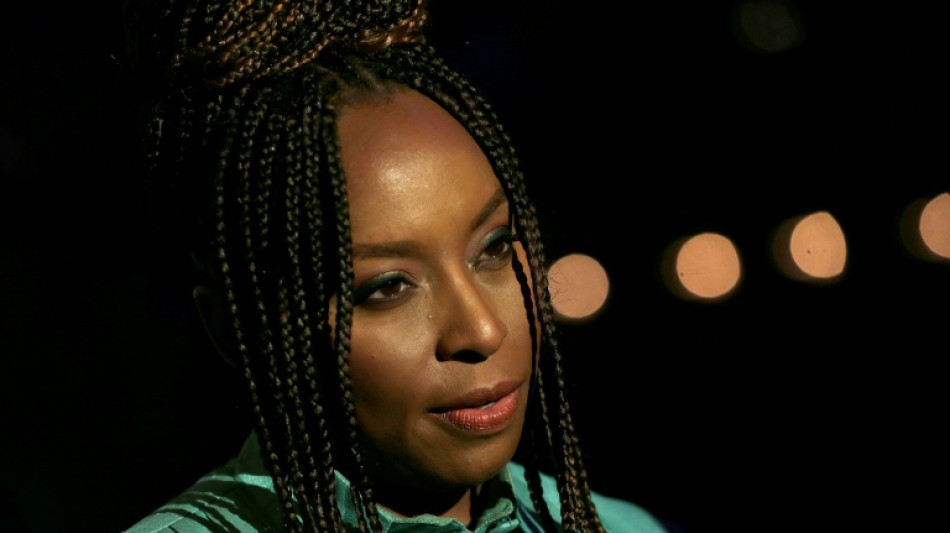
Death of author's baby son puts Nigerian healthcare in spotlight / Photo: John Lamparski - GETTY IMAGES NORTH AMERICA/AFP

The recent death of the 21-month-old son of Nigerian best-selling author Chimamanda Ngozi Adichie has brought healthcare standards in Africa's most populous country under fresh scrutiny, prompting calls for reforms.
Nkanu Nnamdi, died on January 7, following "a brief illness" at Lagos's Euracare Multispecialist Hospital. He had been taken there for diagnostic tests including MRI before he was due to travel to the United States for specialised care, the family said.
Nkanu was one of twins, and according to a close family member Adichie and her medical doctor husband Ivara Esege had been trying for eight years to have children.
The family of the Nigerian author and feminist icon Adichie has accused the hospital of "gross medical negligence".
Adichie's sister-in-law, Dr Anthea Esege Nwandu, a physician and professor with decades of experience, said she had been told the boy had been administered an overdose of propofol, to sedate him to conduct MRI tests.
She argued the anaesthesiologist had been "criminally negligent" and had not followed proper medical protocol.
The boy suffered cardiac arrest when he was being transferred on the anaesthesiologist's shoulder, disconnected from the ventilator, she told local TVC television channel.
The hospital's medical director had told her that "it seems he had been overdosed with propofol", she added.
Calling for systematic reforms and patients safety in Nigeria, she said: "This is a wake-up call... for we the public... to demand accountability, and transparency and consequences of negligence in our healthcare system."
- Legal notice issued -
Adichie lives in the United States but was in Nigeria for the Christmas holidays. She has served legal notice to the hospital seeking answers.
Family spokesperson Omawumi Ogbe said in a text message to AFP "legal notice has been issued" to Euracare hospital, without elaborating.
The Lagos state government has also ordered an investigation into what happened.
Euracare did not immediately respond to AFP request for comment on Wednesday.
The standard of Nigeria's healthcare is generally considered below expectations. Those who can afford to -- including top political leaders -- seek care abroad.
Africa's fourth-largest economy, Nigeria is a major oil producer, has a thriving business culture, and global pop stars. But it lacks basic infrastructure, including water, electricity, and quality healthcare.
Last month, the country's services came under the spotlight following a fatal accident involving former world heavyweight boxing champion Anthony Joshua -- a British national of Nigerian heritage.
Joshua walked out of the car in pain, helped by bystanders with no ambulance in sight.
Just this week, the northern Kano state said it had ordered an investigation into the death of a woman four months after doctors left a pair of scissors in her stomach following surgery.
Despite repeated complaints of abdominal pains during several hospital visits, the doctors administered pain killers. Scans finally revealed the scissor just two days before she died.
Cases of reported negligence and inadequate care abound in Nigeria.
The poor state of Nigerian health care is exacerbated by the exodus of skilled doctors and nurses who leave in search of better living standards and salaries.
Between 15,000 and 16,000 doctors emigrated from Nigeria between 2020 and 2024, according to Health Minister Muhammad Ali Pate.
Nigeria has just 55,000 doctors for a population of 220 million, he said in 2024.
K.Abe--JT