The Japan Times - Highly awaited Alzheimer's drug hit by delays

EUR -
AED 4.27928
AFN 72.830397
ALL 95.473946
AMD 429.710635
ANG 2.086283
AOA 1069.6737
ARS 1621.711681
AUD 1.620051
AWG 2.100313
AZN 1.981292
BAM 1.946715
BBD 2.357657
BDT 143.061731
BGN 1.945827
BHD 0.44148
BIF 3485.108757
BMD 1.165222
BND 1.490519
BOB 8.053312
BRL 5.833109
BSD 1.170581
BTN 111.669453
BWP 16.487501
BYN 3.270408
BYR 22838.351572
BZD 2.354258
CAD 1.600951
CDF 2615.923177
CHF 0.914752
CLF 0.026467
CLP 1041.685501
CNY 7.906143
CNH 7.92055
COP 4415.86519
CRC 531.954833
CUC 1.165222
CUP 30.878384
CVE 110.425363
CZK 24.318242
DJF 208.443117
DKK 7.473059
DOP 69.381066
DZD 154.111905
EGP 61.626294
ERN 17.47833
ETB 182.772723
FJD 2.55877
FKP 0.861904
GBP 0.871161
GEL 3.122885
GGP 0.861904
GHS 13.294634
GIP 0.861904
GMD 84.4706
GNF 10264.198971
GTQ 8.891504
GYD 243.818981
HKD 9.125419
HNL 31.130505
HRK 7.532692
HTG 153.284881
HUF 359.105692
IDR 20479.184811
ILS 3.382175
IMP 0.861904
INR 111.718516
IQD 1526.440845
IRR 1532266.955489
ISK 143.60179
JEP 0.861904
JMD 185.079493
JOD 0.826149
JPY 184.70225
KES 150.605099
KGS 101.898821
KHR 4696.617559
KMF 491.723396
KPW 1048.66563
KRW 1745.654305
KWD 0.359506
KYD 0.971263
KZT 551.673027
LAK 25582.449105
LBP 104331.669901
LKR 379.070912
LRD 213.527012
LSL 19.214134
LTL 3.440597
LVL 0.704831
LYD 7.429972
MAD 10.730238
MDL 20.121509
MGA 4902.662098
MKD 61.636379
MMK 2446.809006
MNT 4171.646561
MOP 9.402598
MRU 46.776235
MUR 54.645266
MVR 17.94104
MWK 2029.346205
MXN 20.111272
MYR 4.59622
MZN 74.469317
NAD 19.214235
NGN 1595.387557
NIO 43.078244
NOK 10.824097
NPR 179.460027
NZD 1.97973
OMR 0.448027
PAB 1.165436
PEN 4.016559
PGK 5.099608
PHP 71.831306
PKR 326.029029
PLN 4.247006
PYG 7133.053439
QAR 4.247816
RON 5.200963
RSD 117.395846
RUB 85.352884
RWF 1712.132771
SAR 4.374416
SBD 9.340579
SCR 15.914979
SDG 699.71378
SEK 10.976823
SGD 1.488292
SHP 0.869956
SLE 28.723019
SLL 24434.12558
SOS 669.01743
SRD 43.35443
STD 24117.743219
STN 24.493316
SVC 10.197148
SYP 128.790513
SZL 19.20076
THB 37.848763
TJS 10.890833
TMT 4.078277
TND 3.365208
TOP 2.805575
TRY 53.066072
TTD 7.912868
TWD 36.732577
TZS 3023.751425
UAH 51.460657
UGX 4358.546858
USD 1.165222
UYU 46.412204
UZS 14035.099706
VES 594.436632
VND 30690.200147
VUV 137.586688
WST 3.156028
XAF 655.778043
XAG 0.014295
XAU 0.000252
XCD 3.149071
XCG 2.100389
XDR 0.815577
XOF 655.778043
XPF 119.331742
YER 278.079904
ZAR 19.262868
ZMK 10488.39105
ZMW 22.035987
ZWL 375.201015
  • RBGPF

    0.8900

    61.68

    +1.44%

  • RYCEF

    -0.1300

    15.9

    -0.82%

  • CMSC

    0.0898

    23.14

    +0.39%

  • GSK

    -0.0300

    50.96

    -0.06%

  • BCE

    -0.2000

    24.19

    -0.83%

  • RIO

    -2.4500

    109.59

    -2.24%

  • BTI

    1.3500

    66.7

    +2.02%

  • BP

    -0.0200

    44.12

    -0.05%

  • AZN

    -2.7600

    184.96

    -1.49%

  • NGG

    0.4500

    87.43

    +0.51%

  • VOD

    -0.0300

    15.48

    -0.19%

  • CMSD

    0.0400

    23.6

    +0.17%

  • JRI

    0.0100

    13.14

    +0.08%

  • BCC

    2.4200

    69.4

    +3.49%

  • RELX

    -0.1600

    31.46

    -0.51%

Highly awaited Alzheimer's drug hit by delays
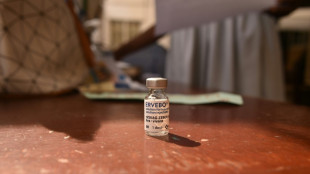
Highly awaited Alzheimer's drug hit by delays / Photo: PHILIPPE LOPEZ - AFP

Highly awaited Alzheimer's drug hit by delays

Eli Lilly's highly anticipated Alzheimer's drug has been held back for further review by regulators, the US pharmaceutical giant said Friday, in a blow for patients with the devastating brain disorder.

Text size:

Donanemab has been found to slow cognitive decline in the early stages of the disease during a clinical trial -- but there was also a high rate of side effects, including deaths.

The Food and Drug Administration (FDA) "has informed Lilly it wants to further understand topics related to evaluating the safety and efficacy of donanemab," the company said in a statement Friday.

The regulator told the Indiana-based company it would convene a new meeting of experts, but hadn't provided a firm date. "As a result, the timing of expected FDA action on donanemab will be delayed beyond the first quarter of 2024."

"We are confident in donanemab's potential to offer very meaningful benefits to people with early symptomatic Alzheimer's disease," said Anne White, the company's executive vice president.

She added the FDA's decision to have a new meeting was "unexpected," but "We will work with the FDA and the stakeholders in the community to make that presentation and answer all questions."

Donanemab is an intravenously injected antibody that targets the build up beta-amyloid, a protein found in the brains of many patients with Alzheimer's.

Another anti-amyloid therapy called Leqembi, which was developed by Eisai of Japan and Biogen of Massachusetts, was granted full approval by the FDA last July and is now accessible through government-run health insurance for the elderly called Medicare.

- Slows decline, but risky -

In a paper published in the Journal of the American Medical Association last year, researchers found donanemab slowed cognitive and functional decline in patients who have early symptoms of the disease.

Forty-seven percent of those who received the drug showed no signs of cognitive decline after one year of treatment, compared to 29 percent who received a placebo.

Serious adverse events, including brain bleeds, occurred in 17.4 percent of those who received donanemab and 15.8 percent of those who received a placebo.

There were also four deaths: three in the donanemab group and one in the placebo group, but all the fatalities were considered a result of the treatment they received.

The trial recruited participants aged 60 to 85 with early symptomatic Alzheimer's, either mild cognitive impairment or Alzheimer's disease with mild dementia.

The news comes after the first Alzheimer's drug to be approved was pulled from the market in January.

The FDA awarded accelerated approval to Aduhelm in June 2021, a decision that was contentious at the time because the agency overruled its own independent advisors, who found there was insufficient evidence of benefit.

Biogen, which co-developed Aduhelm with Eisai, said it was discontinuing Aduhelm to focus its efforts of Leqembi.

Alzheimer's is the most common form of dementia. More than one in nine people over 65 develop the condition, which worsens over time, robbing them of their memories and independence, according to the US Alzheimer's Association.

K.Yoshida--JT