The Japan Times - Patients regain much weight after stopping new obesity drug: study

EUR -
AED 4.246168
AFN 73.421127
ALL 96.080579
AMD 437.405912
ANG 2.069706
AOA 1060.240841
ARS 1591.813902
AUD 1.665343
AWG 2.083773
AZN 1.966007
BAM 1.955388
BBD 2.336928
BDT 142.389987
BGN 1.976314
BHD 0.436478
BIF 3446.288495
BMD 1.156206
BND 1.483194
BOB 8.017275
BRL 6.044181
BSD 1.160265
BTN 109.136524
BWP 15.811804
BYN 3.438805
BYR 22661.643378
BZD 2.333628
CAD 1.599178
CDF 2636.150356
CHF 0.915293
CLF 0.026874
CLP 1061.119847
CNY 7.979553
CNH 7.98805
COP 4279.524169
CRC 539.48862
CUC 1.156206
CUP 30.639467
CVE 110.241287
CZK 24.455613
DJF 206.619129
DKK 7.471735
DOP 69.955557
DZD 153.424549
EGP 61.001685
ERN 17.343094
ETB 181.171096
FJD 2.599441
FKP 0.864652
GBP 0.8656
GEL 3.115955
GGP 0.864652
GHS 12.685271
GIP 0.864652
GMD 85.038269
GNF 10169.900368
GTQ 8.88009
GYD 242.747784
HKD 9.046222
HNL 30.724657
HRK 7.536496
HTG 152.148588
HUF 387.349347
IDR 19537.573969
ILS 3.613318
IMP 0.864652
INR 108.675064
IQD 1520.08617
IRR 1518272.295998
ISK 143.196406
JEP 0.864652
JMD 182.762268
JOD 0.819755
JPY 184.379062
KES 149.962063
KGS 101.109316
KHR 4653.039354
KMF 493.700316
KPW 1040.652492
KRW 1739.801927
KWD 0.355406
KYD 0.9669
KZT 559.824421
LAK 25015.9435
LBP 103748.72112
LKR 364.916239
LRD 212.914201
LSL 19.544649
LTL 3.413977
LVL 0.699378
LYD 7.398537
MAD 10.813374
MDL 20.287899
MGA 4836.02249
MKD 61.669071
MMK 2428.014465
MNT 4143.644146
MOP 9.343371
MRU 46.230455
MUR 53.913328
MVR 17.863527
MWK 2011.993314
MXN 20.578332
MYR 4.617858
MZN 73.877671
NAD 19.544565
NGN 1602.628577
NIO 42.701184
NOK 11.179241
NPR 174.619949
NZD 1.997341
OMR 0.444557
PAB 1.160255
PEN 4.012272
PGK 5.012965
PHP 69.58686
PKR 323.840542
PLN 4.27183
PYG 7549.474017
QAR 4.23139
RON 5.095979
RSD 117.426623
RUB 95.184232
RWF 1694.250213
SAR 4.337549
SBD 9.298254
SCR 16.100424
SDG 694.880448
SEK 10.83654
SGD 1.483586
SHP 0.867454
SLE 28.384666
SLL 24245.080415
SOS 663.063107
SRD 43.173321
STD 23931.135931
STN 24.494943
SVC 10.152904
SYP 128.850948
SZL 19.555047
THB 37.947817
TJS 11.10971
TMT 4.046722
TND 3.404768
TOP 2.783867
TRY 51.298213
TTD 7.889371
TWD 36.885273
TZS 2977.299425
UAH 50.943403
UGX 4293.07654
USD 1.156206
UYU 46.969897
UZS 14151.078431
VES 534.271782
VND 30464.301558
VUV 137.615528
WST 3.179024
XAF 655.821602
XAG 0.016987
XAU 0.000261
XCD 3.124706
XCG 2.091168
XDR 0.815635
XOF 655.827273
XPF 119.331742
YER 275.928661
ZAR 19.665105
ZMK 10407.23896
ZMW 21.726608
ZWL 372.297955
  • RBGPF

    -13.5000

    69

    -19.57%

  • CMSD

    0.0500

    22.68

    +0.22%

  • JRI

    0.2400

    12.1

    +1.98%

  • BCC

    1.0800

    74.65

    +1.45%

  • BCE

    -0.3400

    25.49

    -1.33%

  • RIO

    0.7700

    87.54

    +0.88%

  • AZN

    1.3600

    187.14

    +0.73%

  • NGG

    1.9600

    84.29

    +2.33%

  • GSK

    1.7500

    54.7

    +3.2%

  • CMSC

    0.0400

    22.91

    +0.17%

  • RELX

    0.0100

    32.47

    +0.03%

  • RYCEF

    0.3700

    16.06

    +2.3%

  • VOD

    0.0600

    14.72

    +0.41%

  • BTI

    0.6900

    58.45

    +1.18%

  • BP

    0.6200

    45.41

    +1.37%

Patients regain much weight after stopping new obesity drug: study
Patients regain much weight after stopping new obesity drug: study / Photo: Handout - Eli Lilly/AFP/File

Patients regain much weight after stopping new obesity drug: study

A new generation of obesity drugs often delivers dramatic weight loss, but many patients wonder what happens when they stop treatment.

Text size:

One study published Monday in the Journal of the American Medical Association provides an answer: much of the weight comes back, signaling patients may be locked into long term dependence on the drugs.

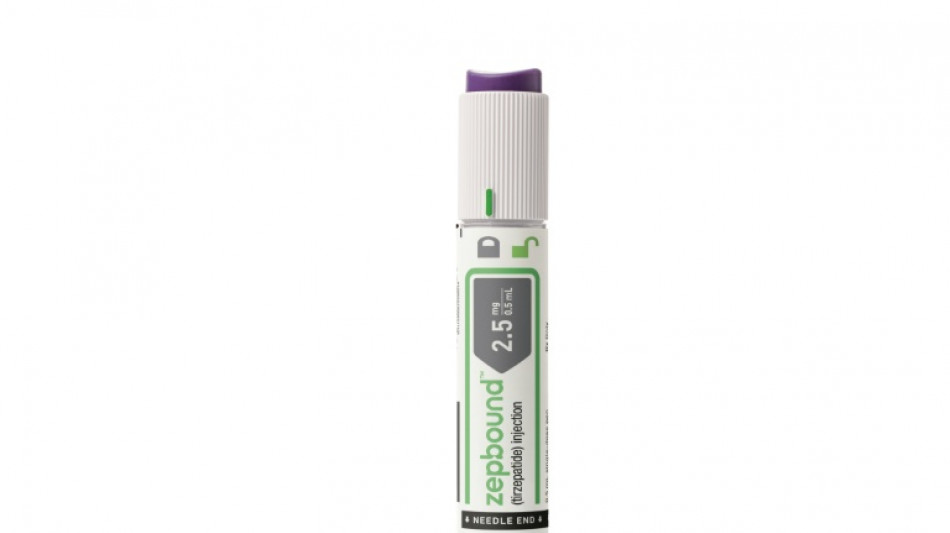
The research was based on weekly injections of tirzepatide, the compound in Eli Lilly's new weight loss drug Zepbound that was approved by the United States last month.

After 36 weeks, 670 adults achieved a notable mean weight loss of 20.9 percent.

The group was then split into two, with half continuing on Zepbound, and the other half given a placebo.

At 88 weeks, those on the placebo regained almost half of the weight they had lost, ending up 9.9 percent lower than their baseline.

Those on Zepbound continued to lose weight, ending 25.3 percent lower than where they had started.

The trial patients were mostly women and had a mean age of 48, with a mean weight at the outset was 107.3 kilograms (236.6 pounds).

All participants were encouraged to consume 500 calories less each day than they burnt and take at least 150 minutes of exercise per week.

Common side effects were gastrointestinal issues including nausea, diarrhea, constipation and vomiting, said the study.

- Growing evidence -

Study authors, led by Louis Aronne at Weill Cornell Medicine, New York, said the results "emphasize the need to continue pharmacotherapy to prevent weight regain and ensure the maintenance of weight reduction."

They added the latest research adds to four previous trials that showed "medications, including potent antiobesity medications such as semaglutide, have demonstrated that weight is substantially regained" after stopping treatment.

Semaglutide is the active ingredient in Novo Nordisk's Ozempic and Wegovy, which, like Zepbound, are examples of so-called "GLP-1 agonists" that work by mimicking the function of a hormone that secretes insulin, slows down the emptying of the stomach, and suppresses appetite.

Zepbound also contains another molecule that acts like the gut hormone GIP.

In response to the study, Lilly's Jeff Emmick said in a statement that "patients, providers and the public do not always understand obesity is a chronic disease that often requires ongoing treatment, which can mean that treatment is stopped once weight goals are met."

GLP-1 agonists have been found to cut the risk of cardiovascular disease associated with obesity -- but they also heighten the risk of gastrointestinal problems, studies show.

Though the rates of serious issues such as stomach paralysis are low, some experts fear that using the drugs for years or decades could change the benefit-to-risk calculus.

Cost can also be a disincentive. Zepbound costs $1,059.87 per month, and insurance companies often do not cover weight loss medications. Medicare, state subsidized insurance for the elderly, is barred from covering it.

S.Suzuki--JT