The Japan Times - Climate change spurring surge in dengue, chikungunya: WHO

EUR -
AED 4.241855
AFN 72.754432
ALL 96.085419
AMD 435.786045
ANG 2.067238
AOA 1058.976619
ARS 1584.416613
AUD 1.668657
AWG 2.081577
AZN 1.963562
BAM 1.958501
BBD 2.324366
BDT 141.598951
BGN 1.973957
BHD 0.4371
BIF 3429.837876
BMD 1.154828
BND 1.483084
BOB 7.992229
BRL 6.039519
BSD 1.154021
BTN 108.748324
BWP 15.866361
BYN 3.465669
BYR 22634.620324
BZD 2.321041
CAD 1.59793
CDF 2639.364949
CHF 0.916119
CLF 0.026908
CLP 1062.27995
CNY 7.978876
CNH 7.987226
COP 4265.678972
CRC 535.051764
CUC 1.154828
CUP 30.602931
CVE 110.419186
CZK 24.48783
DJF 205.509637
DKK 7.471699
DOP 69.577759
DZD 153.567517
EGP 60.919445
ERN 17.322414
ETB 178.357225
FJD 2.596341
FKP 0.863621
GBP 0.864129
GEL 3.112263
GGP 0.863621
GHS 12.616672
GIP 0.863621
GMD 84.881166
GNF 10116.864079
GTQ 8.828404
GYD 241.439229
HKD 9.036947
HNL 30.644056
HRK 7.535594
HTG 151.132345
HUF 387.707374
IDR 19533.908305
ILS 3.605952
IMP 0.863621
INR 108.504369
IQD 1511.824159
IRR 1516461.819995
ISK 142.794582
JEP 0.863621
JMD 181.370119
JOD 0.818764
JPY 184.255628
KES 150.011361
KGS 100.990148
KHR 4621.4733
KMF 493.110949
KPW 1039.411558
KRW 1738.569596
KWD 0.354798
KYD 0.961751
KZT 555.968746
LAK 24926.915142
LBP 103344.902703
LKR 362.949956
LRD 211.76754
LSL 19.74324
LTL 3.409906
LVL 0.698544
LYD 7.369162
MAD 10.774645
MDL 20.270569
MGA 4809.737001
MKD 61.728412
MMK 2425.11916
MNT 4138.703025
MOP 9.299606
MRU 46.033882
MUR 53.849906
MVR 17.842152
MWK 2001.120298
MXN 20.502867
MYR 4.612359
MZN 73.795522
NAD 19.74324
NGN 1600.175159
NIO 42.469671
NOK 11.138601
NPR 173.997719
NZD 1.996437
OMR 0.444039
PAB 1.154016
PEN 3.993912
PGK 4.986964
PHP 69.450197
PKR 322.123193
PLN 4.272562
PYG 7553.009814
QAR 4.207018
RON 5.097294
RSD 117.41827
RUB 93.810626
RWF 1685.267852
SAR 4.332547
SBD 9.287166
SCR 15.993858
SDG 694.05154
SEK 10.849022
SGD 1.482671
SHP 0.86642
SLE 28.350504
SLL 24216.169179
SOS 659.529514
SRD 43.377631
STD 23902.59906
STN 24.534472
SVC 10.098101
SYP 128.697299
SZL 19.737732
THB 37.904329
TJS 11.044217
TMT 4.041896
TND 3.39495
TOP 2.780547
TRY 51.230572
TTD 7.833006
TWD 36.827525
TZS 2967.974997
UAH 50.639111
UGX 4293.013226
USD 1.154828
UYU 46.784924
UZS 14056.506376
VES 533.634686
VND 30430.861232
VUV 137.451427
WST 3.175234
XAF 656.877088
XAG 0.016748
XAU 0.000259
XCD 3.12098
XCG 2.079913
XDR 0.814663
XOF 656.87424
XPF 119.331742
YER 275.599659
ZAR 19.643269
ZMK 10394.833581
ZMW 21.667349
ZWL 371.854006
  • CMSC

    -0.1350

    22.775

    -0.59%

  • JRI

    -0.0300

    12.07

    -0.25%

  • BTI

    -0.1500

    58.3

    -0.26%

  • BCE

    -0.0350

    25.455

    -0.14%

  • RIO

    -1.9700

    85.57

    -2.3%

  • NGG

    -1.6900

    82.6

    -2.05%

  • GSK

    -0.2900

    54.41

    -0.53%

  • AZN

    -3.5200

    183.62

    -1.92%

  • RBGPF

    -13.5000

    69

    -19.57%

  • RYCEF

    -0.6000

    15.3

    -3.92%

  • BCC

    -0.9400

    73.71

    -1.28%

  • BP

    0.9850

    46.395

    +2.12%

  • VOD

    0.0000

    14.72

    0%

  • CMSD

    -0.0300

    22.65

    -0.13%

  • RELX

    -0.1950

    32.275

    -0.6%

Climate change spurring surge in dengue, chikungunya: WHO
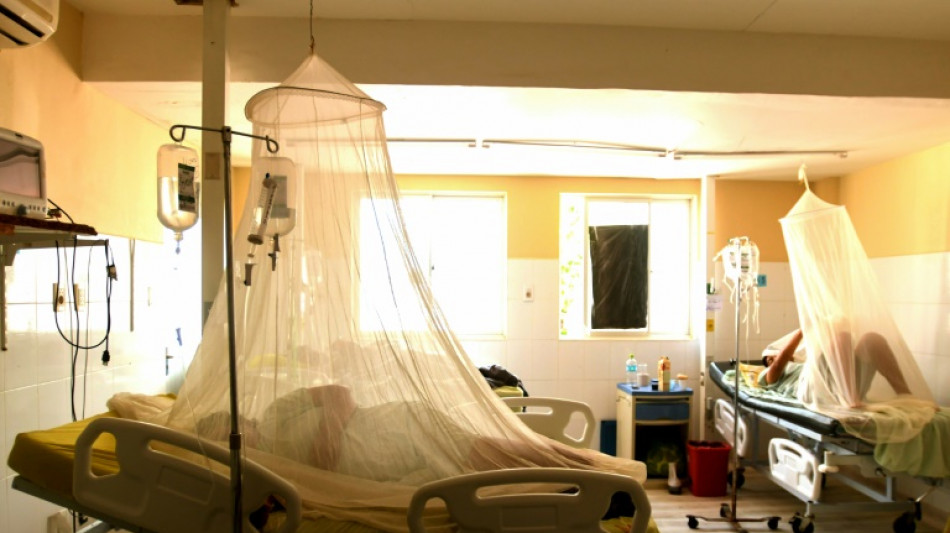
Climate change spurring surge in dengue, chikungunya: WHO / Photo: Rodrigo URZAGASTI - AFP/File

Climate change spurring surge in dengue, chikungunya: WHO

The World Health Organization warned Wednesday that dengue and other diseases caused by mosquito-borne arboviruses were spreading far faster and further amid climate change, warning global outbreaks could be looming.

Text size:

Experts with the United Nations health agency sounded the alarm over swelling numbers of cases of dengue and chikungunya, and warned new epidemics of zika could also be expected.

All three are caused by arboviruses carried by Aedes aegypti mosquitos, which have been spreading into new territory as the planet warms.

"Climate change has played a key role in facilitating the spread of the vector mosquitoes," said Raman Velayudhan, who coordinates WHO's dengue and arbovirus initiative.

He and colleague Diana Rojas Alvarez, WHO's technical lead on chikungunya and zika, stressed the need for urgent action to rein in the spread of the mosquitos, amid fears of larger outbreaks in new areas.

A full 129 countries are already at risk from dengue, including 100 countries where the disease is endemic.

And case numbers have grown exponentially in recent years, jumping from around half a million in 2000 to some 5.2 million in 2019, the worst year on record, Velayudhan told reporters.

Cases were not properly recorded during the Covid pandemic, but he warned that numbers remained high.

In parallel, chikungunya, which to date has been reported in 115 countries since it was discovered in the 1950, is experiencing a dramatic surge in the Americas, Rojas Alvarez told reporters.

So far this year, around 135,000 cases have been reported there, compared to 50,000 cases reported during the first half of 2022, she said.

- 'Alarming' -

Most concerning perhaps is the expanding geographic spread of both diseases, which are being reported further south in the Americas and are also moving into the northern hemisphere, including a number of European countries.

"The mosquitos and these diseases have with climate change been increasing ... by altitude and by latitude," Rojas Alvarez said, describing the situation as "alarming".

"This high transmission (in the Americas) could be an anticipation of what the next summer season in the northern hemisphere might look like," she warned.

The two diseases often cause just mild symptoms like fever, body ache and a rash.

But while most people who catch chikungunya experience symptoms for about a week, a full 40 percent will feel the effects for months and even years.

"It can cause lifelong disability," Rojas Alvarez warned.

With dengue, which comes in four closely related serotypes, people who are reinfected with another serotype often develop severe disease.

This "can lead to organ failure and death", Velayudhan warned, adding that "this is a big threat to the world, because most of the countries now have all four serotypes in circulation."

He called for countries to boost mosquito control and "be on the alert" to detect when the diseases are spreading.

"We really want to avoid any major outbreak."

S.Suzuki--JT