New US rule on abortion pills: What changes? / Photo: Brendan SMIALOWSKI - AFP/File

US public health officials this week authorized pharmacies to sell abortion pills by prescription. What exactly does that change for women in the United States, after several states banned abortion last year?
- Where were they sold before? -
A medication-induced abortion, also known as medical abortion, involves taking two different drugs over the course of one or two days.
The first (mifepristone) blocks the pregnancy, and the second (misoprostol) provokes bleeding to empty the uterus.
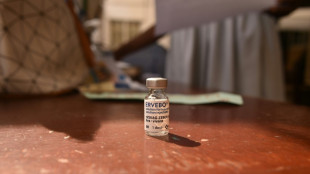
The biggest issues surround mifepristone, which has been authorized and tightly regulated by the US Food and Drug Administration (FDA) since 2000.
The FDA has approved mifepristone to be used through the 10th week of pregnancy.
Until shortly before the Covid pandemic, it could be provided only in person and in specific locales, notably abortion clinics.
But as a result of a lawsuit during the pandemic, the FDA agreed to temporarily allow the drug to be distributed by mail, following a consultation -- in person or remote -- with a doctor.
Then in December 2021, the FDA announced that it was permanently lifting the requirement for in-person delivery of mifepristone.
The agency asked the two pharmaceutical companies supplying it -- Danco Laboratories, which sells it as Mifeprex, and generic manufacturer GenBioPro -- to set up a system allowing wider distribution. That is what was approved this week.
- How does the new system work? -
Pharmacies wishing to sell mifepristone will have to sign a form to be returned to Danco and GenBioPro, guaranteeing that they will be able to dispense the pills to patients within a maximum of four days (if the drug is not stocked on site).
The pharmacy must also stipulate that the prescription comes from a certified medical professional (a doctor or, depending on the state, a nurse).
To be certified, caregivers must themselves fill out a form assuring that they have a relationship with a hospital or clinic that can provide urgent care if needed. They must also obtain a signed consent form from their patients.
Since the doctors themselves are no longer obligated to stock the pills, more might decide to get involved.
It is a "very decentralized system," Kirsten Moore, director of the Expanding Medication Abortion Access Project, told AFP. The FDA "doesn't get involved in the day-to-day management at all."
For Antonia Biggs, a researcher in reproductive health issues at the University of California, San Francisco, the various certifications are unnecessary, but the FDA decision represents "a huge step" -- "it brings medication abortion pills closer to people."
- How soon will pharmacies take part? -
That is unclear. "I would say that in the coming weeks and months, we'll be able to see some more providers" taking part in the program, Jenny Ma, senior counsel with the Center for Reproductive Rights, told AFP.
Two of the biggest US pharmacy chains, Walgreens and CVS, have said they want to participate in the states where it is possible.
- What impact in states where abortion is legal? -
Where abortion is legal, the new measure adds a third option for obtaining the pills, after abortion clinics and the mail. It could allow some women to abort sooner, without waiting for pills to arrive or having to travel to a clinic that may be far away.
"That's going to help tremendously people who live in rural communities," Ma said, particularly those "who might not be able to afford the travel costs."
It could also help women for whom receiving pills by mail might be uncomfortable or complicated, whether young people living with their parents, "people in violent relationships," or those without "stable housing," said Biggs.
Above all, Ma said, "it destigmatizes abortion care; it makes it more similar to any other comparable drug."
- How about states where abortion is illegal? -
A landmark ruling last summer by the US Supreme Court overturned the nationwide right to abortion, allowing each state to pass its own laws governing the procedure.
About a dozen states have since made abortion almost entirely illegal.
In those states, abortion pills remain illegal -- the FDA ruling changes nothing.
"What it will do is make the disparity (between states) even more stark," Ma said.
But women who decide to travel to a state where abortion is legal may now find a pharmacy much closer than an abortion clinic, thereby reducing, and simplifying, their travel.
Y.Mori--JT