Bangladesh revolution sparks new hopes among Rohingya / Photo: Munir UZ ZAMAN - AFP

Rohingya refugee Shonjida has endured years of boredom, misery and violence in Bangladesh -- but last month's overthrow of autocratic ex-premier Sheikh Hasina has given her fresh hope for the future.
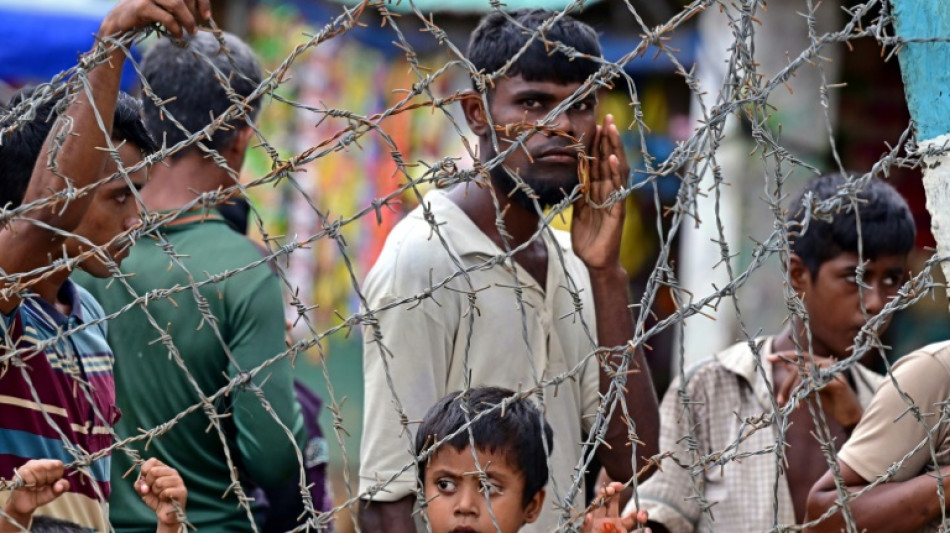
Around a million members of the stateless and persecuted Muslim minority live in a sprawling patchwork of Bangladeshi relief camps after fleeing violence in their homeland next door in Myanmar.
Hasina was lauded by the international community in 2017 for opening the borders to around 750,000 Rohingya who fled a Myanmar military crackdown that is now the subject of a UN genocide investigation.
But the years since have seen rampant malnutrition and regular gun battles in the camps, whose inhabitants hope that Hasina's ouster will bring renewed attention to their plight.
"We and our children live in fear at night because of the shootings," 42-year-old Shonjida, who goes by one name, told AFP.
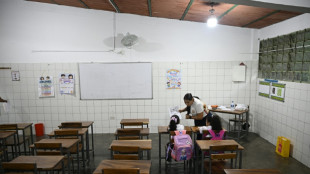
Shonjida teaches at one of a few informal learning centres established for school-aged children in her camp, giving her an unsettling insight into the manifold problems facing her community.
The centres are able to cater to only a fraction of the camp's families, whose status as refugees shuts them out of Bangladeshi schools, universities and the local job market.
Many of her students are undernourished because declining international aid has forced successive ration cuts.
And they are terrified by the sound of rival militant groups battling for control of the camps, with more than 60 refugees killed in clashes so far this year, according to local media reports.
"We want peace and no more gunfire. We want our children to not be scared anymore," Shonjida said.
"Now that the new government is in power, we hope it will give us peace, support, food and safety."
- 'Island jail in the sea' -
Hasina was toppled last month in a student-led uprising that forced her to flee into exile in neighbouring India, moments before thousands of people stormed her palace in the capital Dhaka.
The revolution brought down the curtain on a 15-year rule marred by extrajudicial killings of her opponents, press restrictions and crackdowns on civil society.
Her decision to welcome Rohingya fleeing Myanmar won her some diplomatic reprieve from Washington and other Western capitals, who otherwise issued regular rebukes on abuses committed during her tenure.
But her government's struggles to accommodate the refugees in the following years were also the subject of regular criticism by rights groups.
It relocated at least 36,000 Rohingya to the previously uninhabited and cyclone-prone island of Bhashan Char to ease overcrowding in the camps.
Many of those sent there said they were forced to go against their will, with one refugee describing their new home to Human Rights Watch as "an island jail in the middle of the sea".
The desperate situation in the camps also prompted thousands to embark upon dangerous sea trips to find new refuge in Southeast Asian countries, with many drowning at sea.
- 'How can we go back?' -
Nobel Peace Prize laureate Muhammad Yunus, who is leading an interim government ahead of fresh elections, began his tenure last month by promising to continue supporting the Rohingya.
Many refugees said they had been encouraged by the initial weeks of the 84-year-old's administration.
"We saw on Facebook and YouTube that many of our community leaders had spoken with them and met with them," community leader Hamid Hossain, 48, told AFP. "I am more hopeful now."
But Yunus also said that Bangladesh needed "the sustained efforts of the international community" to look after the Rohingya.
This week he travelled to the United States and lobbied for more foreign aid for the group, with the State Department announcing nearly $200 million in additional funding after Yunus sat for a private meeting with President Joe Biden.
Yunus has also called for accelerated resettlement of Rohingya in third countries, with the prospect of refugees being safely returned to their original homes looking slimmer than ever.
The Rohingya endured decades of discrimination in Myanmar, where successive governments classified them as illegal immigrants despite their long history in the country.
Hasina's government and Myanmar made several abortive plans to establish a repatriation scheme, opposed by refugees who did not want to return home without guarantees of their safety and civic rights.
The security situation has worsened dramatically since last year. Rohingya-majority communities in Myanmar have been the site of intense clashes between the military and a rebel army battling the country's junta.
"There are killings there," refugee Mohammad Johar, 42, told AFP. "How can we go back?"
T.Kobayashi--JT