School's out forever in ageing Japan / Photo: Richard A. Brooks - AFP

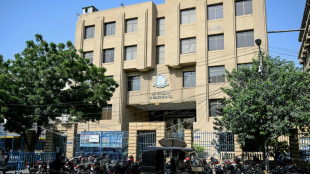
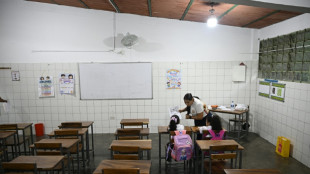
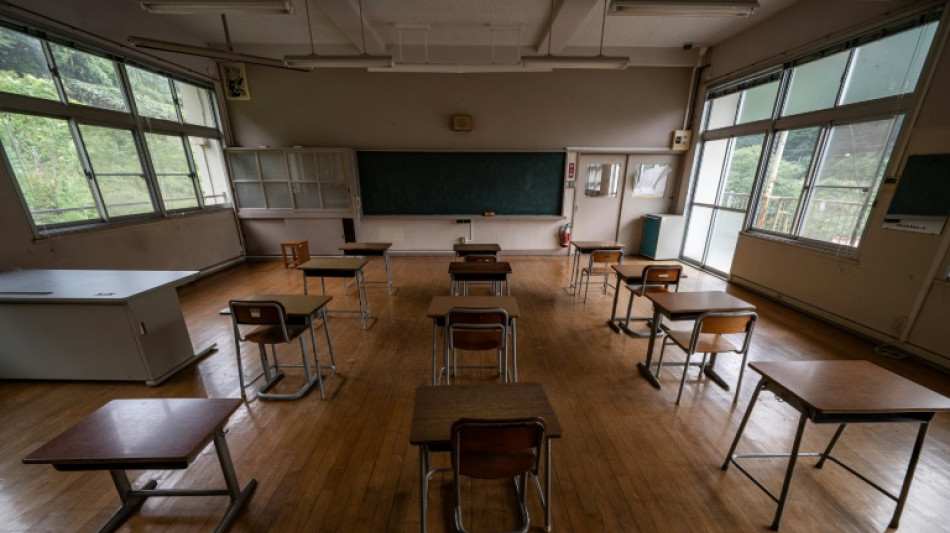
Fading photos of smiling children still adorn the staircase walls at the Ashigakubo primary school, one of thousands that have shut in ageing Japan over the past 20 years.
The school, which was more than a century old, was forced to close in 2009 when the last few dozen children left to join a bigger one "because they couldn't make any friends", mayor Yoshinari Tomita told AFP.
The playground was removed after becoming dangerous due to a lack of maintenance, and the swimming pool is now used by ducks and dragonflies.
But the oldest part of the school, built in 1903, has been preserved, with local authorities working to bring the wooden rooms full of nostalgia back to life.
Public money is available to help municipalities manage old schools and repurpose the disused buildings to best serve their communities.
- 'Make the residents happy' -
Ashigakubo's premises host a weekly parent-child workshop and are sometimes rented for filming, cosplay events -- where fans dress up as game characters -- or business seminars.
And the site is profitable: the town of Yokoze last year made 200,000 yen ($1,340). Before the pandemic, it brought in even more.
It can also serve as an evacuation centre in the event of a natural disaster, after being brought up to required standards in 2019.
For this town of around 7,800 residents whose finances are shrinking along with its population, the Ashigakubo school building was too valuable to do without.
"I want to find ways to reuse (the school) that make the residents of the neighbourhood happy," mayor Tomita said.
- 8,580 schools closed -
Japan has the second oldest population in the world after Monaco.
It has 14.4 million children under the age of 15, barely 11.5 percent of the total population and four million fewer than at the start of the 2000s.
Between 2002 and 2020, 8,580 public schools closed, according to the education ministry.
Of the 7,400 of those still standing in 2021, 74.1 percent were being reused and only 2.9 percent were slated to be demolished.
These figures are, however, misleading because the reuse of buildings is often only partial, as in Ashigakubo.
- Turtles, records and sweet potatoes -
One former school in the Kochi region had its swimming pool turned into an aquarium by a non-profit looking after turtles.
Another in Mie houses a vinyl shop with about 40,000 records in two former classrooms.
In the town of Namegata, the population fell by 20 percent to around 30,000 between 2009 and 2023.
The number of children dropped by more than a third and the number of schools was slashed from 22 to seven.
One of Namegata's disused schools was bought by a company that has transformed it since 2015 into an agricultural leisure park, featuring farm product shops and culinary workshops.
In pride of place is a museum dedicated to sweet potato, a beloved local speciality, including for desserts.
"This makes the residents happy, creates jobs and continues the production of the local speciality of sweet potatoes," said Tetsuro Kinoshita, a manager at the "Namegata Farmers Village".
"This is one of the exemplary cases of reusing a school in the country," said mayor Shuya Suzuki.
The ideal is to "make it something very close to the inhabitants, linked to the region, as the school has long been an emblem of the community", he said.
But other old schools in Namegata, too expensive to renovate, needed to be knocked down.
"This work is expensive and we cannot do it without the support of the state," Suzuki said.
"And we have little time left, because the duration of the subsidies is limited. It is very difficult to manage, but we do not have any other options."
M.Sugiyama--JT