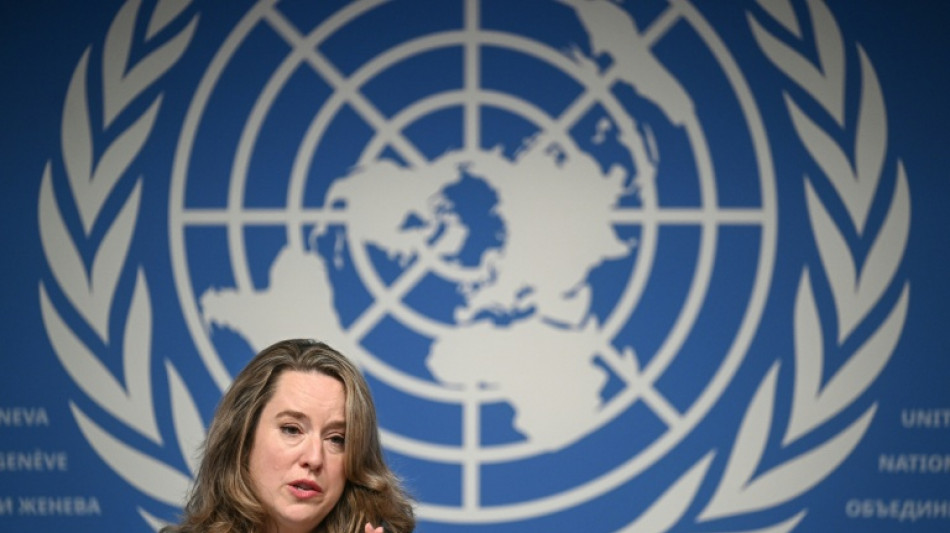
Millions may be forced to move as climate change hits South Asia: UN / Photo: Fabrice COFFRINI - AFP

Climate change is threatening livelihoods and forcing people from their homes across South Asia, but technology and government action could help limit the damage, the UN migration chief told AFP on Friday.
Rising seas, flooding and drought threaten homes and farmland, Amy Pope, Director General of the International Organization for Migration (IOM), said during a visit to New Delhi.
In the Himalayas, she pointed to Nepal's August 26 disaster, when a mountain and glacier collapse triggered deadly flooding, where IOM sent humanitarian aid to help.
In a worst-case scenario, up to 40.5 million people in South Asia may be forced to move by 2050, according to IOM.
"When they can't produce food, when they can't feed their livestock, it increases the likelihood of displacement," said Pope. "The first adaptation is often for people to move."
Pope said climate change was also accelerating urbanisation in India.
"As people seek shelter from heat, they're going into urban centres," she said.
- 'Migration as a tool' -
The risks are particularly acute in South Asia, where vast populations and limited resources leave many communities vulnerable.
"There's a lack of urgency globally about the risks that vulnerable communities are facing," Pope said, warning that funding to help residents prepare for climate change remained inadequate.
"The cost of a humanitarian disaster is in the billions. The cost of investing in some of the resilience measures can be far less," she said.
Better data and artificial intelligence could help governments identify communities at risk before disaster strikes, Pope said.
"With the advancements in AI forecasting, you can now better anticipate those communities that are at high risk of displacement," Pope said.
By combining weather forecasts with information about local livelihoods, authorities can identify which communities most need help.
"If you know a community is at risk, we don't need to wait until they're displaced to respond," she said.
Measures could include improving farming methods, training people for other jobs and, where necessary, relocating communities repeatedly hit by floods or drought.
Finding the money for such programmes is a major obstacle, Pope said, with governments often struggling to navigate the systems available to fund climate adaptation.
India's investments in early-warning systems, disaster response and technology offer grounds for optimism, she said. But no government can meet the scale of the challenge alone.
International migration can also help people earn a living while filling labour shortages abroad.
South Asia already has established migration routes, offering opportunities to build on existing links.
"Here we have government partners who recognise both the threats to their communities but they're also using migration as a tool for development," Pope said.
She warned that growing demand for workers must be matched by safe, legal routes to employment.
Otherwise, migrants risk exploitation by traffickers and smugglers, including through fraudulent overseas job offers.
India's technological capacity could also help its workers compete internationally as artificial intelligence reshapes employment, Pope said.
AI could threaten some jobs, particularly those involving routine analysis of documents and reports, but other sectors still rely heavily on human labour.
"If we can marry that capacity with the labour mobility, so that the workers are being skilled for those jobs as they're emerging, they will be ahead," Pope said.
"This is a place where I have more optimism than in places where we're dealing with the most acute crises," she said.
Y.Mori--JT