The Japan Times - China imposes 'national security' rules on overseas investments

EUR -
AED 4.189014
AFN 72.431472
ALL 93.956358
AMD 419.587061
ANG 2.042211
AOA 1046.537188
ARS 1692.722503
AUD 1.654862
AWG 2.056009
AZN 1.954528
BAM 1.955282
BBD 2.295932
BDT 140.442813
BGN 1.928691
BHD 0.429792
BIF 3392.346377
BMD 1.140643
BND 1.475629
BOB 7.89391
BRL 5.885689
BSD 1.139913
BTN 107.845972
BWP 15.448842
BYN 3.341701
BYR 22356.602362
BZD 2.292533
CAD 1.621078
CDF 2583.556657
CHF 0.922952
CLF 0.026723
CLP 1051.752471
CNY 7.749471
CNH 7.754884
COP 3913.785591
CRC 519.769209
CUC 1.140643
CUP 30.227039
CVE 110.235328
CZK 24.267196
DJF 202.988032
DKK 7.474067
DOP 67.952901
DZD 151.914408
EGP 56.154878
ERN 17.109645
ETB 182.454989
FJD 2.561599
FKP 0.860404
GBP 0.861243
GEL 3.011512
GGP 0.860404
GHS 12.903583
GIP 0.860404
GMD 83.832783
GNF 9992.48557
GTQ 8.696659
GYD 238.436866
HKD 8.94669
HNL 30.50179
HRK 7.533488
HTG 149.042496
HUF 356.076847
IDR 20469.750748
ILS 3.400827
IMP 0.860404
INR 108.036686
IQD 1493.330776
IRR 1569524.737008
ISK 143.789575
JEP 0.860404
JMD 179.601657
JOD 0.808731
JPY 185.632826
KES 147.655742
KGS 99.748808
KHR 4587.845551
KMF 492.75784
KPW 1026.579079
KRW 1770.996664
KWD 0.353188
KYD 0.949965
KZT 546.247336
LAK 25566.790719
LBP 102076.32452
LKR 383.015226
LRD 206.884314
LSL 18.655269
LTL 3.368022
LVL 0.689964
LYD 7.323157
MAD 10.712963
MDL 20.142108
MGA 4835.698394
MKD 61.635434
MMK 2394.907224
MNT 4086.905405
MOP 9.207923
MRU 45.550538
MUR 53.792431
MVR 17.634306
MWK 1976.567975
MXN 19.98817
MYR 4.667538
MZN 72.830569
NAD 18.655269
NGN 1574.281378
NIO 41.949444
NOK 11.327554
NPR 172.556579
NZD 2.010321
OMR 0.438575
PAB 1.139893
PEN 3.89592
PGK 5.00674
PHP 70.270407
PKR 316.977838
PLN 4.298964
PYG 6932.225242
QAR 4.166678
RON 5.243761
RSD 117.324291
RUB 89.936956
RWF 1670.850264
SAR 4.279123
SBD 9.199332
SCR 16.874381
SDG 684.980032
SEK 11.091362
SGD 1.478125
SHP 0.851605
SLE 28.290454
SLL 23918.7171
SOS 651.424659
SRD 42.779245
STD 23609.006688
STN 24.493837
SVC 9.974534
SYP 126.077661
SZL 18.652306
THB 38.045572
TJS 10.532465
TMT 4.003657
TND 3.378291
TOP 2.746395
TRY 53.239603
TTD 7.737121
TWD 36.354574
TZS 2999.888714
UAH 51.08425
UGX 4177.893767
USD 1.140643
UYU 45.757684
UZS 13684.556527
VES 709.757701
VND 30018.301243
VUV 136.989364
WST 3.171996
XAF 655.780486
XAG 0.019877
XAU 0.000288
XCD 3.082645
XCG 2.054392
XDR 0.81558
XOF 655.791982
XPF 119.331742
YER 272.162817
ZAR 18.738198
ZMK 10267.163288
ZMW 20.54692
ZWL 367.286573
  • CMSD

    0.0000

    21.9

    0%

  • CMSC

    -0.0528

    21.64

    -0.24%

  • RIO

    0.6400

    94.93

    +0.67%

  • NGG

    -0.8900

    82.87

    -1.07%

  • GSK

    -0.3900

    52.42

    -0.74%

  • BCC

    -1.6300

    77.63

    -2.1%

  • JRI

    0.1000

    12.96

    +0.77%

  • BCE

    -0.7500

    21.51

    -3.49%

  • RBGPF

    0.6100

    65.61

    +0.93%

  • BTI

    -0.9800

    61.76

    -1.59%

  • AZN

    -1.3300

    189.62

    -0.7%

  • BP

    -0.4000

    36.95

    -1.08%

  • RELX

    0.3800

    31.67

    +1.2%

  • RYCEF

    0.7100

    19.1

    +3.72%

  • VOD

    -0.4650

    13.225

    -3.52%

China imposes 'national security' rules on overseas investments
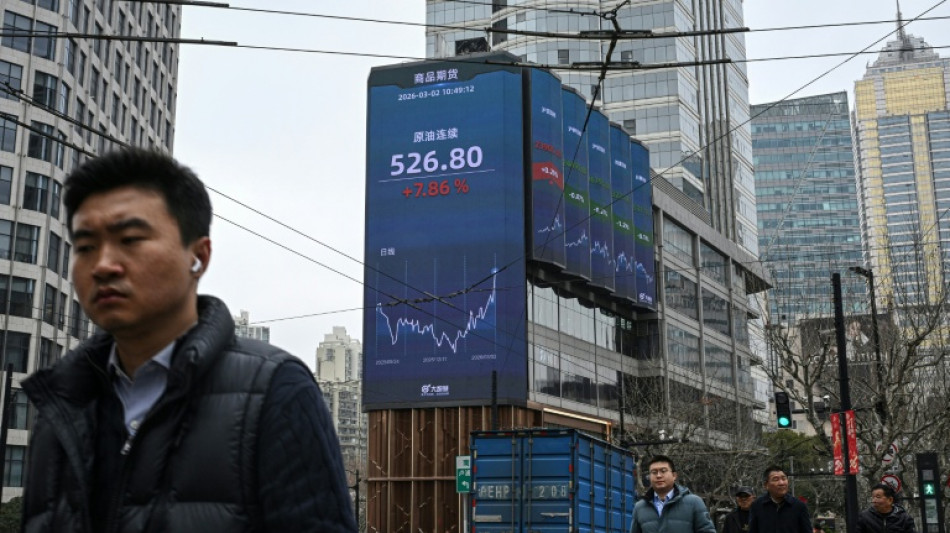
China imposes 'national security' rules on overseas investments / Photo: Jade GAO - AFP/File

China imposes 'national security' rules on overseas investments

China is intensifying its scrutiny of investments overseas with broad "national security" regulations taking effect from Wednesday, at a time of rising tech competition with Washington.

Text size:

The new rules, originally announced on June 1, provide authorities with a sweeping legal framework to influence flows of capital and personnel across China's borders.

Beijing sees fields such as artificial intelligence, computer chips and green technology as economically and strategically vital and has vowed to promote their domestic development.

The new measures are intended to "enhance the quality and level of outward investment", according to the provisions laid out by the State Council, China's cabinet.

However, some investors worry they will restrict the ability of China's bustling and sprawling tech ecosystem to access global markets.

Outbound investment should adhere to the "overall national security concept", the regulations state, while aiming to "balance domestic and international considerations".

The new framework also authorises the government to conduct reviews of investments or transfers that could impact national security.

Beijing often views cross-border transactions with suspicion, with its top economic planning body striking down in April an attempt by Facebook owner Meta to acquire AI startup Manus, which was created by a company founded in China but now based in Singapore.

Under the new rules, existing curbs on cross-border transfers will extend beyond goods and data to include the export of services through sending technical experts abroad or carrying out training overseas.

The US-China Economic and Security Review Commission said on social media this week that the move reinforces a trend it has tracked for months.

The bipartisan commission warned in May that, "as is often the case for China's national security-related laws, enforcement authorities have immense discretion to determine what constitutes a violation, creating further risk for foreign firms".

Beijing is looking to protect domestic AI prowess in its competition with Washington, but the new rules risk cutting off other parts of the world from Chinese investments, Alicia Garcia-Herrero, Asia-Pacific chief economist at Natixis, told AFP.

"This is terrible for Europe, because if anybody were to believe that we would rely on China's open-weight (AI) models, this is wrong -- we can't," she said, adding that the continent also cannot depend on Chinese talent to develop its own models due to Beijing's stringent cross-border curbs.

With the US-China tech race showing no signs of stopping, Europe will need to seek strategic partnerships with other key players, including South Korea and Japan, "if they want to stand a chance of not becoming too dependent", she said.

T.Shimizu--JT