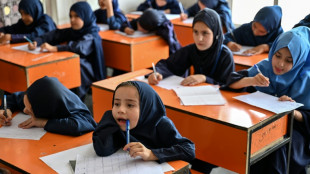
Viral bullying videos test Bhutan's digital transition / Photo: Arun SANKAR - AFP/File

In the Himalayan kingdom of Bhutan, which has long limited outside influence, viral videos of school bullying have triggered debate over social media's erosion of traditional values.
Footage of fighting pupils circulated across Facebook, X, Reddit and Telegram in early June, sparking outrage and probes by police and education authorities.
Filmed by classmates as others looked on, the videos showed secondary school girls slapping and punching another student to the ground.
Bhutan carefully controls tourism and foreign access, and only introduced television and the internet in 1999 under a cautious modernisation programme designed to protect its distinct culture.
At the same time, social media has become increasingly popular, acting as a bridge to the outside world for the population of around 800,000.
For many, this month's incident felt at odds with Bhutan's self-cultivated image as a peaceful Buddhist nation that has sought to prioritise social wellbeing over material growth through its "Gross National Happiness" philosophy.
The school, Lungtenzampa Middle Secondary School in the capital Thimphu, said the situation was being treated with "the utmost seriousness".
Students have been suspended and the videos taken down after the incident, which has raised broader questions about youth behaviour, digital responsibility, misinformation and how technology shapes society.
- 'Disturbing' -
Bhutan's National Commission for Women and Children urged the public not to share the footage, warning that it "may cause further harm, trauma, stigmatisation, and victimisation of the children concerned".
For Sangay Dema, a 32-year-old who found the video on her feed, it was deeply upsetting.
"As a mother myself, I couldn't even fall asleep at night and images kept flashing in my memory," she said. "It was that disturbing."
Bhutan has an overall internet penetration rate of 88 percent, and 485,000 social media user identities, according to analytics site DataReportal.
There has been no indication that the nation -- where more than half the population is under 28 -- is considering banning young teens from social platforms, a move taken by an increasing number of governments.
"Social media has democratised access to information, civic participation and opportunities for youth," said Tandin Wangmo, head of the Bhutan Centre for Media and Democracy, a rights group.
"But it also has the potential to amplify outrage, public shaming and hate speech," she told AFP. "Everybody is a judge."
Dorji Gyeltshen, a 24-year-old content creator who saw the footage on Telegram, said that children with access to phones and tablets can be easily influenced.
"The content we consume has a significant impact on our lives," Gyeltshen said.
- 'Becoming bullies themselves' -
Bhutan has embraced technology -- including hydropower-backed cryptocurrency mining -- as it seeks to create jobs and curb the migration of its young people to countries such as Australia.
Yet its digital transformation has also brought new social challenges.
Children in Bhutan "face new challenges as the traditional layers of protection offered by families and communities are weakened" amid rapid modernisation, economic development and increasing urbanisation, according to the UN children's fund.
Six out of 10 children in Bhutan have experienced some form of physical violence, Unicef says, using data from a 2016 government study.
"A lot of what we see now is not new behaviour, but things that were once hidden behind closed doors," said company employee Srijana Giri, 31.
"The kind of online culture I would like to see in Bhutan is one where adults actually behave like adults -- not acting like judges or gods trying to punish others, while becoming bullies themselves in the process," she said.
M.Fujitav--JT