Mideast war forces EU to slash eurozone 2026 growth forecast / Photo: - - AFP/File

The eurozone economy will expand less than expected this year, the EU said Thursday, as the Middle East war and subsequent energy shock take their toll.
The European Commission said the single currency area's economy is expected to grow 0.9 percent in 2026, down from a previous prediction of 1.2 percent.
The EU also sharply raised its prediction for inflation in the 21-nation eurozone this year to 3.0 percent, up from 1.9 percent in the last forecast and well above the European Central Bank's target of two percent.
EU economy chief Valdis Dombrovskis pointed to the conflict in the Middle East, which "triggered a major energy shock, further testing Europe as it navigates an already volatile geopolitical and trade environment".
Households and businesses will have to pay more for energy because of the spike in fuel prices, the EU said, pushing the bloc's economic output down.
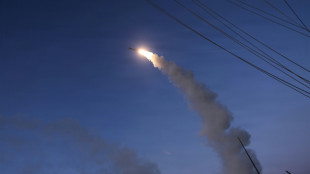
Energy prices surged after Tehran retaliated to US-Israeli strikes with attacks on neighbouring countries and effectively closed the Strait of Hormuz, through which a fifth of the world's oil supply transited before the war.
Since the European Union is a net energy importer, the 27-nation bloc is extremely vulnerable to any fluctuations in energy prices.
Many EU states including Poland and Spain have sought to contain energy costs with tax reductions, caps on fuel prices and other measures, but Brussels has urged countries to take temporary and targeted steps.
The EU is facing its second energy shock after a first crisis following Russia's 2022 invasion of Ukraine, which led to double-digit highs in inflation.
Dombrovskis said the EU had to learn from the shocks by "further reducing its reliance on imported fossil fuels".
- 'Stagflationary shock' -
The forecasts come after the EU warned the war was causing a "stagflationary shock" in Europe, when slower growth coincides with higher inflation.
The commission predicted growth in 2026 will be 1.1 percent for the European Union as a whole, another downward revision to the previous forecast of 1.4 percent.
But with uncertainty over how long the Middle East conflict will last, Brussels warned that Europe could face a worse scenario if energy prices keep rising until the end of the year.
"Under this scenario, inflation would not ease and economic activity would fail to rebound in 2027," the commission said.
Thursday's announcement reflects a marked change from how the EU thought the European economy would fare, with expectations that it would expand -- albeit at a moderate pace -- and that inflation would remain in line with the ECB's two-percent target.
There had also been high hopes in November that Germany, the EU's largest economy, would rebound this year and grow by 1.2 percent overall, but that was sharply cut to 0.6 percent Thursday.
The EU executive expects 2027 will be a better year, though it still cut its forecast for economic growth in the eurozone to 1.2 percent, after predicting in November it would reach 1.4 percent.
For the EU as a whole, Brussels trimmed its 2027 growth forecast to 1.4 percent from 1.5 percent.
"The situation is set to improve slightly in 2027 if tensions on energy markets ease," the commission said.
Brussels expects energy prices to fall gradually and eurozone inflation to reach 2.3 percent in 2027, up from the previous prediction of 2.0 percent.
Y.Kato--JT