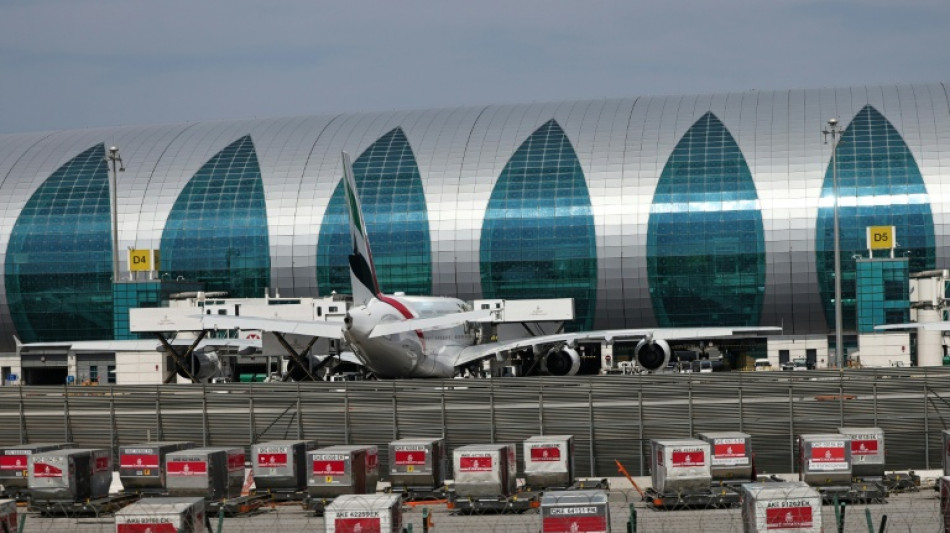
Aviation, tourism, agriculture... the economic sectors hit by the war / Photo: - - AFP

The war in the Middle East is impacting numerous economic sectors and not only in the region, both by direct disruptions and rising fuel prices.
- Aviation -
Airlines bore an immediate impact from the outbreak of hostilities as they cancelled flights to the region.
While airlines based in the Middle East account for only 9.5 percent of global capacity, they play an outsized role they have developed into a major hub for long-haul travel between Europe and Asia.
These airlines have been particularly hard hit.
Qatar Airways has had to cancel nearly 91 percent of its flights since the fighting broke on February 28, according to aviation data firm Cirium.
Abu Dhabi-based Etihad has cancelled nearly three-quarters of its flights and Dubai-based Emirates nearly half.
But all airlines feeling the heat from soaring prices of jet fuel, which has more than doubled from pre-war levels.
Fuel accounts for between a quarter and a third of the operating costs of airlines, and some have already begun to pass along the higher costs to consumers by adding surcharges or hiking fares.
Several airlines have begun cutting back on their service schedules due to higher jet fuel costs as well as limited stocks, which have disrupted by the conflict and export restrictions some countries have imposed.
- Tourism -
Disruptions and higher airline ticket prices will have an impact on the willingness and financial means of tourists to travel.
Oxford Economics estimates that even with a quick end to the conflict the Middle East is facing an 11-27 percent drop in visitor arrivals this year, against previously forecast 13 percent growth.
But with Middle East airlines being important travel hubs and airlines everywhere raising fares the impact is likely to be wider.
The conflict could cause a reduction in 116 million visits and 858 million nights in hotel stays outside the Middle East this year, Oxford Economics estimates.
Some countries might benefit from tourists choosing its beaches over those in the Middle East region, however, such as Spain and Portugal, it noted.
In Europe, there was a six percent drop in hotel revenue per room, a key financial metric, during the first week of the war, according MKG Consulting.
Over the following two weeks the drop was just one percent in Britain and France, but 23.5 percent in Ireland and 15.4 percent in Portugal, two countries more dependent upon foreign tourists.
- Maritime transport -
Maritime transport carries 80 percent of the goods traded in the world. Fuel costs, which are up an average of 20 percent for ships, will raise overall shipping costs.
While shipping between Asia and North America has been little affected, routes between Asia and Europe, as well as Asia and Africa, have been impacted as ports in the Gulf and Red Sea are often used as transfer zones, said Cyrille Poirier Coutansais at the French defence ministry's maritime security research centre.
Shipping companies also have a number of vessels blocked in the Gulf.
Those that don't want to travel through the Red Sea and take the Suez Canal have to take the considerably longer route around Africa, increasing delivery times and shipping costs.
- Agriculture -
The Gulf region produces around 30 percent of the world's fertiliser, which is key agricultural input in terms of cost as well as ensuring high yields.
The region is a big supplier for Asian nations, several of which have had to suspend their own output as the price of natural gas used in its production has soared.
There are concerns that an extended conflict could result in shortages while high prices could force some farmers to do without.
Farmers are also facing higher costs of diesel for their tractors and other equipment, as well as for gas to heat greenhouses and animal enclosures.
- Luxury -
The Middle East is an important market for the luxury industry and the Abu Dhabi, Doha and Dubai airports were also important distribution hubs.
Analysts at Bernstein expect luxury sales in the region to be cut in half in March, mainly due to a drop in tourism.
Y.Ishikawa--JT