The Japan Times - US-China 'Board of Trade' may help ties but experts flag market worries

EUR -
AED 4.310347
AFN 73.9416
ALL 95.378956
AMD 432.006525
ANG 2.100496
AOA 1077.439046
ARS 1625.549388
AUD 1.621286
AWG 2.11556
AZN 1.990162
BAM 1.955369
BBD 2.364178
BDT 144.288165
BGN 1.955935
BHD 0.443002
BIF 3494.129079
BMD 1.173681
BND 1.49427
BOB 8.111245
BRL 5.764181
BSD 1.173841
BTN 112.192247
BWP 15.844504
BYN 3.281876
BYR 23004.148522
BZD 2.360779
CAD 1.607503
CDF 2611.439995
CHF 0.915935
CLF 0.027241
CLP 1072.110876
CNY 7.971761
CNH 7.969342
COP 4445.915543
CRC 535.681811
CUC 1.173681
CUP 31.102548
CVE 110.241147
CZK 24.338858
DJF 209.023882
DKK 7.47136
DOP 69.274716
DZD 155.389871
EGP 62.087964
ERN 17.605216
ETB 183.281862
FJD 2.565491
FKP 0.859811
GBP 0.867004
GEL 3.133946
GGP 0.859811
GHS 13.252133
GIP 0.859811
GMD 86.267542
GNF 10299.727538
GTQ 8.956062
GYD 245.576864
HKD 9.188338
HNL 31.213113
HRK 7.533848
HTG 153.356165
HUF 357.714274
IDR 20605.731302
ILS 3.420048
IMP 0.859811
INR 112.251445
IQD 1537.647643
IRR 1539869.533619
ISK 143.599265
JEP 0.859811
JMD 185.479077
JOD 0.83217
JPY 185.034927
KES 151.59245
KGS 102.638314
KHR 4708.961047
KMF 492.945358
KPW 1056.334357
KRW 1753.356269
KWD 0.361623
KYD 0.978176
KZT 544.445239
LAK 25732.103402
LBP 105114.312701
LKR 379.143118
LRD 214.812605
LSL 19.402554
LTL 3.465575
LVL 0.709948
LYD 7.426361
MAD 10.712782
MDL 20.089396
MGA 4904.917812
MKD 61.641379
MMK 2463.502229
MNT 4202.776117
MOP 9.465212
MRU 46.823669
MUR 54.805289
MVR 18.073251
MWK 2035.55089
MXN 20.219566
MYR 4.617232
MZN 75.009859
NAD 19.402554
NGN 1608.811319
NIO 43.200469
NOK 10.782643
NPR 179.507395
NZD 1.971268
OMR 0.451287
PAB 1.173846
PEN 4.023012
PGK 5.112872
PHP 72.210145
PKR 326.995754
PLN 4.25301
PYG 7165.419071
QAR 4.278774
RON 5.203278
RSD 117.378615
RUB 86.652585
RWF 1716.821212
SAR 4.405144
SBD 9.423496
SCR 16.562616
SDG 704.797057
SEK 10.907482
SGD 1.492799
SHP 0.876271
SLE 28.901914
SLL 24611.508992
SOS 670.851988
SRD 43.724896
STD 24292.828021
STN 24.494596
SVC 10.270646
SYP 129.726289
SZL 19.395721
THB 37.981501
TJS 10.975179
TMT 4.107884
TND 3.413761
TOP 2.825943
TRY 53.295921
TTD 7.966175
TWD 36.989266
TZS 3051.746463
UAH 51.591117
UGX 4412.045352
USD 1.173681
UYU 46.6799
UZS 14239.858215
VES 591.868057
VND 30913.585098
VUV 138.87399
WST 3.179848
XAF 655.812306
XAG 0.013442
XAU 0.000248
XCD 3.171932
XCG 2.115515
XDR 0.81562
XOF 655.812306
XPF 119.331742
YER 280.099047
ZAR 19.379706
ZMK 10564.54125
ZMW 22.097125
ZWL 377.924818
  • RBGPF

    0.0000

    61

    0%

  • CMSD

    -0.0100

    23.6

    -0.04%

  • RYCEF

    -0.3900

    16.2

    -2.41%

  • NGG

    0.0800

    87.24

    +0.09%

  • BCE

    0.1900

    24.47

    +0.78%

  • RIO

    1.6000

    109.5

    +1.46%

  • BTI

    3.2000

    63.64

    +5.03%

  • RELX

    -0.5000

    32.77

    -1.53%

  • GSK

    1.0900

    50.9

    +2.14%

  • CMSC

    -0.0100

    23.11

    -0.04%

  • BCC

    -1.2700

    67.93

    -1.87%

  • JRI

    0.0100

    13.14

    +0.08%

  • AZN

    2.6800

    184.54

    +1.45%

  • VOD

    -1.2250

    15.095

    -8.12%

  • BP

    0.1800

    44.4

    +0.41%

US-China 'Board of Trade' may help ties but experts flag market worries
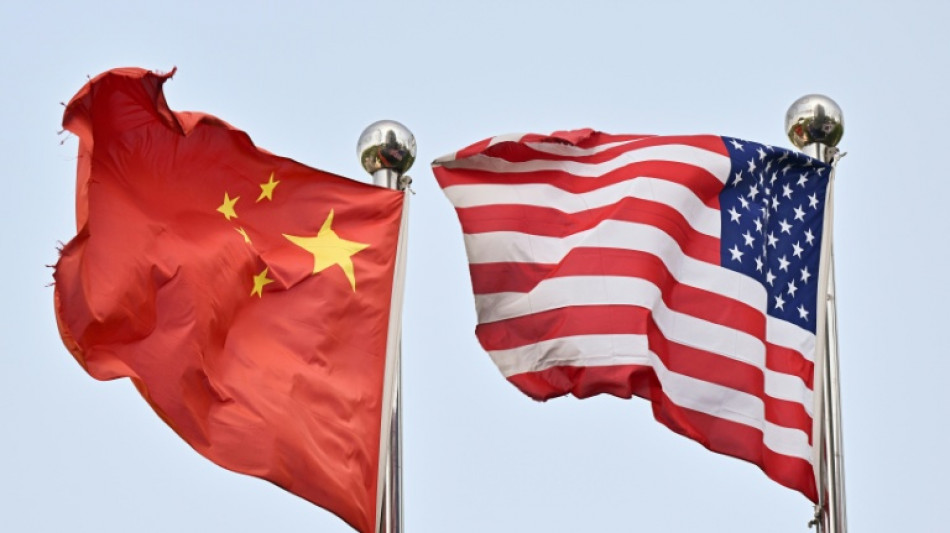
US-China 'Board of Trade' may help ties but experts flag market worries / Photo: Pedro Pardo - AFP/File

US-China 'Board of Trade' may help ties but experts flag market worries

As Washington and Beijing mull a new mechanism to adjust trade between the world's two largest economies, some analysts warn that it could interfere with market forces, while others consider it a path to smoother coexistence.

Text size:

What is the managed approach to trade that Donald Trump's administration is seeking with China, as both sides work towards the US president's potential meeting with Chinese leader Xi Jinping in the coming weeks?

- What is a 'Board of Trade'? -

After top US economic officials held talks with their Chinese counterparts in Paris last weekend, US trade envoy Jamieson Greer said both sides discussed creating a "US-China Board of Trade."

The mechanism would help to formalize and identify what kinds of goods the United States should be exporting to and importing from China, he said.

The board could look into opportunities for expanding trade in non-sensitive products, or discuss mutual tariff reduction in non-strategic sectors, said Wendy Cutler of the Asia Society Policy Institute.

For now, officials appear to have made progress towards Chinese purchase commitments for agriculture, energy and planes from the United States, added Cutler, a former US trade official.

- Is this new to US-China ties? -

The talks come as Washington looks towards "managed trade," which Chad Bown of the Peterson Institute for International Economics said focuses on outcomes rather than policies.

This could mean import commitments or voluntary export restraints, as in the case of Japan in the 1980s to manage the flow of autos into the United States, he said.

A more recent example is the "Phase One" deal that Washington signed with Beijing during Trump's first presidency, marking a truce in their trade war, Bown added.

The agreement saw China agree to import an added $200 billion in US products over two years -- although China did not meet the commitment.

- Why has this sparked worry? -

"Instead of taking regulations out, tariffs down, and making it easier for customers and companies to decide what they sell at what prices, it (would be) more mechanized," said Joerg Wuttke, a partner at advisory firm DGA-Albright Stonebridge Group.

"That's not a good sign," he told AFP. "Where are the market forces?"

Such an approach is also not good for competitiveness, and could fuel concern among other trading partners, Wuttke warned.

A US-based business leader, speaking on condition of anonymity, said that managing trade raises concerns over how Washington will decide which industries to prioritize, and which sectors will benefit.

- Does it help the relationship? -

Bown of PIIE believes a managed trade agreement between the United States and China could be more successful than previous attempts to solve economic conflicts.

The question is whether this leads to "a more sustainable, longer-term relationship" that is better than a "constant back and forth of conflict," he said.

"It's clear the old system didn't work. Could we try a new system that might work?"

But any trade agreement would have to be realistic and acceptable to both parties.

"You'd have to have a sincere commitment by both sides to make this work," he added. "Even then, it's going to be really, really hard."

H.Takahashi--JT