The Japan Times - Mideast energy shock rattles eurozone rate-setters

EUR -
AED 4.197002
AFN 73.140161
ALL 94.221852
AMD 420.431174
ANG 2.046105
AOA 1048.53997
ARS 1693.080711
AUD 1.650828
AWG 2.057073
AZN 1.944375
BAM 1.960756
BBD 2.30239
BDT 140.837811
BGN 1.932369
BHD 0.430995
BIF 3401.768078
BMD 1.142818
BND 1.479759
BOB 7.91632
BRL 5.930769
BSD 1.143089
BTN 108.172064
BWP 15.492767
BYN 3.351114
BYR 22399.241261
BZD 2.298941
CAD 1.622271
CDF 2599.911954
CHF 0.922477
CLF 0.026777
CLP 1053.905044
CNY 7.764251
CNH 7.764326
COP 3945.032082
CRC 521.210499
CUC 1.142818
CUP 30.284688
CVE 110.549731
CZK 24.264434
DJF 203.562512
DKK 7.474627
DOP 68.143124
DZD 152.196154
EGP 56.214896
ERN 17.142276
ETB 182.973764
FJD 2.561913
FKP 0.862417
GBP 0.861257
GEL 3.016641
GGP 0.862417
GHS 12.942543
GIP 0.862417
GMD 83.996472
GNF 10020.589722
GTQ 8.721004
GYD 239.113767
HKD 8.962228
HNL 30.587711
HRK 7.536314
HTG 149.459716
HUF 355.82912
IDR 20494.677203
ILS 3.405656
IMP 0.862417
INR 108.061823
IQD 1497.504543
IRR 1572518.161721
ISK 143.983671
JEP 0.862417
JMD 180.105209
JOD 0.810263
JPY 185.699942
KES 147.971655
KGS 99.939768
KHR 4600.80954
KMF 493.697756
KPW 1028.536988
KRW 1770.282854
KWD 0.353988
KYD 0.952645
KZT 547.771663
LAK 25638.13596
LBP 102366.558542
LKR 384.09583
LRD 207.516241
LSL 18.706589
LTL 3.374446
LVL 0.691279
LYD 7.343786
MAD 10.744272
MDL 20.198847
MGA 4849.320128
MKD 61.634938
MMK 2399.332964
MNT 4093.643262
MOP 9.234064
MRU 45.676246
MUR 53.929465
MVR 17.667775
MWK 1982.187959
MXN 19.958292
MYR 4.667153
MZN 72.969015
NAD 18.707328
NGN 1577.809619
NIO 42.066875
NOK 11.314759
NPR 173.042659
NZD 2.010429
OMR 0.439402
PAB 1.143124
PEN 3.906826
PGK 5.020844
PHP 70.278193
PKR 317.865165
PLN 4.296975
PYG 6951.783283
QAR 4.178489
RON 5.238337
RSD 117.344547
RUB 89.823922
RWF 1675.600999
SAR 4.295012
SBD 9.216877
SCR 15.721551
SDG 686.261457
SEK 11.066477
SGD 1.478367
SHP 0.853229
SLE 28.331624
SLL 23964.335291
SOS 653.271126
SRD 42.860832
STD 23654.034194
STN 24.56208
SVC 10.002544
SYP 126.318119
SZL 18.70411
THB 37.926146
TJS 10.562505
TMT 4.011293
TND 3.387762
TOP 2.751633
TRY 53.320023
TTD 7.758712
TWD 36.35362
TZS 2999.896091
UAH 51.229048
UGX 4189.717672
USD 1.142818
UYU 45.888189
UZS 13722.322444
VES 711.111364
VND 30073.267029
VUV 137.084557
WST 3.17811
XAF 657.645069
XAG 0.019916
XAU 0.000287
XCD 3.088524
XCG 2.060089
XDR 0.818528
XOF 657.6393
XPF 119.331742
YER 272.679534
ZAR 18.723812
ZMK 10286.739741
ZMW 20.604889
ZWL 367.987069
  • RYCEF

    0.7600

    19.15

    +3.97%

  • RBGPF

    0.6100

    65.61

    +0.93%

  • CMSC

    0.0372

    21.73

    +0.17%

  • RIO

    0.1500

    94.44

    +0.16%

  • BP

    -0.4150

    36.935

    -1.12%

  • BTI

    -0.7400

    62

    -1.19%

  • GSK

    -0.2950

    52.515

    -0.56%

  • NGG

    -0.6950

    83.065

    -0.84%

  • BCE

    -0.5950

    21.665

    -2.75%

  • CMSD

    0.0950

    21.995

    +0.43%

  • RELX

    0.1450

    31.435

    +0.46%

  • JRI

    0.0400

    12.9

    +0.31%

  • BCC

    -0.9900

    78.27

    -1.26%

  • VOD

    -0.5200

    13.17

    -3.95%

  • AZN

    -2.6050

    188.345

    -1.38%

Mideast energy shock rattles eurozone rate-setters
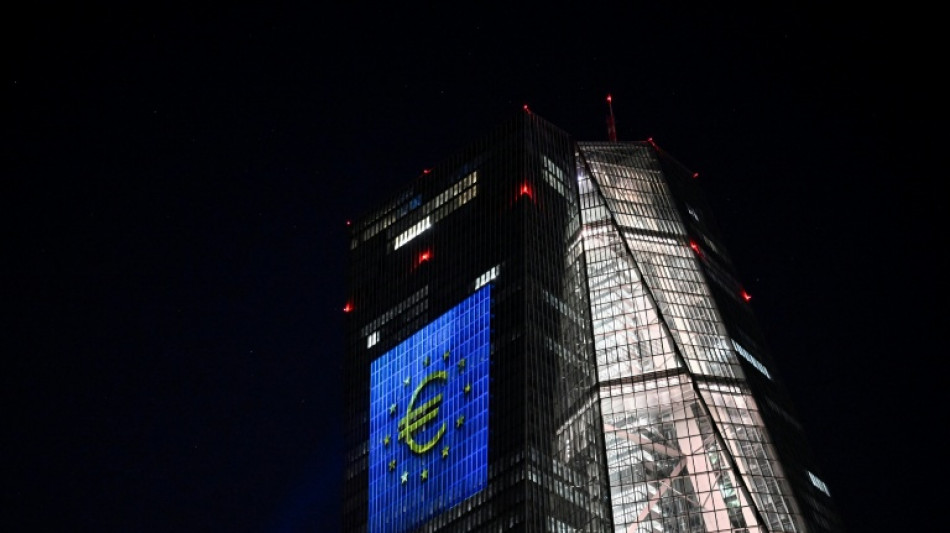
Mideast energy shock rattles eurozone rate-setters / Photo: Kirill KUDRYAVTSEV - AFP

Mideast energy shock rattles eurozone rate-setters

The energy shock unleashed by the Middle East war will top the agenda at Thursday's European Central Bank meeting, as fears grow of a major hit to the eurozone economy.

Text size:

The surge in oil and gas prices triggered by the conflict has fuelled worries of a new burst of inflation in the 21-nation euro area, which is heavily dependent on energy imports.

This would weigh on households and businesses -- with energy-hungry manufacturers set to be especially hard hit -- and could dent the region's already tepid growth.

But while price rises can prompt interest rate hikes, the ECB is expected to stay on hold this time as policymakers assess the fallout from the war, which is just three weeks in.

With no signs so far of core inflation rising, the rate-setters "don't really have an argument for a rate hike", Reinhard Pfingsten, chief investment officer at apoBank, told AFP. "So they’ll just muddle through."

Other central banks meeting this week are taking the same approach.

The US Federal Reserve kept rates on hold Wednesday for its second straight meeting, as it faces a tough balancing act between fears the war could push up inflation and signs of a weakening labour market.

The Bank of England is also expected to keep borrowing costs steady when it meets Thursday.

- 'Everything necessary' -

In the eurozone, the key deposit rate has been at two percent since June, and inflation has been hovering around the ECB's two percent target.

However, headline inflation figures will likely jump in coming months as the impact of the war -- which began with US-Israeli strikes on Iran before Iranian retaliatory strikes spread across the region -- filter through more strongly to the real economy.

At ECB chief Christine Lagarde's post-rate call news conference, she will likely reiterate a message she delivered last week -- that officials will do "everything necessary" to keep inflation in check.

Still, most economists also expect her to repeat recent comments that rates remain in a "good place", at least for now.

She may also seek to downplay the parallels with the inflation shock that followed Russia's 2022 full-scale invasion of Ukraine, when the ECB was criticised for being too slow to hike rates.

Jack Allen-Reynolds, deputy chief eurozone economist at Capital Economics, told AFP the economic backdrop then was very different.

In 2022, loose monetary and fiscal policy combined with an energy shock and supply constraints to create a "perfect storm for inflation", he said.

"We're not in that world now."

Nevertheless, investors will be looking out for any hints that rate hikes could be on the horizon at the ECB's next meetings, in April or June, although Lagarde is expected to stay tight-lipped.

She could also face questions over her own future after the Financial Times reported last month, citing an anonymous source, that she would step down before her term ends in October 2027.

She has since insisted that her "baseline" is that she will finish her term.

Y.Ishikawa--JT