The Japan Times - Germany raises growth forecasts, but warns reforms needed

EUR -
AED 4.34565
AFN 76.914273
ALL 96.607572
AMD 446.36223
ANG 2.118193
AOA 1085.081707
ARS 1709.824236
AUD 1.683447
AWG 2.13289
AZN 2.021476
BAM 1.956958
BBD 2.375416
BDT 144.135286
BGN 1.987191
BHD 0.446102
BIF 3494.697374
BMD 1.183295
BND 1.499187
BOB 8.149822
BRL 6.199519
BSD 1.179403
BTN 106.558601
BWP 16.290708
BYN 3.379214
BYR 23192.585239
BZD 2.372014
CAD 1.6135
CDF 2603.249667
CHF 0.917087
CLF 0.025772
CLP 1017.634253
CNY 8.209944
CNH 8.203661
COP 4321.393943
CRC 585.768881
CUC 1.183295
CUP 31.357322
CVE 110.329817
CZK 24.339203
DJF 210.025161
DKK 7.468545
DOP 74.266769
DZD 153.602363
EGP 55.650127
ERN 17.749427
ETB 182.951611
FJD 2.600706
FKP 0.866753
GBP 0.862563
GEL 3.189017
GGP 0.866753
GHS 12.920645
GIP 0.866753
GMD 86.380406
GNF 10347.516218
GTQ 9.046315
GYD 246.746002
HKD 9.247682
HNL 31.161624
HRK 7.533807
HTG 154.701538
HUF 380.912173
IDR 19848.593102
ILS 3.656778
IMP 0.866753
INR 107.051295
IQD 1545.02073
IRR 49846.309022
ISK 144.988891
JEP 0.866753
JMD 184.836398
JOD 0.838943
JPY 184.975657
KES 152.088635
KGS 103.479199
KHR 4758.75547
KMF 494.617247
KPW 1064.950559
KRW 1716.717192
KWD 0.36371
KYD 0.982882
KZT 591.302377
LAK 25369.011047
LBP 105616.640496
LKR 365.056007
LRD 219.367948
LSL 18.890578
LTL 3.493963
LVL 0.715764
LYD 7.456444
MAD 10.818702
MDL 19.972818
MGA 5227.115013
MKD 61.634227
MMK 2485.061759
MNT 4222.50488
MOP 9.491156
MRU 47.08365
MUR 54.289889
MVR 18.282221
MWK 2045.118755
MXN 20.373735
MYR 4.646762
MZN 75.435099
NAD 18.890658
NGN 1642.59147
NIO 43.406051
NOK 11.390362
NPR 170.501371
NZD 1.958797
OMR 0.454974
PAB 1.179398
PEN 3.970449
PGK 5.053182
PHP 69.762331
PKR 329.85297
PLN 4.224598
PYG 7824.662979
QAR 4.288619
RON 5.095033
RSD 117.375808
RUB 91.110678
RWF 1721.38402
SAR 4.437519
SBD 9.535112
SCR 16.849789
SDG 711.752142
SEK 10.5164
SGD 1.503181
SHP 0.887778
SLE 28.961135
SLL 24813.1071
SOS 672.923765
SRD 45.100704
STD 24491.820857
STN 24.515438
SVC 10.320106
SYP 13086.741503
SZL 18.897262
THB 37.358404
TJS 11.021528
TMT 4.153366
TND 3.410504
TOP 2.849091
TRY 51.487184
TTD 7.988761
TWD 37.331541
TZS 3054.72387
UAH 51.040817
UGX 4204.487829
USD 1.183295
UYU 45.426495
UZS 14438.543402
VES 439.760484
VND 30762.716058
VUV 141.448244
WST 3.226037
XAF 656.370341
XAG 0.013535
XAU 0.000234
XCD 3.197915
XCG 2.125567
XDR 0.816286
XOF 656.34814
XPF 119.331742
YER 282.067981
ZAR 18.847602
ZMK 10651.062831
ZMW 23.145793
ZWL 381.02056
  • SCS

    0.0200

    16.14

    +0.12%

  • CMSD

    -0.1400

    23.94

    -0.58%

  • CMSC

    -0.0900

    23.66

    -0.38%

  • BCC

    3.1800

    84.93

    +3.74%

  • BCE

    0.2700

    26.1

    +1.03%

  • JRI

    -0.0300

    13.12

    -0.23%

  • RIO

    3.8500

    96.37

    +4%

  • GSK

    0.8700

    53.34

    +1.63%

  • NGG

    1.6200

    86.23

    +1.88%

  • BTI

    0.8800

    61.87

    +1.42%

  • RYCEF

    0.2600

    16.93

    +1.54%

  • AZN

    -4.0900

    184.32

    -2.22%

  • BP

    1.1200

    38.82

    +2.89%

  • VOD

    0.3400

    15.25

    +2.23%

  • RBGPF

    -2.1000

    82.1

    -2.56%

  • RELX

    -5.0200

    30.51

    -16.45%

Germany raises growth forecasts, but warns reforms needed
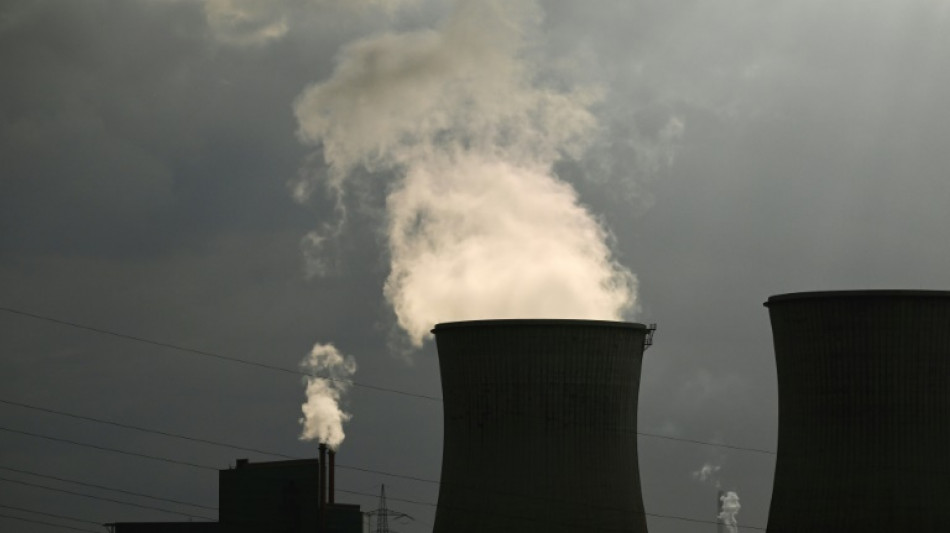
Germany raises growth forecasts, but warns reforms needed / Photo: Ina FASSBENDER - AFP

Germany raises growth forecasts, but warns reforms needed

Germany's economy will eke out meagre growth in 2025 before picking up speed next year, the government Wednesday said as it raised forecasts, but called for "decisive reforms" for a sustained recovery.

Text size:

Europe's top economy shrank in both 2024 and 2023 as it was hit by a manufacturing slump, surging energy costs and weak demand for its exports, particularly from key market China.

In its latest forecasts, the economy ministry said it did not expect a third year of recession in 2025, although the economy would only grow 0.2 percent. This was up from a forecast of stagnation in April.

Next year it expects growth of 1.3 percent, up from a previous forecast of one percent, with a spending blitz on defence and infrastructure championed by Chancellor Friedrich Merz set to provide a boost.

In 2027 the economy is expected to expand 1.4 percent.

But Economy Minister Katherina Reiche warned the government would have to "fight" to revive the economy in the long term as it battles strengthening headwinds, from volatile US trade policy to China's emergence as a rival in numerous industries.

"The economy is far from running smoothly," she told a press conference in Berlin.

"We must fight to return to growth. And we must fight to keep Europe strong. So we need the courage to implement decisive reforms."

Much of the growth momentum in 2026 and 2027 would come from a special fund set up to overhaul infrastructure and extra spending on defence, said Reiche.

Merz has moved to loosen Germany's tough debt rules to allow greater borrowing to overhaul creaking trains and crumbling bridges, and more spending on the military in the face of a growing Russian threat.

However, Reiche noted that deeper reforms were needed to "overcome structural weakness".

Her comments echoed criticism from economists that reforms are needed to deal with deep-rooted problems, such as onerous bureaucracy, to help the economy in the long term.

- China, from market to rival -

Data released earlier Wednesday highlighted the problems -- industrial production dropped sharply in August, particularly in the crisis-hit automotive sector.

Following a contraction in GDP of 0.3 percent in the second quarter, these figures show "that the risk of yet another quarter of contraction and thus an outright technical recession is very real", said economist Carsten Brzeski of ING bank.

US President Donald Trump's tariff blitz has hit Germany hard, as the United States is a major destination for the country's exporters.

A rush to stock up on imports before the tariffs kicked in gave the German economy a boost at the start of the year -- but that trend has since reversed, with the levies acting as a drag.

Foreign trade, which has been a key support for the economy in recent years, was unlikely to provide the same sort of momentum going forward, said Reiche.

This was due not only to volatile US trade policy, but also because China had become a rival to Germany in many industries, rather than simply a destination for its exports.

"China has become a serious competitor to Germany in such important transformation industries as photovoltaics, batteries, and even wind energy," said Reiche.

K.Abe--JT