The Japan Times - Opec+ plus to raise oil production by 137,000 barrels a day in November

EUR -
AED 4.201992
AFN 73.227845
ALL 93.855216
AMD 419.810955
ANG 2.048539
AOA 1049.781355
ARS 1699.968984
AUD 1.645671
AWG 2.059519
AZN 1.946861
BAM 1.956317
BBD 2.300618
BDT 140.78721
BGN 1.934667
BHD 0.430614
BIF 3401.098898
BMD 1.144177
BND 1.477716
BOB 7.922094
BRL 5.889405
BSD 1.142307
BTN 108.904783
BWP 15.430146
BYN 3.308168
BYR 22425.877079
BZD 2.297317
CAD 1.626271
CDF 2580.120253
CHF 0.921497
CLF 0.026911
CLP 1059.153409
CNY 7.776285
CNH 7.773593
COP 3839.950895
CRC 520.43755
CUC 1.144177
CUP 30.320701
CVE 110.293186
CZK 24.171835
DJF 203.414651
DKK 7.474739
DOP 67.567858
DZD 152.33123
EGP 55.880137
ERN 17.162661
ETB 184.367528
FJD 2.55975
FKP 0.856933
GBP 0.854226
GEL 3.014877
GGP 0.856933
GHS 13.01644
GIP 0.856933
GMD 84.099115
GNF 10018.735479
GTQ 8.716304
GYD 238.943152
HKD 8.974069
HNL 30.574081
HRK 7.53487
HTG 149.272061
HUF 353.781917
IDR 20578.030575
ILS 3.429675
IMP 0.856933
INR 109.041537
IQD 1496.37587
IRR 1574044.852165
ISK 143.994622
JEP 0.856933
JMD 180.657747
JOD 0.811241
JPY 185.22687
KES 147.953692
KGS 100.058494
KHR 4583.291463
KMF 493.714038
KPW 1029.760062
KRW 1742.507872
KWD 0.354798
KYD 0.951939
KZT 539.937423
LAK 25757.582518
LBP 102288.840581
LKR 382.597775
LRD 207.324795
LSL 18.533636
LTL 3.378458
LVL 0.692101
LYD 7.328969
MAD 10.694627
MDL 20.138146
MGA 4851.282177
MKD 61.661566
MMK 2402.491822
MNT 4098.864054
MOP 9.228218
MRU 45.590049
MUR 53.856273
MVR 17.677503
MWK 1980.30608
MXN 19.890831
MYR 4.667216
MZN 73.111202
NAD 18.53396
NGN 1564.799315
NIO 42.031844
NOK 11.199729
NPR 174.248053
NZD 2.007173
OMR 0.439947
PAB 1.142302
PEN 3.889628
PGK 5.01937
PHP 70.262737
PKR 317.579423
PLN 4.289121
PYG 6928.861552
QAR 4.175904
RON 5.230725
RSD 117.332297
RUB 88.213829
RWF 1673.927783
SAR 4.299201
SBD 9.264892
SCR 16.636342
SDG 687.080395
SEK 11.017828
SGD 1.477797
SHP 0.854244
SLE 27.889289
SLL 23992.832224
SOS 652.772525
SRD 43.127486
STD 23682.162137
STN 24.506691
SVC 9.99451
SYP 126.468328
SZL 18.529978
THB 38.111979
TJS 10.565993
TMT 4.004621
TND 3.379093
TOP 2.754905
TRY 53.589612
TTD 7.735112
TWD 36.681759
TZS 3003.463381
UAH 50.934517
UGX 4173.102936
USD 1.144177
UYU 45.952145
UZS 13758.756641
VES 762.269504
VND 30097.014471
VUV 136.150222
WST 3.173017
XAF 656.124677
XAG 0.018647
XAU 0.000276
XCD 3.092197
XCG 2.058617
XDR 0.816016
XOF 656.133281
XPF 119.331742
YER 271.255895
ZAR 18.549822
ZMK 10298.972254
ZMW 21.046655
ZWL 368.424657
  • CMSC

    0.0700

    22.06

    +0.32%

  • RBGPF

    0.1700

    68.32

    +0.25%

  • BCC

    -0.6500

    75.28

    -0.86%

  • VOD

    -0.0700

    13.08

    -0.54%

  • RIO

    -0.8400

    93.58

    -0.9%

  • BCE

    -0.5500

    20.87

    -2.64%

  • RYCEF

    0.2200

    19.9

    +1.11%

  • CMSD

    0.0800

    22.23

    +0.36%

  • NGG

    -0.2600

    82.59

    -0.31%

  • GSK

    -0.5700

    53.09

    -1.07%

  • AZN

    -4.9900

    190.16

    -2.62%

  • JRI

    0.1100

    13.11

    +0.84%

  • RELX

    0.3400

    32.27

    +1.05%

  • BP

    -0.0100

    37.39

    -0.03%

  • BTI

    -0.3100

    61.46

    -0.5%

Opec+ plus to raise oil production by 137,000 barrels a day in November
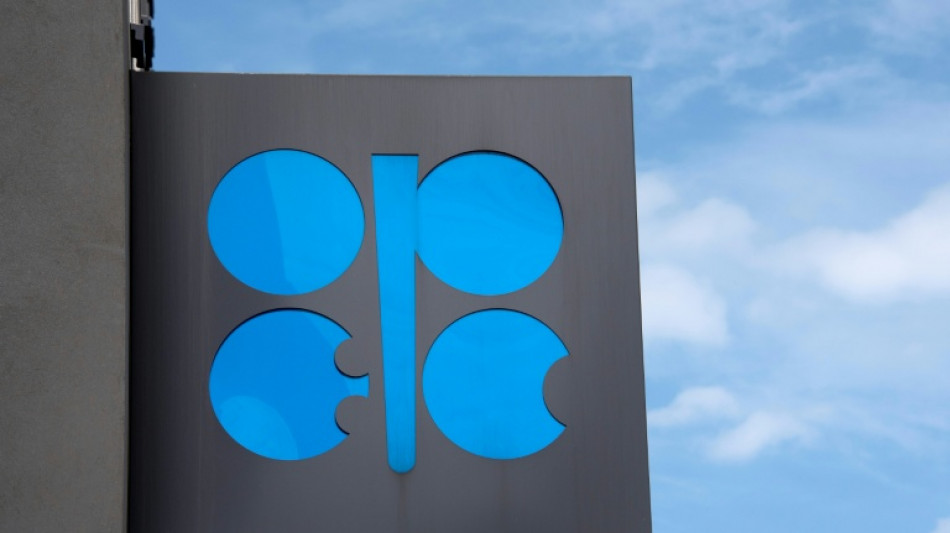
Opec+ plus to raise oil production by 137,000 barrels a day in November / Photo: JOE KLAMAR - AFP

Opec+ plus to raise oil production by 137,000 barrels a day in November

Saudi Arabia, Russia and six other members of Opec+ on Sunday decided to raise their production quotas by 137,000 barrels per day in November, as they continue to push for greater market share.

Text size:

"In view of a steady global economic outlook and current healthy market fundamentals, as reflected in the low oil inventories, the eight participating countries decided to implement a production adjustment of 137 thousand barrels per day" from October's levels, the group said in a statement after an on-line meeting.

The increase was less than many analysts expected, with the cartel seeking to avoid pressuring prices amid weak demand.

"OPEC+8 stepped carefully after witnessing how nervous the market had become" in light of market rumours that production could be hiked by 500,000 barrels a day, said Jorge Leon, analyst at Rystad Energy.

"The group is walking a tightrope between maintaining stability and clawing back market share in a surplus environment," he added.

In the past few months, Saudi Arabia, Russia, Iraq, the United Arab Emirates, Kuwait, Kazakhstan, Oman and Algeria have already raised their quotas by more than 2.5 million barrels a day.

Opec+'s priority at the start of the year was to maintain prices high by limiting supply, but it changed strategy starting in April and is now seeking to gain market share from other producers such as the United States, Brazil, Canada, Guyana and Argentina.

The production increases come as the International Energy Agency forecasts that oil demand will only increase by 700,000 barrels a day between 2025 and 2026.

OPEC, generally more optimistic in its reports, expects global oil demand to increase by 1.3 million barrels a day in 2025 and by another 1.4 million in 2026.

A barrel of Brent, the global benchmark for crude, was trading below $65 on Friday, down about 8 percent in one week, weighed down by fears of a significant production increase by the cartel.

Russia, the largest producer in the cartel after Saudi Arabia, depends on high prices to finance its war machine against Ukraine, but unlike Riyadh, has limited potential to increase production due to US and European pressure on its oil sector.

The increase decided Sunday is "manageable" for Russia, said Leon+.

Russia currently produces around 9.25 million barrels per day and has a maximum production capacity of 9.45 million compared to around 10 million before the war, Homayoun Falakshahi, an analyst at Kpler, told AFP.

Ukrainian strikes on Russian refineries have intensified since August, causing "an increase in Russian crude oil exports, as it cannot be used domestically," making the country even more dependent on selling oil abroad, Arne Lohmann Rasmussen, an analyst at Global Risk Management, told AFP.

K.Hashimoto--JT