The Japan Times - Japan rice prices double, raising pressure on PM

EUR -
AED 4.314513
AFN 74.012811
ALL 95.567036
AMD 437.72427
ANG 2.102782
AOA 1078.479575
ARS 1615.076261
AUD 1.639062
AWG 2.117603
AZN 1.99533
BAM 1.956174
BBD 2.369253
BDT 144.337573
BGN 1.95971
BHD 0.443056
BIF 3497.968226
BMD 1.174814
BND 1.495786
BOB 8.117116
BRL 5.885943
BSD 1.17631
BTN 109.776792
BWP 15.770946
BYN 3.336637
BYR 23026.362786
BZD 2.365852
CAD 1.604591
CDF 2718.520924
CHF 0.91612
CLF 0.02667
CLP 1049.65036
CNY 8.014173
CNH 8.01745
COP 4214.188582
CRC 535.102222
CUC 1.174814
CUP 31.132582
CVE 110.873159
CZK 24.328586
DJF 209.467341
DKK 7.473476
DOP 70.793524
DZD 155.2737
EGP 60.796411
ERN 17.622216
ETB 183.67437
FJD 2.578136
FKP 0.867648
GBP 0.869098
GEL 3.16017
GGP 0.867648
GHS 12.999289
GIP 0.867648
GMD 86.349192
GNF 10323.972215
GTQ 8.978067
GYD 245.760737
HKD 9.199878
HNL 31.255104
HRK 7.533966
HTG 154.039427
HUF 363.50757
IDR 20169.860246
ILS 3.524226
IMP 0.867648
INR 110.240478
IQD 1540.99438
IRR 1551929.859504
ISK 143.809083
JEP 0.867648
JMD 186.346391
JOD 0.832921
JPY 187.08274
KES 151.727107
KGS 102.735766
KHR 4702.898407
KMF 493.4222
KPW 1057.315827
KRW 1735.517719
KWD 0.361819
KYD 0.980287
KZT 546.204343
LAK 25952.957862
LBP 105166.061876
LKR 372.361133
LRD 216.488953
LSL 19.247177
LTL 3.468921
LVL 0.710634
LYD 7.447328
MAD 10.872321
MDL 20.232865
MGA 4869.909585
MKD 61.61504
MMK 2467.033665
MNT 4202.471649
MOP 9.488213
MRU 46.665915
MUR 54.67618
MVR 18.162333
MWK 2039.780983
MXN 20.313014
MYR 4.644631
MZN 75.07667
NAD 19.247177
NGN 1584.554283
NIO 43.288269
NOK 10.957485
NPR 175.889601
NZD 1.986312
OMR 0.451726
PAB 1.17467
PEN 4.040472
PGK 5.101975
PHP 70.578741
PKR 327.984568
PLN 4.234325
PYG 7480.333479
QAR 4.282786
RON 5.096331
RSD 117.419166
RUB 88.260586
RWF 1718.921054
SAR 4.405879
SBD 9.444066
SCR 16.856813
SDG 704.88833
SEK 10.767209
SGD 1.495504
SHP 0.877118
SLE 28.89805
SLL 24635.266641
SOS 672.225556
SRD 44.023232
STD 24316.286716
STN 24.504681
SVC 10.292966
SYP 129.866318
SZL 19.253596
THB 37.798467
TJS 11.041854
TMT 4.117725
TND 3.367603
TOP 2.828671
TRY 52.775507
TTD 7.976524
TWD 36.977871
TZS 3066.26592
UAH 51.896193
UGX 4351.700932
USD 1.174814
UYU 46.70313
UZS 14186.710124
VES 565.140692
VND 30924.052778
VUV 138.699407
WST 3.190757
XAF 656.07954
XAG 0.015
XAU 0.000247
XCD 3.174995
XCG 2.120005
XDR 0.815952
XOF 656.073955
XPF 119.331742
YER 280.340096
ZAR 19.313495
ZMK 10574.739322
ZMW 22.379275
ZWL 378.289766
  • RBGPF

    -13.5000

    69

    -19.57%

  • CMSC

    -0.0700

    22.66

    -0.31%

  • RYCEF

    -1.3100

    15.85

    -8.26%

  • CMSD

    -0.0450

    23.04

    -0.2%

  • RELX

    0.3300

    37.07

    +0.89%

  • BCE

    -0.0500

    23.9

    -0.21%

  • VOD

    -0.4600

    15.19

    -3.03%

  • BTI

    -2.2300

    54.83

    -4.07%

  • RIO

    -2.1100

    97.72

    -2.16%

  • GSK

    -1.2300

    56.12

    -2.19%

  • NGG

    -1.7500

    84.27

    -2.08%

  • BCC

    -1.5200

    82.45

    -1.84%

  • JRI

    -0.0800

    13.05

    -0.61%

  • AZN

    -4.9100

    195.78

    -2.51%

  • BP

    0.7900

    45.91

    +1.72%

Japan rice prices double, raising pressure on PM
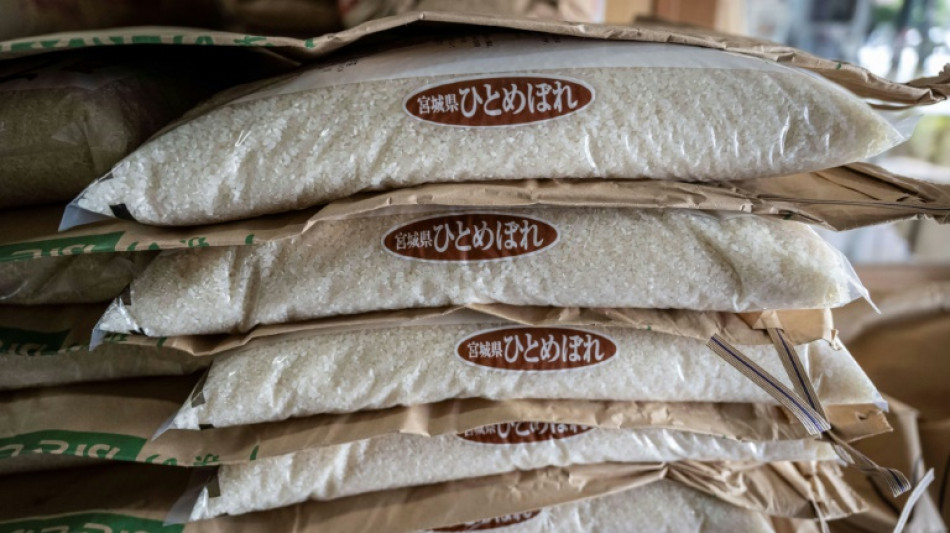
Japan rice prices double, raising pressure on PM / Photo: Yuichi YAMAZAKI - AFP

Japan rice prices double, raising pressure on PM

Rice prices in Japan soared 99.2 percent in June year-on-year, official data showed Friday, piling further pressure on Prime Minister Shigeru Ishiba ahead of elections this weekend.

Text size:

The price of the grain already rocketed 101 percent year-on-year in May, having jumped 98.4 percent in April and more than 92.5 percent in March.

Overall, Japan's core inflation rate slowed to 3.3 percent in June from 3.7 percent in May, the data from the internal affairs ministry showed.

The reading, which excludes volatile fresh food prices, was slightly below market expectations of 3.4 percent.

Excluding energy and also fresh food, consumer prices rose 3.4 percent, compared with 3.3 percent in May.

Public support for Ishiba's administration has tumbled to its lowest level since he took office in October, partly because of frustration over the cost of living.

One of the main sources of anger has been inflation and in particular the surging cost of rice, as well as scandals within the ruling party.

The 68-year-old leader's coalition was deprived of a majority in the powerful lower house in October.

It was the worst election result in 15 years for the Liberal Democratic Party (LDP), which has governed Japan almost continuously since 1955.

Opinion polls ahead of Sunday's election suggest the ruling coalition may lose its majority in the upper house as well.

This could force Ishiba to resign after less than a year in office.

- Tariff pressure -

He is under additional pressure to reach a trade deal with the United States before new tariffs of 25 percent take effect on August 1.

Japan's important auto imports into the world's biggest economy are already subject to painful levies, as are steel and aluminium.

US President Donald Trump wants to get Japanese firms to manufacture more in the United States, and Tokyo to buy more US goods -- notably gas and oil, cars and rice -- to reduce the $70 billion trade deficit with the Asian powerhouse.

Ishiba, who has sent his trade envoy Ryosei Akazawa to Washington seven times to try and broker a deal, was due to host US Treasury Secretary Scott Bessent on Friday.

The Bank of Japan has been tightening monetary policy since last year as inflation crept up but worries about the impact of US tariffs on the world's number four economy has forced it to take a slower approach.

Factors behind the rising price of rice include shortages due to an intensely hot and dry summer two years ago that damaged harvests nationwide.

Since then some traders have been hoarding rice in a bid to boost their profits down the line, experts say.

The issue was made worse by panic buying last year prompted by a government warning about a potential "megaquake" that did not strike.

The government has taken the rare step of releasing its emergency stockpile since February, which it typically only ever did during disasters.

M.Matsumoto--JT