The Japan Times - The UK car loan scandal that could cost banks billions

EUR -
AED 4.028994
AFN 70.758022
ALL 90.062914
AMD 395.9236
ANG 1.963936
AOA 1005.87951
ARS 1715.932817
AUD 1.648828
AWG 1.974463
AZN 1.869118
BAM 1.952541
BBD 2.21022
BDT 136.49215
BGN 1.945362
BHD 0.413815
BIF 3296.256235
BMD 1.096924
BND 1.415151
BOB 12.900582
BRL 6.510252
BSD 1.097323
BTN 102.308027
BWP 15.501476
BYN 3.281487
BYR 21499.70789
BZD 2.207126
CAD 1.573587
CDF 2500.986166
CHF 0.9261
CLF 0.0283
CLP 1113.826948
CNY 7.312807
CNH 7.336556
COP 3763.085097
CRC 491.259772
CUC 1.096924
CUP 26.338033
CVE 110.542511
CZK 24.433705
DJF 194.945209
DKK 7.474308
DOP 65.965795
DZD 150.46069
EGP 59.026477
ERN 16.453858
ETB 176.928112
FJD 2.532246
FKP 0.834079
GBP 0.838198
GEL 2.846508
GGP 0.834079
GHS 12.916261
GIP 0.834079
GMD 81.17248
GNF 9718.745312
GTQ 8.389651
GYD 229.486116
HKD 8.60302
HNL 29.682937
HRK 7.494146
HTG 143.881127
HUF 373.394192
IDR 20032.02375
ILS 3.618702
IMP 0.834079
INR 102.337787
IQD 1660.742742
IRR 2125086.521474
ISK 137.203155
JEP 0.834079
JMD 173.680071
JOD 0.777742
JPY 175.268139
KES 142.654244
KGS 95.92625
KHR 4469.964737
KMF 492.519099
KPW 987.231869
KRW 1464.815721
KWD 0.342207
KYD 0.914594
KZT 494.077474
LAK 24713.694534
LBP 98229.532741
LKR 365.265267
LRD 184.008778
LSL 19.190724
LTL 3.238931
LVL 0.663518
LYD 7.091585
MAD 10.935779
MDL 20.137842
MGA 5029.39572
MKD 61.554656
MMK 2303.32229
MNT 3949.818889
MOP 8.867334
MRU 44.606427
MUR 51.380089
MVR 16.903386
MWK 1905.356681
MXN 20.946917
MYR 4.511863
MZN 70.104816
NAD 19.190698
NGN 1482.887198
NIO 40.520667
NOK 10.721438
NPR 163.723185
NZD 2.001299
OMR 0.42176
PAB 1.097478
PEN 3.782193
PGK 4.959215
PHP 69.996891
PKR 303.244741
PLN 4.437567
PYG 6880.514151
QAR 3.996138
RON 5.348489
RSD 117.690079
RUB 90.117329
RWF 1620.156559
SAR 4.117276
SBD 8.91867
SCR 15.302915
SDG 659.804038
SEK 11.186418
SGD 1.417105
SHP 0.83429
SLE 25.012358
SLL 23001.949153
SOS 627.989411
SRD 40.980751
STD 22704.109469
STN 24.79048
SVC 9.601971
SYP 14262.204553
SZL 19.207293
THB 37.274606
TJS 10.094455
TMT 3.850203
TND 3.344247
TOP 2.64113
TRY 55.478696
TTD 7.446603
TWD 36.239186
TZS 2917.815293
UAH 49.436574
UGX 4647.242219
USD 1.096924
UYU 44.545639
UZS 13157.601889
VES 1006.556816
VND 28251.274322
VUV 132.671979
WST 3.096925
XAF 655.957
XAG 0.025649
XAU 0.000303484188
XCD 2.964492
XCG 1.977807
XDR 0.775582
XOF 655.957
XPF 119.331742
YER 259.477338
ZAR 19.20514
ZMK 9873.628002
ZMW 22.552558
ZWL 353.209039
SSP 6449.472825
MXV 2.348687
  • RYCEF

    0.1000

    19.81

    +0.5%

  • VOD

    -0.2500

    16.33

    -1.53%

  • CMSC

    -0.2800

    20.12

    -1.39%

  • RBGPF

    -2.0000

    65

    -3.08%

  • RIO

    -0.2500

    94.16

    -0.27%

  • BTI

    -1.2000

    54.85

    -2.19%

  • NGG

    -0.3000

    74.94

    -0.4%

  • GSK

    -0.3500

    49.35

    -0.71%

  • BCE

    -0.4200

    20.14

    -2.09%

  • CMSD

    -0.3400

    19.93

    -1.71%

  • BP

    -0.9100

    43.52

    -2.09%

  • RELX

    0.1700

    33.24

    +0.51%

  • BCC

    -0.6200

    75.97

    -0.82%

  • AZN

    -1.9400

    164.21

    -1.18%

  • JRI

    0.0000

    10.77

    0%

The UK car loan scandal that could cost banks billions
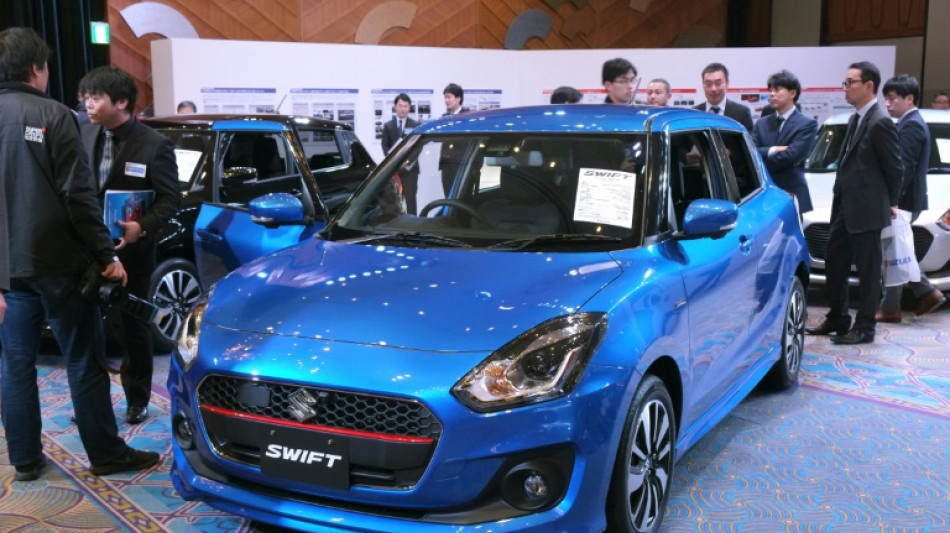
The UK car loan scandal that could cost banks billions / Photo: KAZUHIRO NOGI - AFP/File

The UK car loan scandal that could cost banks billions

Banks may have to pay out tens of billions of pounds if the British Supreme Court upholds a judgment ruling controversial car loans are unlawful, in a case beginning in April.

Text size:

These loans incentivised car dealers to offer higher interest rates in return for a higher commission, without sufficiently informing borrowers.

Consumer association Which! estimated that millions of drivers would become eligible for compensation if the UK's highest judicial authority sides with borrowers.

The government, however, sought to intervene in the case amid concerns over the economic fallout.

"Such a substantial sum could limit banks' ability and willingness to lend and provide credit at a time when the economic outlook remains uncertain," said AJ Bell investment director Russ Mould.

"This may be why the government is seeking to intervene," he added.

Marcus Johnson is one of the claimants whose case is under consideration by the Supreme Court.

He took out a loan in 2017 when he bought a Suzuki Swift from a car dealer in Cardiff, Wales for £6,500 ($8,400) -- unaware that interest paid on the loan would fund a commission of over £1,600.

The Court of Appeal in October ruled in favour of Johnson, ordering South African lender FirstRand Bank to refund the commission plus interest -- sparking panic across the finance sector.

Now, the Supreme Court will hear his case on April 1, along with another similar case against FirstRand and one against British bank Close Brothers.

If the court sides with borrowers after the three-day hearing, it will set a precedent for similar cases across the country, potentially triggering billions in compensation.

"In each of these three linked appeals, the claimants were financially unsophisticated consumers on relatively low incomes," the Supreme Court said in its case summary.

It has rejected the government's attempt to intervene.

- £44 billion -

In preparation for the ruling, British banks have set aside considerable sums, including Lloyds Bank, which has earmarked nearly £1.2 billion.

Which! estimated it could cost banks up to £16 billion, while other analysts expect the sums to be higher, with those at HSBC suggesting it could hit £44 billion.

That "would put it on a similar scale to the payment protection insurance (PPI) scandal, where the major UK high street lenders reportedly paid out some £45 billion to £50 billion between them," said Mould.

The Financial Conduct Authority banned undisclosed commissions in 2021 and launched a separate investigation into the practice early last year.

The financial watchdog plans to wait for the Supreme Court ruling before deciding whether to start a programme for automatic compensation.

"Even if the Supreme Court upholds the Court of Appeal judgement, it could act to limit and reduce any compensation payments, and that could well represent the best-case scenario for the lenders," Mould added.

T.Maeda--JT