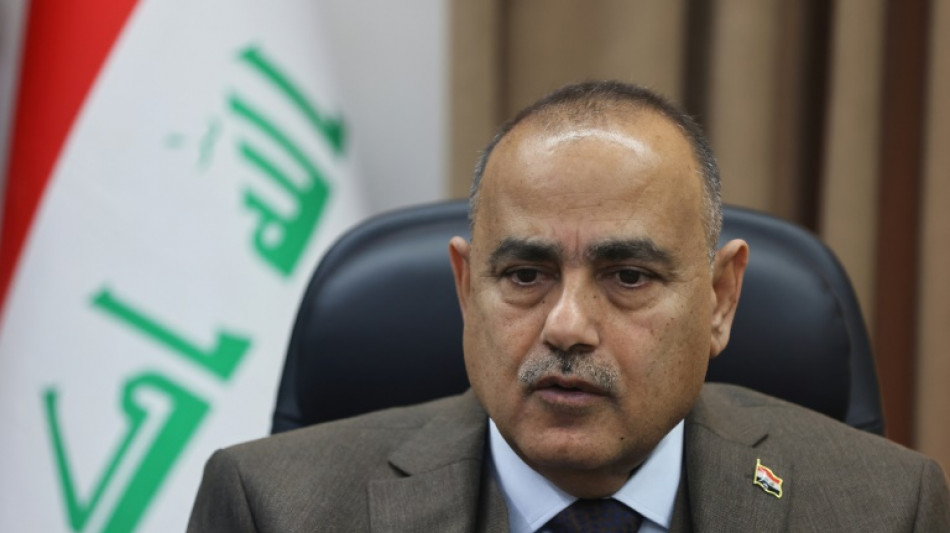
Iraq says seeking alternatives to Iran gas / Photo: AHMAD AL-RUBAYE - AFP

Iraq is exploring alternatives to Iranian gas imports, including options in the Gulf, a government official said, as it seeks to reduce dependence on its sanctions-hit neighbour.
The administration of US President Donald Trump announced at the weekend its decision to end a sanctions waiver that had allowed Iraq to buy electricity from Iran, though it has yet to bar gas imports.
Iran's gas and electricity supply accounts for a third of Iraq's energy needs.
"Previously, we only had imports from Iran, but there are government directives and a political will to rely on multiple sources of imports," said Saad Jassem, an official at Iraq's electricity ministry.
"We have not yet stopped Iranian gas imports," the director of the ministry's fuel department told AFP in an interview on Wednesday.
His remarks come amid rising tensions between Washington and Tehran, after Iran rejected a US offer of talks on its nuclear programme.
"The administration has made clear to the Iraqi government that it needs to make swift progress in eliminating all Iranian natural gas purchases," a US diplomat told AFP on condition of anonymity.
Despite its vast oil wealth, Iraq has been ravaged by decades of conflict, suffers from crumbling infrastructure and is plagued by daily power cuts.
"We must consider the worst-case scenario -- if there is an interruption, we have prepared alternatives," said Jassem.
"In the region, Qatar is the largest natural gas producer -- we have made several visits, and they are ready to help Iraq with preferential rates," the official said, adding that "Oman is also an option".
Negotiations were also underway to buy gas from Turkmenistan to be delivered via pipelines across Iran, he added.
- 'Vital' -
Iraq is setting up two floating liquefied natural gas terminals in the southern Khor al-Zubair region, Jassem said, expressing hope they will be operational by June.
The facilities could be used to process 14 to 19 million cubic metres (500 to 700 million cubic feet) a day, he said.
"If we manage to set up a third unit we could hit 800 to 900 million cubic feet," he added, saying this would help offset the shortfall of Iranian gas that southern Iraq depends on.
"The question of energy is vital for citizens: cutting off gas would mean a significant reduction in electricity supply," Jassem said.
Iraq faces the challenge of balancing relations with Iran and its strategic partner, the United States.
In a bid to make Iraq self-sufficient, Prime Minister Mohammed Shia al-Sudani's government wants to stop gas flaring in Iraq's oil fields by 2028, and to use it instead to supply power stations.
Since his return to the White House in January, Trump has called for a new nuclear deal with Tehran while reinstating his "maximum pressure" policy of sanctions.
Even before the United States ended its sanctions waiver, Iran's gas supply to Iraq had already started to become erratic, with Baghdad falling behind on payments while Iraqi domestic consumption increased.
Iran has regularly cut its deliveries, exacerbating life for Iraq's 46 million people, especially during climate change-driven heatwaves.
In 2024, Iraq and Iran renewed for five years their gas import agreement for the purchase of up to 50 million cubic metres a day.
But Iraq currently receives no more than 15 million cubic metres, sharply down from the agreed amount.
For Iraq, electricity shortages remain a sensitive issue, as power cuts have sparked protests, particularly during the summer months.
H.Takahashi--JT