The Japan Times - Report details fossil fuel threat to 'Amazon of the seas'

EUR -
AED 4.006086
AFN 70.361199
ALL 89.895948
AMD 394.864389
ANG 1.953033
AOA 1000.294959
ARS 1723.457794
AUD 1.646517
AWG 1.963501
AZN 1.819361
BAM 1.954625
BBD 2.206273
BDT 136.298048
BGN 1.934562
BHD 0.413253
BIF 3291.181448
BMD 1.090834
BND 1.413676
BOB 12.876317
BRL 6.468319
BSD 1.095341
BTN 101.727098
BWP 15.604617
BYN 3.274536
BYR 21380.348599
BZD 2.203075
CAD 1.566449
CDF 2492.555862
CHF 0.917827
CLF 0.028179
CLP 1109.027424
CNY 7.270028
CNH 7.266411
COP 3850.709866
CRC 490.307439
CUC 1.090834
CUP 26.289313
CVE 110.199245
CZK 24.423939
DJF 195.064501
DKK 7.474471
DOP 65.920666
DZD 149.912259
EGP 59.265887
ERN 16.362512
ETB 179.788698
FJD 2.52343
FKP 0.837659
GBP 0.83649
GEL 2.8416
GGP 0.837659
GHS 12.964264
GIP 0.837659
GMD 80.18418
GNF 9713.204246
GTQ 8.374003
GYD 229.163261
HKD 8.554724
HNL 29.447294
HRK 7.45254
HTG 143.756199
HUF 368.838312
IDR 19875.979275
ILS 3.603461
IMP 0.837659
INR 101.258477
IQD 1660.662386
IRR 2125992.051412
ISK 137.205108
JEP 0.837659
JMD 173.625604
JOD 0.773396
JPY 173.639014
KES 141.884733
KGS 95.392972
KHR 4458.380608
KMF 493.056964
KPW 981.751083
KRW 1465.655808
KWD 0.340234
KYD 0.91288
KZT 499.025961
LAK 24705.145492
LBP 98093.667923
LKR 364.300956
LRD 183.485563
LSL 19.146987
LTL 3.220949
LVL 0.659834
LYD 7.083806
MAD 10.953964
MDL 19.969268
MGA 4965.037421
MKD 61.541565
MMK 2290.380917
MNT 3928.368038
MOP 8.846502
MRU 44.540423
MUR 51.356328
MVR 16.809519
MWK 1899.466611
MXN 20.911453
MYR 4.492602
MZN 69.709751
NAD 19.147601
NGN 1478.352649
NIO 40.306135
NOK 10.722953
NPR 162.761866
NZD 2.002581
OMR 0.419427
PAB 1.095346
PEN 3.786575
PGK 5.013985
PHP 69.558676
PKR 302.793539
PLN 4.446294
PYG 7004.788218
QAR 4.004211
RON 5.347484
RSD 117.645397
RUB 89.222839
RWF 1615.136267
SAR 4.084499
SBD 8.912638
SCR 15.202615
SDG 656.10203
SEK 11.206084
SGD 1.408701
SHP 0.837011
SLE 25.089475
SLL 22874.249913
SOS 626.02359
SRD 40.813013
STD 22578.063737
STN 24.485278
SVC 9.584237
SYP 14183.025494
SZL 19.149486
THB 36.984706
TJS 10.088858
TMT 3.828828
TND 3.316721
TOP 2.626467
TRY 55.209622
TTD 7.435768
TWD 35.864878
TZS 2912.702025
UAH 49.513356
UGX 4639.231825
USD 1.090834
UYU 44.394324
UZS 13161.02632
VES 1002.119739
VND 28127.157583
VUV 132.546273
WST 3.079715
XAF 655.957
XAG 0.025821
XAU 0.000301122442
XCD 2.948034
XCG 1.974213
XDR 0.771276
XOF 655.957
XPF 119.331742
YER 258.036572
ZAR 18.998398
ZMK 9818.812604
ZMW 22.598412
ZWL 351.248139
SSP 6300.105075
MXV 2.341669
  • RYCEF

    0.1000

    19.81

    +0.5%

  • VOD

    -0.2500

    16.33

    -1.53%

  • CMSC

    -0.2800

    20.12

    -1.39%

  • RBGPF

    -2.0000

    65

    -3.08%

  • RIO

    -0.2500

    94.16

    -0.27%

  • BTI

    -1.2000

    54.85

    -2.19%

  • NGG

    -0.3000

    74.94

    -0.4%

  • GSK

    -0.3500

    49.35

    -0.71%

  • BCE

    -0.4200

    20.14

    -2.09%

  • CMSD

    -0.3400

    19.93

    -1.71%

  • BP

    -0.9100

    43.52

    -2.09%

  • RELX

    0.1700

    33.24

    +0.51%

  • BCC

    -0.6200

    75.97

    -0.82%

  • AZN

    -1.9400

    164.21

    -1.18%

  • JRI

    0.0000

    10.77

    0%

Report details fossil fuel threat to 'Amazon of the seas'
Report details fossil fuel threat to 'Amazon of the seas' / Photo: STEPHEN COATES - AFP/File

Report details fossil fuel threat to 'Amazon of the seas'

Fossil fuel exploration is threatening an ever-expanding swath of the Coral Triangle, one of the most biodiverse marine areas in the world, a report said Saturday.

Text size:

Issued to coincide with the UN's COP16 summit on biodiversity in Colombia, the report warned expansion in oil, gas and liquefied natural gas (LNG) in the Indo-Pacific region was putting at risk marine species and the communities that rely on them.

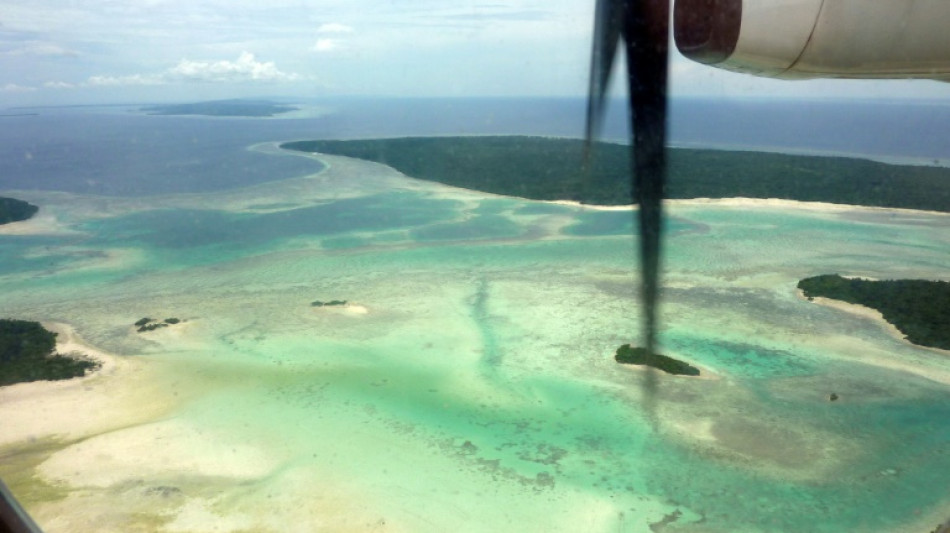
Dubbed the "Amazon of the seas" for its species variety, the Coral Triangle covers over 10 million square kilometers (some four million square miles) in waters of Indonesia, Malaysia, Papua New Guinea, Singapore, the Philippines, Timor-Leste and the Solomon Islands.

It contains three-quarters of the world’s known coral species, said the report by monitoring bodies including the threat-mapping research project Earth Insight, satellite imaging watchdog SkyTruth, and the Center for Energy, Ecology, and Development, a Filipino think tank.

The triangle is a home to six of the world's seven marine turtle species, and acts as a feeding ground for whales and other marine mammals.

More than 120 million people rely on it for subsistence.

Yet, oil and gas concessions and production areas overlap with tens of thousands of square kilometers of marine protected areas, said the report.

It noted more than 100 known offshore oil and gas blocks producing in the region. Another 450 blocks are being explored for future extraction.

"If all blocks were to go into production, about 16 percent of the Coral Triangle would be directly impacted by fossil fuel development," said the report.

It warned fossil fuel expansion will increase tanker traffic and the risk of oil spills.

- Not on track -

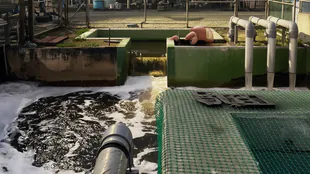
Since July 2020, satellites have spotted 793 oil slicks in the Coral Triangle, said the report.

Almost all were created by transiting vessels, some by oil infrastructure.

"Cumulatively, all slicks covered an area over 24,000 km2 –- nearly enough oil to cover the land in the Solomon Islands," said the report.

Its authors called for a moratorium on oil, gas, mining, and other industrial activities in environmentally-sensitive areas within the Coral Triangle.

They also urged "leapfrogging the use of LNG as a transition fuel" as the world moves away from coal and gas, and moving directly to clean energy sources instead.

The report called for the triangle to be designated a "particularly sensitive sea area" in need of special protection from shipping.

The so-called Kunming-Montreal Global Biodiversity Framework approved two years ago by 196 parties to the UN's Convention on Biological Diversity set 23 targets to "halt and reverse" biodiversity loss by 2030.

It includes ensuring that 30 percent of marine and coastal areas are "effectively conserved and managed," and 30 percent are "under effective restoration."

A report by Greenpeace Monday said only 8.4 percent of the global ocean enjoys protection to date.

"At the current rate, we won't hit 30 percent protection at sea until the next century," said Greenpeace policy advisor Megan Randles.

The biodiversity summit meant to measure progress towards achieving the UN goals.

T.Ueda--JT