The Japan Times - Indonesia biomass drive threatens key forests: report

EUR -
AED 4.026507
AFN 71.265467
ALL 89.745016
AMD 395.217508
ANG 1.962989
AOA 1005.394057
ARS 1746.00621
AUD 1.653314
AWG 1.976252
AZN 1.866035
BAM 1.95679
BBD 2.207748
BDT 136.741083
BGN 1.944424
BHD 0.413396
BIF 3294.666808
BMD 1.096395
BND 1.414109
BOB 12.906474
BRL 6.475643
BSD 1.09615
BTN 101.788128
BWP 15.64985
BYN 3.284147
BYR 21489.340911
BZD 2.204486
CAD 1.564726
CDF 2499.780378
CHF 0.916181
CLF 0.028778
CLP 1132.630743
CNY 7.306924
CNH 7.307818
COP 3971.537191
CRC 487.544549
CUC 1.096395
CUP 26.307316
CVE 110.68131
CZK 24.414248
DJF 194.85141
DKK 7.474278
DOP 62.587667
DZD 150.422654
EGP 59.450701
ERN 16.445924
ETB 179.90694
FJD 2.519403
FKP 0.841929
GBP 0.836171
GEL 2.856085
GGP 0.841929
GHS 12.910089
GIP 0.841929
GMD 81.13353
GNF 9730.505358
GTQ 8.37724
GYD 229.272911
HKD 8.597672
HNL 29.466915
HRK 7.490532
HTG 143.784744
HUF 369.725762
IDR 19982.620159
ILS 3.672205
IMP 0.841929
INR 101.75329
IQD 1661.763843
IRR 2140555.440962
ISK 137.214058
JEP 0.841929
JMD 173.797968
JOD 0.777389
JPY 174.592674
KES 142.553013
KGS 95.87338
KHR 4468.906116
KMF 492.281117
KPW 986.755834
KRW 1475.385744
KWD 0.341998
KYD 0.913475
KZT 504.277542
LAK 24737.40945
LBP 98182.167518
LKR 364.5145
LRD 180.357272
LSL 19.231634
LTL 3.23737
LVL 0.663198
LYD 7.107598
MAD 10.961198
MDL 20.212138
MGA 4957.441404
MKD 61.560331
MMK 2302.056775
MNT 3948.393994
MOP 8.853058
MRU 44.569559
MUR 51.617952
MVR 16.895768
MWK 1900.627339
MXN 21.320375
MYR 4.511773
MZN 70.065134
NAD 19.231634
NGN 1487.227001
NIO 40.340971
NOK 10.745959
NPR 162.861948
NZD 2.002275
OMR 0.421565
PAB 1.09614
PEN 3.789101
PGK 4.9385
PHP 69.888643
PKR 302.939434
PLN 4.460962
PYG 7039.563101
QAR 3.996223
RON 5.342292
RSD 117.650188
RUB 89.95919
RWF 1619.741999
SAR 4.110204
SBD 8.958073
SCR 15.274323
SDG 659.483414
SEK 11.23335
SGD 1.413867
SHP 0.841278
SLE 25.216993
SLL 22990.857805
SOS 626.411347
SRD 40.910856
STD 22693.161737
STN 24.512743
SVC 9.590898
SYP 14255.327437
SZL 19.228557
THB 37.211602
TJS 10.095072
TMT 3.848346
TND 3.336489
TOP 2.639856
TRY 55.553566
TTD 7.431694
TWD 36.110974
TZS 2927.377799
UAH 49.731372
UGX 4664.424731
USD 1.096395
UYU 44.422485
UZS 13150.656254
VES 1007.22832
VND 28270.543642
VUV 133.221964
WST 3.095415
XAF 655.957
XAG 0.026751
XAU 0.000308493441
XCD 2.963062
XCG 1.975509
XDR 0.775208
XOF 655.957
XPF 119.331742
YER 259.351784
ZAR 19.251796
ZMK 9868.867606
ZMW 22.651362
ZWL 353.038725
SSP 6332.221624
MXV 2.38746
  • RYCEF

    0.1000

    19.81

    +0.5%

  • VOD

    -0.2500

    16.33

    -1.53%

  • CMSC

    -0.2800

    20.12

    -1.39%

  • RBGPF

    -2.0000

    65

    -3.08%

  • RIO

    -0.2500

    94.16

    -0.27%

  • BTI

    -1.2000

    54.85

    -2.19%

  • NGG

    -0.3000

    74.94

    -0.4%

  • GSK

    -0.3500

    49.35

    -0.71%

  • BCE

    -0.4200

    20.14

    -2.09%

  • CMSD

    -0.3400

    19.93

    -1.71%

  • BP

    -0.9100

    43.52

    -2.09%

  • RELX

    0.1700

    33.24

    +0.51%

  • BCC

    -0.6200

    75.97

    -0.82%

  • AZN

    -1.9400

    164.21

    -1.18%

  • JRI

    0.0000

    10.77

    0%

Indonesia biomass drive threatens key forests: report
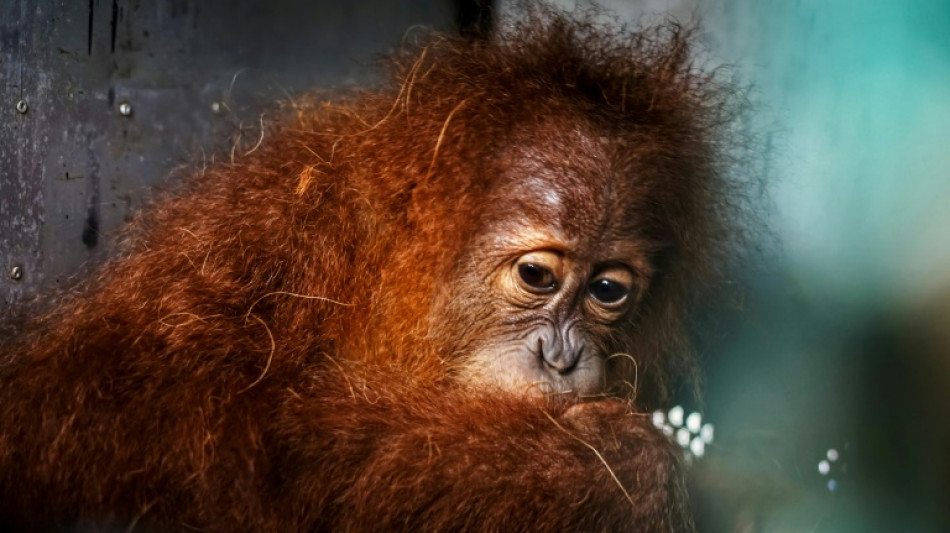
Indonesia biomass drive threatens key forests: report / Photo: HENDRA SYAMHARI - AFP

Indonesia biomass drive threatens key forests: report

Indonesia's push to add wood-burning to its energy mix and exports is driving deforestation, including in key habitats for endangered species such as orangutans, a report said Thursday.

Text size:

Bioenergy, which uses organic material like trees to produce power, is considered renewable by the International Energy Agency as carbon released by burning biomass can theoretically be absorbed by planting more trees.

But critics say biomass power plants emit more carbon dioxide per unit of energy produced than modern coal plants, and warn that using biomass to "co-fire" coal plants is just a way to extend the life of the polluting fossil fuel.

Producing the wood pellets and chips used for "co-fire" coal plants also risks driving deforestation, with natural forests cut down and replaced by quick-growing monocultures.

That, according to a report produced by a group of Indonesian and regional NGOs, is exactly what is happening in Indonesia, home to the world's third-largest rainforest area.

"The country's forests face unprecedented threats from the industrial scale projected for biomass demand," said the groups, which include Auriga Nusantara and Earth Insight.

Indonesia's production of wood pellets alone jumped from 20,000 to 330,000 tonnes from 2012 to 2021, the report said.

Auriga Nusantara estimates nearly 10,000 hectares of deforestation has been caused by biomass production in the last four years.

- Forests for 'human survival' -

But the report warns that much more is at risk as Indonesia ramps up biomass, particularly in its coal-fired power plants.

The report looked at existing co-firing plants and pulp mills around Indonesia and the 100 kilometres (62 miles) surrounding each.

They estimate more than 10 million hectares of "undisturbed forest" lie within these areas and are at risk of deforestation, many of which "significantly overlap" with the habitat of endangered species.

Animals at risk include orangutans in Sumatra and Borneo, the report said.

Using wood to achieve just a 10 percent reduction in coal at Indonesia's largest power plants "could trigger the deforestation of an area roughly 35 times the size of Jakarta," the report warned.

Indonesia's environment and forestry ministry officials did not immediately respond to AFP's request for comment.

Indonesia saw a 27 percent jump in primary forest loss last year after a downward trend from a peak in 2015-2016, according to the World Resources Institute.

The groups also point the finger at growing demand in South Korea and Japan, two major export destinations for Indonesia's wood pellets.

They urged Indonesia to commit to protecting its remaining natural forest and reform its energy plans to focus on solar, while banning new coal projects.

Japan and South Korea should end biomass incentives and focus on cleaner renewable options, the group urged.

"There are no math tricks that can justify burning forests for energy," the NGOs said.

"Science has clearly proven the vital role of tropical forests for climate stability, biodiversity and human survival."

M.Ito--JT