The Japan Times - Europe's drinking water contamined by 'forever chemical': NGOs

EUR -
AED 4.021559
AFN 71.178358
ALL 89.791427
AMD 395.362254
ANG 1.960573
AOA 1004.157082
ARS 1748.147599
AUD 1.643472
AWG 1.973819
AZN 1.865925
BAM 1.955613
BBD 2.208689
BDT 137.516871
BGN 1.942031
BHD 0.413561
BIF 3294.785437
BMD 1.095045
BND 1.414265
BOB 13.000759
BRL 6.087472
BSD 1.096595
BTN 102.037258
BWP 16.223451
BYN 3.299685
BYR 21462.890873
BZD 2.205489
CAD 1.562795
CDF 2496.704028
CHF 0.915526
CLF 0.028728
CLP 1131.381984
CNY 7.297935
CNH 7.287751
COP 3822.435061
CRC 486.853519
CUC 1.095045
CUP 26.318487
CVE 110.254474
CZK 24.461787
DJF 195.281356
DKK 7.483217
DOP 65.603737
DZD 149.524724
EGP 59.691301
ERN 16.425682
ETB 179.262785
FJD 2.511104
FKP 0.835738
GBP 0.835944
GEL 2.836595
GGP 0.835738
GHS 13.022757
GIP 0.835738
GMD 81.033753
GNF 9728.071232
GTQ 8.3842
GYD 229.3881
HKD 8.574261
HNL 29.481185
HRK 7.481312
HTG 143.886263
HUF 370.498103
IDR 20098.957009
ILS 3.64344
IMP 0.835738
INR 101.834304
IQD 1662.441282
IRR 2146470.865212
ISK 137.395775
JEP 0.835738
JMD 173.55343
JOD 0.776431
JPY 174.72002
KES 142.776369
KGS 95.762146
KHR 4458.574326
KMF 491.675792
KPW 985.541291
KRW 1460.21068
KWD 0.342443
KYD 0.913913
KZT 502.692006
LAK 24731.638796
LBP 98202.324327
LKR 365.33512
LRD 179.84283
LSL 19.034983
LTL 3.233385
LVL 0.662382
LYD 7.108321
MAD 10.990851
MDL 20.189072
MGA 4965.525926
MKD 61.549124
MMK 2299.728126
MNT 3954.460298
MOP 8.842456
MRU 44.501751
MUR 51.303294
MVR 16.867794
MWK 1901.518456
MXN 21.522794
MYR 4.512468
MZN 70.357083
NAD 19.034983
NGN 1485.484321
NIO 40.356147
NOK 10.733202
NPR 163.259413
NZD 2.003377
OMR 0.41867
PAB 1.096595
PEN 3.803637
PGK 5.018521
PHP 69.81576
PKR 303.023569
PLN 4.474082
PYG 7064.325547
QAR 3.997618
RON 5.349082
RSD 117.658767
RUB 89.456059
RWF 1620.945243
SAR 4.108206
SBD 8.954364
SCR 15.181751
SDG 658.673865
SEK 11.24196
SGD 1.413015
SHP 0.836455
SLE 25.186416
SLL 22962.559633
SOS 626.740163
SRD 40.801799
STD 22665.229983
STN 24.497661
SVC 9.595084
SYP 14237.781345
SZL 19.030183
THB 37.174645
TJS 10.176628
TMT 3.832659
TND 3.323883
TOP 2.636607
TRY 55.566772
TTD 7.44029
TWD 36.138804
TZS 2947.21862
UAH 49.374886
UGX 4731.548265
USD 1.095045
UYU 44.645738
UZS 13181.741499
VES 1008.953531
VND 28292.141839
VUV 133.056777
WST 3.108294
XAF 655.957
XAG 0.025033
XAU 0.0002996746
XCD 2.959416
XCG 1.976411
XDR 0.774254
XOF 655.957
XPF 119.331742
YER 259.091684
ZAR 19.010482
ZMK 9856.727054
ZMW 22.891814
ZWL 352.604189
SSP 6324.325702
MXV 2.407766
  • RYCEF

    0.1000

    19.81

    +0.5%

  • VOD

    -0.2500

    16.33

    -1.53%

  • CMSC

    -0.2800

    20.12

    -1.39%

  • RBGPF

    -2.0000

    65

    -3.08%

  • RIO

    -0.2500

    94.16

    -0.27%

  • BTI

    -1.2000

    54.85

    -2.19%

  • NGG

    -0.3000

    74.94

    -0.4%

  • GSK

    -0.3500

    49.35

    -0.71%

  • BCE

    -0.4200

    20.14

    -2.09%

  • CMSD

    -0.3400

    19.93

    -1.71%

  • BP

    -0.9100

    43.52

    -2.09%

  • RELX

    0.1700

    33.24

    +0.51%

  • BCC

    -0.6200

    75.97

    -0.82%

  • AZN

    -1.9400

    164.21

    -1.18%

  • JRI

    0.0000

    10.77

    0%

Europe's drinking water contamined by 'forever chemical': NGOs
Europe's drinking water contamined by 'forever chemical': NGOs / Photo: JOEL SAGET - AFP

Europe's drinking water contamined by 'forever chemical': NGOs

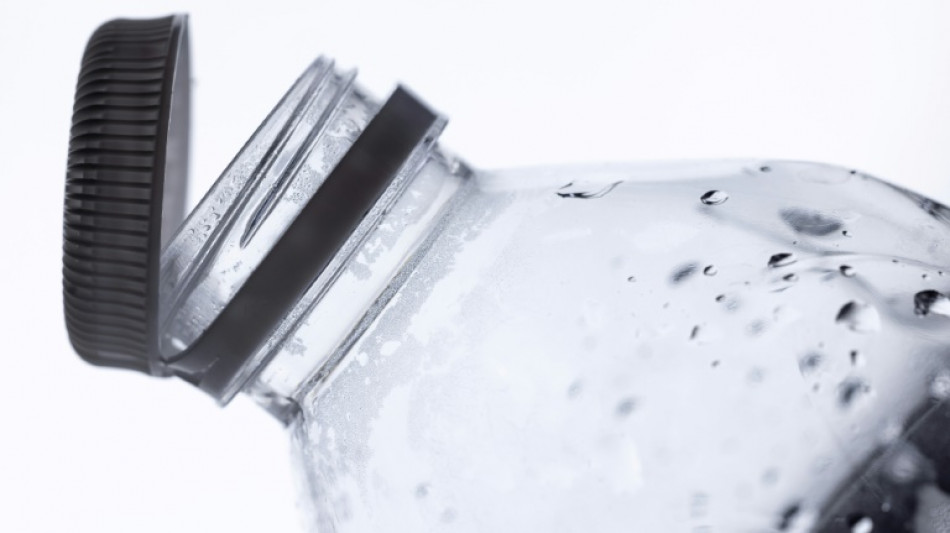
A large sample of European drinking water has detected a substance linked to "forever chemicals" used in pesticides and refrigeration, a coalition of non-governmental organisations said Wednesday.

Text size:

It follows an earlier study in May, also by the European Pesticide Action Network (PAN Europe) and its members, that found "alarming" levels of PFAS chemicals in Europe's rivers, lakes and groundwater.

Widely used in everyday items like cosmetics, non-stick pans and fire extinguishers, PFAS long-life substances are highly durable products that can take centuries to break down.

Samples for this latest study, taken from bottled and tap water in 11 EU countries, detected the presence of TFA (trifluoroacetic acid).

A major source of TFA is degrading PFAS used in certain synthetic pesticides and cooling gases in refrigeration and air conditioning, among other applications.

The possible impact on human health of PFAS, and of TFA in particular, has been growing, but "surprisingly few toxicological studies are available", PAN Europe said.

The samples tested by the Water Technology Centre in Karlsruhe, Germany, found TFA in 34 of 36 tap water samples and in 12 of the 19 bottled mineral and spring waters.

TFA values in tap water ranged from "undetectable" to 4,100 nanograms/litre, with an average of 740 ng/L.

In mineral and spring waters, TFA values ranged from "undetectable" to 3,200 ng/L, with an average of 278 ng/L.

PAN Europe backed the proposal made by the Dutch National Institute of Public Health and the Environment to set a standard at 2,200 ng/L.

This "was set in such a way that the consumption of drinking water only fulfils 20 percent of the tolerable daily intake," PAN Europe said.

This threshold was exceeded in mineral water analysed in drinking water from Austria (4,100 ng/L), while in Paris, the tap water analysed contained 2,100 ng/L.

Under European Union rules, from 2026 all drinking water must not exceed 500 ng/L for all PFAS, and NGOs are demanding that TFA be added to the list.

An earlier decision to class TFA as "non-relevant" under EU pesticide regulations was "regrettable" considering its "toxicological profile still leaves many questions unanswered", the report in May said.

A recent study on rabbits and TFA exposure found birth defects in offspring, raising serious concerns about this chemical.

PAN Europe has called for urgent interventions to address this "political failure", starting with a "rapid ban" on PFAS pesticides and a rethink on the threat posed by individual chemicals like TFA.

Y.Kimura--JT