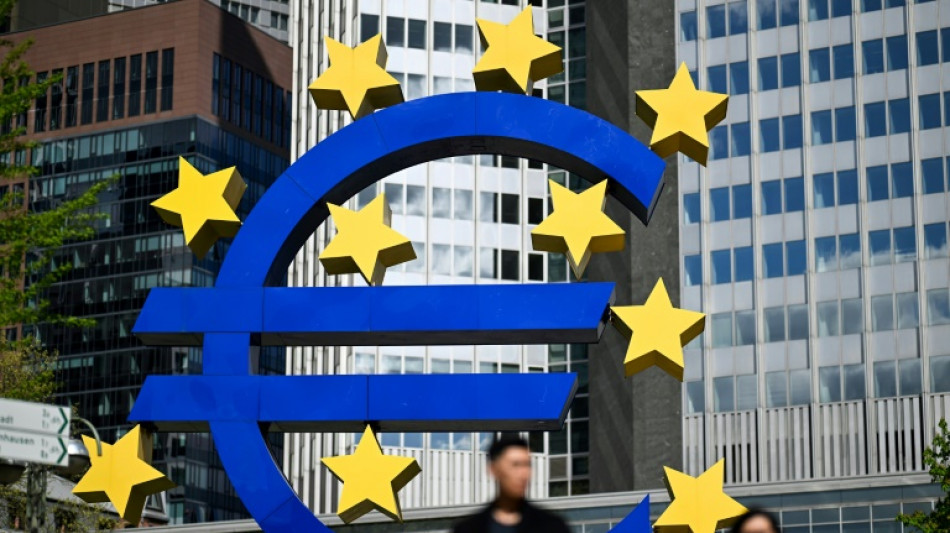
ECB to start cutting rates from record highs / Photo: Kirill KUDRYAVTSEV - AFP/File

The European Central Bank is expected to start cutting interest rates from record highs Thursday, its first reduction in nearly five years, but volatile inflation means the path ahead is uncertain.
After an unprecedented streak of eurozone rate hikes beginning in mid-2022 to tame runaway energy and food costs, inflation has been slowly coming down towards the ECB's two-percent target.
Rates have been on hold since October, but it is a near certainty the central bank will reduce borrowing costs by a quarter percentage point Thursday, taking its key deposit rate to 3.75 percent.
It will provide a much-needed boost for the beleaguered eurozone economy and be the first cut since September 2019.
The move will also mark the ECB diverging from the US Federal Reserve, which has also hiked rates aggressively but is not expected to start cutting until later due to stronger-than-expected data.
"The ECB is all but certain to cut its policy rates... This move has long been telegraphed to markets," said Frederik Ducrozet, chief economist at Pictet Wealth Management.
"The focus will now shift to what is going to happen after June."
The ECB's tightening campaign began after inflation was driven higher by Russia's 2022 invasion of Ukraine and pandemic-related supply chain woes, with the bank hiking 10 consecutive times.
- Rapid easing not expected -
But Thursday's expected cut is unlikely to herald the start of a rapid easing cycle.
Despite consumer price rises having slowed from peaks of over 10 percent in late 2022, when Europe was rocked by an energy shock, bringing inflation down to the ECB's target is proving difficult.
Data last week showed that inflation in the 20 countries that use the euro rose in May, and faster than expected -- to 2.6 percent on year, up from April's 2.4-percent increase.
The eurozone economy also expanded faster than expected in the first quarter as it emerged from recession, although it is still slow compared to the robust growth of the US economy.
Investors will be keenly watching to see if ECB president Christine Lagarde provides any guidance about the pace of cuts going forward in her post-meeting press conference.
The central bank will also release its own updated forecasts for growth and inflation on Thursday, which will feed into rate-setters' debate about their next move.
Berenberg bank economist Holger Schmieding expects, however, that the "ECB will probably provide little clarity on the further outlook for its monetary policy", and continue to insist that it will respond to incoming data.
But given the volatility of recent data, the chances of another cut at the ECB's next meeting in July are now viewed as low.
Instead, many analysts believe policymakers are hoping to reduce rates every other meeting -- so once a quarter, as the bank meets every six weeks -- at the same time as they release their regularly updated projections.
This view was strengthened by recent comments from Dutch central bank chief Klaas Knot, a member of the ECB's rate-setting governing council, who said rates would be reduced gradually with a focus on quarterly meetings.
In the United States, stronger-than-expected data pushed back expectations of when the Fed -- which holds its next meeting in mid-June -- will begin reducing borrowing costs, fuelling speculation the ECB might also stay its hand.
But eurozone rate-setters have stressed they plot their own course.
There are nevertheless concerns if the ECB cuts faster than its US counterpart, as this could lead to a depreciation of the euro and fuel inflation by pushing up the cost of imports into the eurozone.
M.Saito--JT