ECB to start rate cuts but sticky inflation clouds path ahead / Photo: Kirill KUDRYAVTSEV - AFP/File

The European Central Bank is expected to begin cutting eurozone interest rates from historic highs this week, but sticky inflation means the move is unlikely to kickstart a rapid easing cycle.
Policymakers are poised to reduce eurozone borrowing costs by a quarter percentage point on Thursday, taking the key deposit rate to 3.75 percent from its current record level.
ECB officials have widely flagged the coming cut and brushed off concerns about a divergence from the US Federal Reserve, where a robust economy has pushed back expectations of when rate reductions will start.
"The ECB's own communication over the last two months has made it almost impossible not to cut" on Thursday, said ING economist Carsten Brzeski.
The Frankfurt-based institution launched an unprecedented hiking cycle in mid-2022 as energy and food costs surged following Russia's invasion of Ukraine and amid pandemic-related supply chain woes.
After 10 consecutive increases, it has kept rates on hold since October, but steadily slowing inflation means a cut is now on the horizon, which would alleviate pressure on the beleaguered eurozone.
- Forecast-busting inflation -
But while it is a near certainty the 26 members of the ECB governing council will lower borrowing costs Thursday, recent stronger-than-expected data means it is unlikely to herald the start of a rapid rate-cutting cycle.
Despite consumer price rises having slowed from peaks of over 10 percent in late 2022, when Europe was rocked by an energy shock, bringing inflation down to the ECB's two-percent target is proving difficult.
Data released on Friday showed that inflation in the 20 countries that use the euro rose in May, and faster than expected -- to 2.6 percent on year, up from April's 2.4-percent increase.
Officials are particularly concerned about strong price rises in the service sector as well as continued robust wage growth, as workers clinch big pay rises to compensate for inflation.
The eurozone economy also grew faster than expected in the first quarter as it emerged from recession, although it is still slow compared to the robust growth of the US economy.
After the inflation setback, Capital Economics' Jack Allen-Reynolds said another reduction at the ECB's meeting in July was now "unlikely".
"Several policymakers have been keen to stress that even if the bank cuts rates (Thursday) -- which is still likely -- it will be in no rush to cut again in July," its next meeting, he said.
- Fed divergence worries -
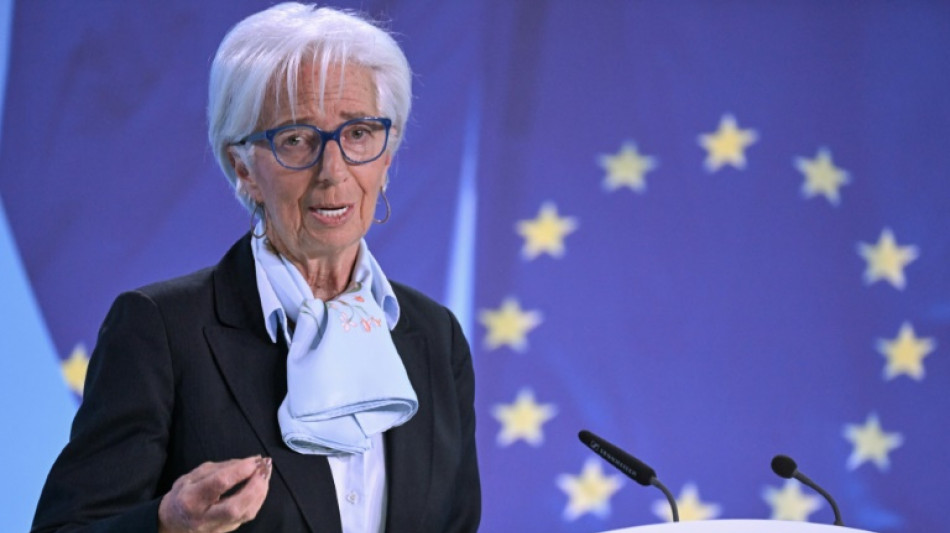
Investors will be keenly watching to see if ECB president Christine Lagarde provides any guidance about the pace of cuts going forward in her post-meeting press conference.
The central bank will also release its own updated forecasts for growth and inflation on Thursday, which will feed into rate-setters' debate about their next move.
But economist Dirk Schumacher from Natixis bank said only "marginal changes" were expected to the projections, and that "we are unlikely to get anything concrete" about what will happen after June.
In the United States, stronger-than-expected data pushed back expectations of when the Fed -- which holds its next meeting in mid-June -- will begin reducing borrowing costs, fuelling speculation the ECB might also stay its hand.
But eurozone rate-setters have stressed they plot their own course.
"What the Fed does will not determine the case for a rate cut by the ECB," Bank of Finland governor Olli Rehn, who sits on the ECB's governing council, told AFP in an interview last month.
But there are risks if the ECB cuts faster than its US counterpart, as this could lead to a depreciation of the euro and fuel inflation by pushing up the cost of imports into the eurozone.
Still with eurozone data having been surprisingly strong in recent times, analysts have dialled back expectations for the number of rate cuts this year.
Berenberg bank economist Holger Schmieding forecasts the ECB will cut rates just once a quarter this year, and the deposit rate will be reduced to 3.25 percent by the end of 2024.
S.Ogawa--JT