Centuries-old Algerian indigenous tradition champions sharing / Photo: - - AFP

In a village nestled in the mountains of northeastern Algeria, locals and visitors gathered under a cold winter sky to celebrate Tamechrit, a centuries-old Berber tradition rooted in sharing.
Seeking to preserve a practice that faded during the Algerian civil war of the 1990s, villagers marked Tamechrit with Berber music and food on the occasion coinciding in January with the Amazigh new year.
The minority community of Berbers refer to themselves as the Amazigh, meaning "free people". They have long fought for recognition for their ancient culture and language in modern states across North Africa.
Berbers are descendants of pre-Arab North Africans, whose historic homelands stretched from the Canary Isles and Morocco to the deserts of western Egypt.
"We hope to perpetuate this tradition during cultural or religious festivals," bringing together different people from the village and even those who have left, Dahmane Barbacha, a 41-year-old from Ath Atig village, told AFP.
Children wore temporary Amazigh face tattoos at the event that dates back to the 13th century, according to historian Saleh Ahmed Baroudi.
Tamechrit means "offering" in Tamazight, the community's language recognised as an official language alongside Arabic in Algeria.
It represents "an occasion for gathering, fraternity, and reconciliation between families" across Amazigh villages, said Baroudi, who teaches contemporary Algerian history.
Different regions of the country use other names for the custom, he added.
The merrymaking is also held to observe major Islamic events such as the fasting month of Ramadan, Prophet Mohammed's birthday, and Ashura.
It is often held in Zawiyas, small places for worship and religious teaching, usually where a local saint or holy figure lived and was buried.
Baroudi said most of those sites are in mountainous regions, adding to the "spiritual dimension" of Tamechrit.
- Reconciliation -
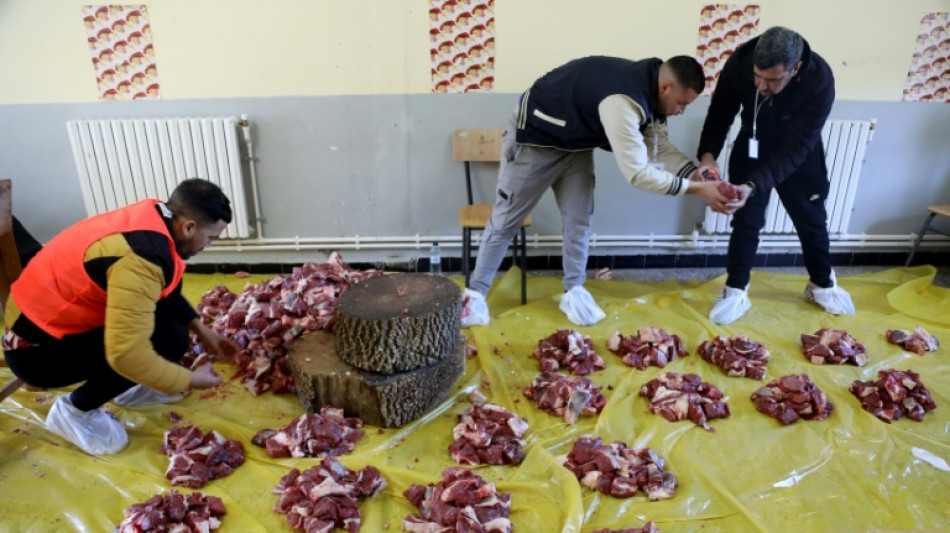
The festival begins days in advance, when men from the village collect donations to purchase cattle whose meat is later distributed equally among families.
During the event a communal meal -- usually couscous prepared by village women -- is served to everyone, regardless of social standing.
Ammar Benkherouf, a 36-year-old living in France, said he has been taking annual leaves in recent years to attend the ceremony.
"I can't describe the happiness it brings me to help keep this heritage alive," he told AFP.
By midday, the communal couscous is served to villagers and visitors while volunteers distribute the portioned meat around the village's households.
Tamechrit had also been a tool for fostering solidarity during Algeria's Independence War against French colonial rule from 1954-1962, according to Baroudi.
The ritual then faded during the country's civil war between 1992 and 2002, a conflict between authorities and Islamist groups that claimed the lives of around 200,000 after the Islamic Salvation Front (FIS) party won municipal and legislative elections.
Tamechrit then "made a comeback in the early 2000s" with the end of the civil war, said Baroudi.
Today, Tamechrit continues to bring together villagers and resolve conflicts between them.
Farhat Medhous, a 31-year-old who heads a cultural association in Ath Atig, said his group now looks to "restore women's participation in these traditions inherited from their ancestors".
He said that, traditionally, women held their own gatherings in a separate area from the men's, but their involvement diminished even after the civil war.
In addition, he added, the association aims at teaching the younger generations Tamechrit values, meaning sharing and reconciliation.
He said this year's festivity was organised by villagers aged 18 to 40.
"We have held activities for children to teach them the values of volunteerism and community," said Medhous. "This prepares them to preserve these traditions as they grow older."
Y.Hara--JT