Nepalis fight TikTok ban in court, or ignore it entirely / Photo: PRAKASH MATHEMA - AFP

When Nepal suddenly announced a ban on TikTok last year, lawyer Sunil Rajan Singh was determined to fight what he said was a government effort to hide its wrongdoings.
The hugely popular video-sharing platform has faced restrictions in several countries for allegedly breaking data rules and for its supposed harmful impact on youth.
Last week the United States became the latest nation poised to ban the app outright, unless Chinese parent company ByteDance agrees to divest it.
Efforts to restrict access to TikTok have prompted vocal opposition wherever they have been attempted but especially so in Nepal, where the platform had been used to mobilise anti-government demonstrations.
Some Nepalis have skirted the ban entirely by accessing TikTok via virtual private networks (VPNs), which use a remote connection that obscures their location. Others like Singh are determined to fight.
"The government's move is against freedom of speech and expression guaranteed by Nepal's constitution," said the attorney, who is leading a legal challenge to the ban in the Himalayan republic's top court.
"On TikTok the public would learn about corruption, financial embezzlement and other immoral activities of leaders," he told AFP. "That was not helpful for the government."
Nepal's communications minister justified last November's ban by accusing the platform of spreading content that damaged the country's "social harmony".
The announcement came days before a huge rally called by a prominent businessman who was using TikTok to organise a campaign demanding the reinstatement of Nepal's monarchy.
The case before the Supreme Court is due to be heard next week with a decision expected later this year.
TikTok is one of the most popular social media platforms on the planet with more than one billion users.
Its explosive growth has given its content creators and influencers an immense audience, and its editing features and AI-powered algorithm have proved particularly attractive.
But the platform has also been blamed for spreading disinformation, and ByteDance's alleged ties to the Chinese government have prompted alarm in foreign capitals.
Multiple countries have sought to tighten controls on TikTok, and it was banned about four years ago in neighbouring India.
AFP, along with more than a dozen fact-checking organisations, is paid by TikTok to verify videos that potentially contain false information.
- 'TikTok gave us hope' -
Nepal's ban was condemned not just by free speech advocates like Singh but the owners of popular accounts whose lives were transformed by the platform, which had about 2.2 million users in the country.
Sangmo Bomjan, 28, was running a lucrative business reselling children's clothes on the platform that began when the Covid-19 pandemic put her husband out of work, saving her household from financial ruin.
"We were worried, but TikTok gave us hope," she told AFP.
Orders kept the couple busy packing clothes even at night to deliver across the country, and they were able to earn more than $2,000 every month.
After the ban, Bomjan used a VPN to keep posting videos to her account, circumventing the block on TikTok imposed by local internet service providers.
But her orders have shrunk to less than half of what they were before the ban and her videos get a fraction of their earlier viewers.
"They do not reach my customers in remote areas. They don't know how to use VPNs," she said.
The collapse in her earnings prompted her husband to migrate to South Korea, sending back money to support Bomjan and their two children.
- 'So many people were earning' -
Industry workers told AFP last year that Nepal's TikTok ban had torpedoed a market worth an estimated $5 million each year for advertisers and content creators, and which was set to grow rapidly.
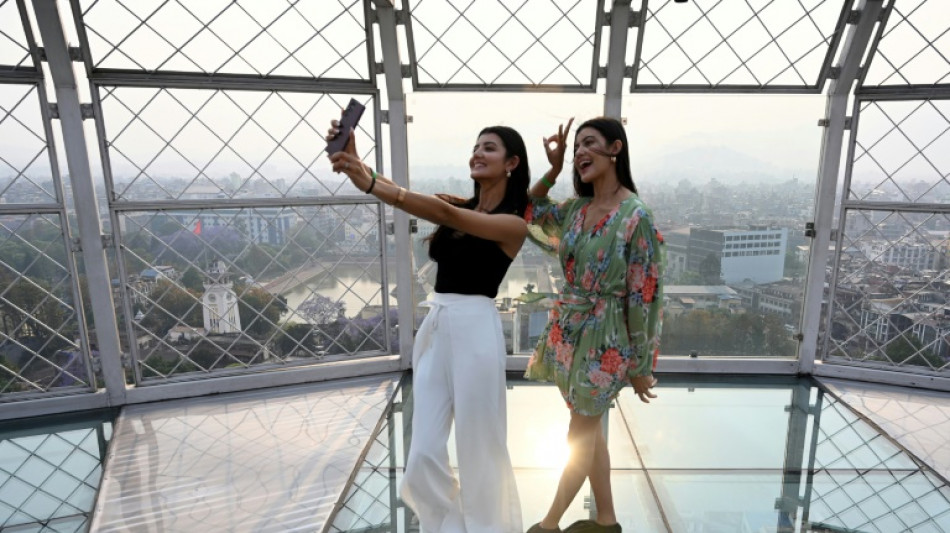
After joining the platform in 2018, twin sisters Prisma and Princy Khatiwada built a following of nearly eight million on TikTok with videos of their synchronised dance routines.
Their popularity has netted them endorsement deals and modelling contracts in music videos and advertisements.
Both sisters still post to their individual accounts but their recent videos have been watched just tens of thousands of times on average -- miniscule compared to the 70 million views one of their biggest viral hits got before the ban.
"Where we stand today is because of TikTok... so many people were earning and getting opportunities through it," Prisma told AFP.
"We are hopeful that the ban will be lifted."
H.Takahashi--JT