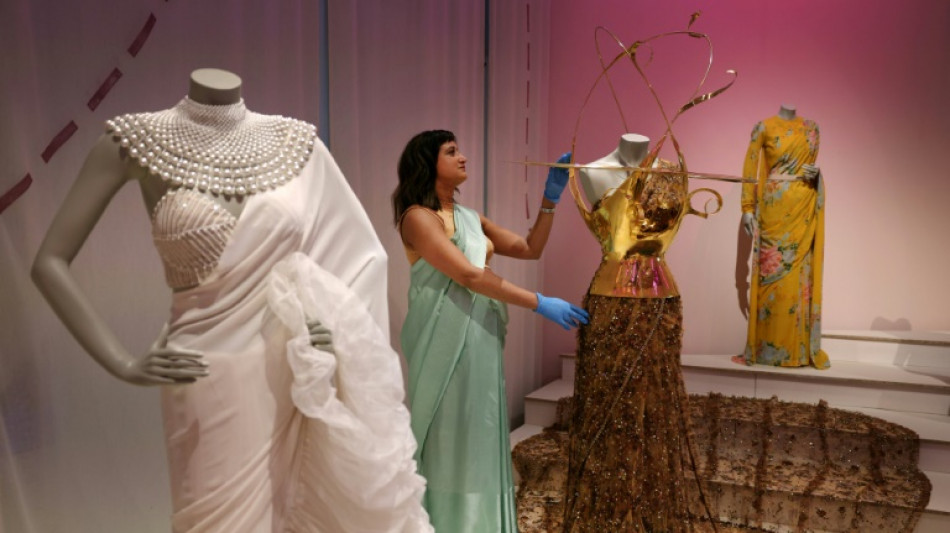
London show explores sari's 21st century reinvention / Photo: Adrian DENNIS - AFP

The sari is being reinvented for the modern age in an Indian "fashion revolution," with around 60 trailblazing examples due to go on display at a new exhibition in London.
Over the past decade, according to curator Priya Khanchandani, the sari has seen the most rapid transformation in its 5,000-year history.
From sari styles worn by young women on their way to work in Delhi and Mumbai to the spectacular creation that was the first sari to grace New York's famous Met Gala, the London showcase spotlights the garment's 21st century revival.
Khanchandani says she first became aware of a renaissance in 2015 when she met some of the designers in Delhi who were transforming the sari, traditionally a single long piece of unstitched fabric draped over the body.
"I saw the sari being revived as an everyday garment in a way that was very fashionable. They were being worn by younger women than I knew before," she told AFP ahead of the show, The Offbeat Sari, which opens at the Design Museum on Friday.
"They were often quite intellectual women, writers and artists... wearing them in ways that I didn't expect," she said.
Having previously viewed saris as a garment to be worn for special events or weddings, she suddenly noticed them being reinvented as everyday clothing, even teamed with T-shirts and sneakers.
The birth of mass consumerism and social media in India combined with the growth of the country's urban middle class has accelerated the sari's revamp, Khanchandani said.
"The influence of digital media which has a really significant reach in India, particularly among young people, allowed trends to spread and I think allowed the way that saris were being worn to become a grassroots movement," she added.
- Pushing boundaries -
Popular hashtags that have seen a vast array of images shared online include #sarilove, #sarifashion, #designsarees and #sareeindia.
Despite the sari's long history, it was not until last year that a sari was seen at the celebrated annual Met Gala event in New York.
Worn by Indian businesswoman and socialite Natasha Poonawalla, the showstopping ensemble featured a flowing gold sari by Sabyasachi with a gold Schiaparelli bustier.
In addition to extravagant couture saris, designers in India have also pushed boundaries by experimenting in a range of ways.
The Raj Kilt, by the Little Shilpa brand, is described as "half kilt, half sari" and reflects the cross-cultural experiences of Indian designer Shilpa Chavan who studied in Britain.
Some of the most eye-catching and innovative exhibits include a sari adorned with sequins cut from old X-ray images from hospital waste and another in distressed denim.
But while the sari's potential for extravagance and creativity is on full display in the exhibition's selections, there are also examples of how it is being pressed into use to express ideas of identity and resistance.
Hundreds of thousands of members of the so-called Gulabi Gang, a group set up to fight domestic violence, including sexual abuse and child marriage in rural India, have adopted bright pink saris along with bamboo sticks as the symbol of their movement.
Also included in the show is a purple silk sari embroidered with sequins and crystals by the brand Papa Don't Preach.
After the label posted a photograph of the sari being worn by the author and comedian ALOK, who founded the #DeGenderFashion movement, it decided to remove the "womenswear" wording from their messaging.
T.Shimizu--JT