Desperate Rohingya risk deadly voyages as trafficking surges / Photo: Munir UZ ZAMAN - AFP

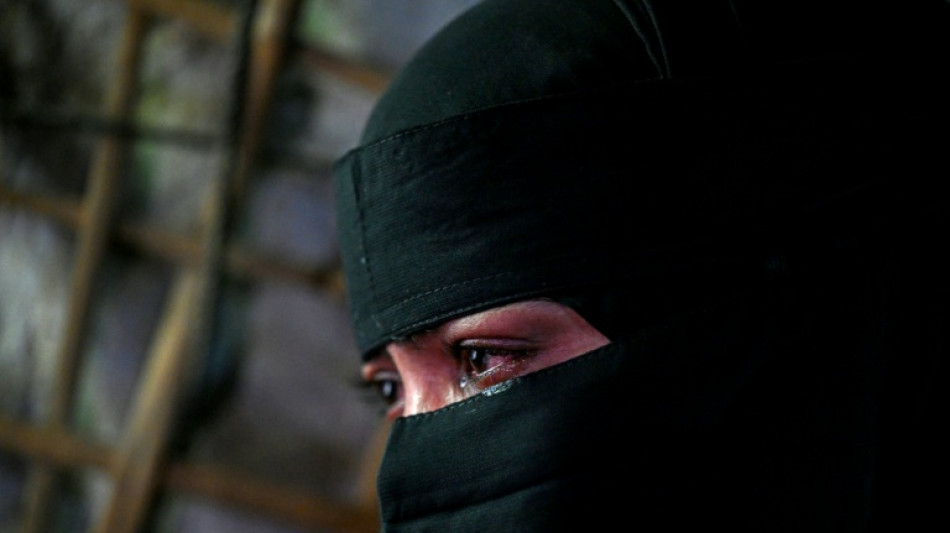
Rahela Begum survived the horrors of war in Myanmar and life in the world's largest refugee camp in Bangladesh -- only to end up drifting at sea, clinging to a wooden plank.
The 25-year-old boarded a boat bound for Malaysia in April, part of a wave of Rohingya refugees attempting dangerous sea crossings that led to a record number of deaths in 2025.
She spent two days and a night adrift in the Andaman Sea off Bangladesh after the overcrowded vessel carrying about 280 people sank following four days of travel.
"I managed to find a wooden plank, which I clung to for two days and one night," Begum said, noting she eventually caught the attention of a passing rescue ship.
"I was floating like a dead body, and after great difficulty managed to raise my head slightly."
Thousands of Rohingya have tried in recent years to leave Cox's Bazar, where more than a million refugees forced to flee war-torn Myanmar's Rakhine state live in squalid conditions.
Nearly 900 Rohingya were reported dead or missing at sea in 2025, the deadliest year on record, according to the United Nations refugee agency, UNHCR.
And deaths have continued to mount in 2026.
Begum arrived in Cox's Bazar in 2017 and in April joined the still growing exodus of refugees to Malaysia, Indonesia and Thailand as conditions in the camps deteriorated.
- Desperation -
Bangladesh bars most refugees from leaving the camps or working, giving Begum little choice but to attempt to flee by sea, she said.
A trafficker who promised to treat her "like his own sister" took her to Teknaf, about an hour's drive from Cox's Bazar, and she boarded a crowded trawler on April 4.
When news of the disaster emerged a week later, the Bangladesh Coast Guard said nine people had been found alive, including six traffickers.
Human trafficking has become a lucrative trade, with recruiters and criminal gangs selling refugees the hope of a better life outside what many describe as an "open-air prison".
"The networks include people who live in the camps and individuals from Teknaf, Myanmar, Thailand and Malaysia," a trafficker told AFP on condition of anonymity.
Journeys typically begin in Teknaf, where migrants are packed onto trawlers before being transferred to larger vessels at sea.
The trafficker told AFP he earned up to 250,000 taka ($2,000) per shipment, but did not consider it a crime.
- 'Maximum alert' -
Despite the risks, the desire for many to leave remains strong.
In 2025, more than 6,500 Rohingya attempted to leave the camps by sea, and one in seven of them were reported dead or missing, according to the UN.
Astrid Castelein, a UNHCR representative in Cox's Bazar, said the agency recorded 2,300 departures from camps between January and May this year -- up from 1,180 during the same period last year.
Authorities are struggling to contain the trafficking.
Coast Guard Lieutenant Mohammad Rawnak Rahman patrols the mouth of the Naf, the river that marks the border between Bangladesh and Myanmar.
Sitting in his boat, he weaves between fishermen's canoes, his eyes fixed on the hills of Myanmar's Rakhine state, plagued by clashes between Arakan Army rebels and junta troops.
"We're on maximum alert. We're doing everything we can to get the situation under control," Rahman said, adding that the coast guard had rescued "618 trafficking victims" this year.
- 'Lasting peace' -
At the Cox's Bazar courthouse, prosecutor Tawhidul Anwar said he was overwhelmed by the scale of the problem.
"We're handling around 500 human trafficking cases," he said. "Investigators aren't very effective, it's hard to obtain evidence. The traffickers are very powerful."
Anwar said the traffickers arrested after the April shipwreck were released on bail despite facing potential life sentences.
Local police superintendent ANM Sajedur Rahman said authorities lacked the resources to dismantle trafficking networks.
"The problem is that the Rohingya want to escape at any cost."
Sayed Ullah, president of the United Rohingya Council, defended the attempts to leave.
"Each person has to survive on two meals a day, and 16 taka ($0.13)," he said.
"No one should be surprised that people try to leave, hoping to find something better."
Authorities have said easing restrictions on refugees is difficult because Bangladesh's resources are already stretched.
"There's no way out for us here. The only solution is a lasting peace agreement in Myanmar," Ullah said.
But across the border, the conflict unleashed by the 2021 military coup continues to rage.
According to US-based NGO Acled, more than 100,000 people have died in the fighting.
At her bamboo-and-tarpaulin shack in Cox's Bazar, Begum says her dreams of freedom sank with the boat.
"God has granted me peace nowhere in this world. Not in my country, not here."
K.Tanaka--JT