Portugal's unofficial exorcism fever worries Church / Photo: PATRICIA DE MELO MOREIRA - AFP

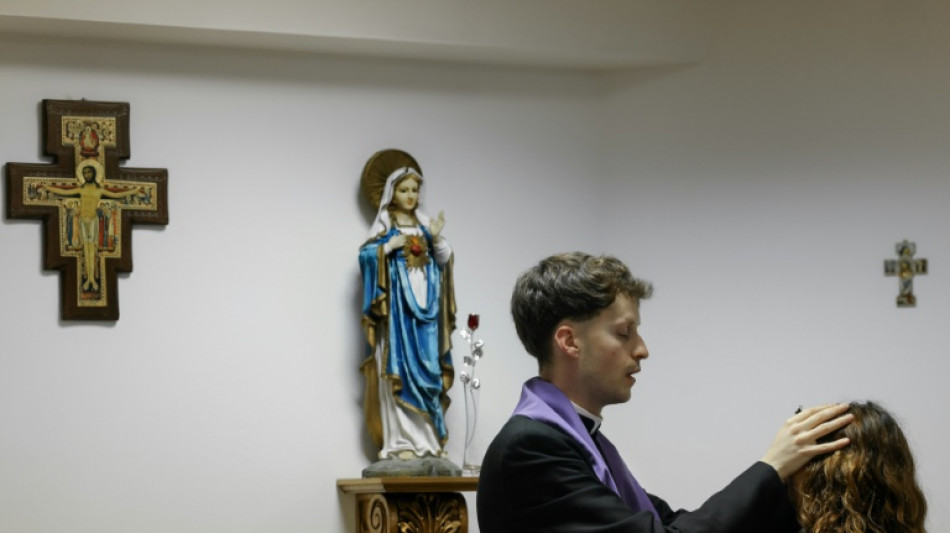
A woman closes her eyes as a young man dressed as a priest places both hands on her forehead. Moments later, she falls to the floor in front of dozens of worshippers.
The scene unfolds not in a church but in the basement of a small shopping centre a short walk from the vast esplanade of Portugal's Fatima shrine, one of the Catholic Church's most visited pilgrimage sites.
The gathering was part of a series of monthly so-called "exorcism retreats" held in Fatima that have raised concerns among Catholic authorities, who say they operate outside official Church oversight by self-styled religious figures and risk exploiting vulnerable believers.
On a recent Saturday, more than 100 people waited for the moment when Francisco Marques, 27, would start laying his hands on participants one by one.
Wearing a black cassock and a Roman collar, Marques cuts the figure of a traditional Catholic cleric.
But neither the Vatican nor local Church authorities recognise his ministry, which was founded in 2006.
Marques placed both hands on their foreheads, concentrating silently.
Some participants -- mostly women -- immediately fall backwards into the arms of attendants standing ready behind them before being lowered onto mats spread across the floor.
"You get a great feeling of peace. It's a liberation. I leave here cleansed, with a lighter soul," Lurdes Ramisio, a 56-year-old nurse, told AFP at the retreat.
"I feel he has a power. His hands transmit a power to me," she added.
- 'Driving out demons' -
The sessions are organised by Marques and members of his family with the support of Salvatore Micalef, an Italian who presents himself as his bishop.
"When I met Francisco, I saw above all that he had the gift of driving out demons," Micalef told AFP. "I therefore issued a decree authorising him to be an exorcist."
Exorcism is the ancient practice of driving out demons or evil spirits from a person or place they are thought to possess.
It is practised by some Roman Catholics but treated with deep scepticism by others.
While exorcism is an officially recognised practice within Catholicism, it is governed by strict rules and reserved for specially authorised priests.
Church officials say cases of alleged demonic possession are approached with caution and often involve consultation with medical experts to ensure people with illnesses such as epilepsy do not miss out on medical treatment if their symptoms are wrongly ascribed to the supernatural.
Bishop Jose Ornelas of Leiria-Fatima told AFP the Church treats the subject "with great prudence" to avoid creating the impression that priests are "gurus" with special powers over demons.
In 2023, his diocese warned against what it called "suspicious retreats" organised by "a supposed seminarian friend of the pope".
- Holy water and 'exorcised' salt -
Ornelas said that while the Church lacks the legal authority to prohibit such gatherings, it has the responsibility to denounce "abuse" by those who "exploit" people's suffering for their own benefit.
Marques says he is the victim of a campaign against him and has filed a defamation complaint against Church authorities.
"We have been slandered. We have been called false priests, false bishops, fraudsters. We must defend our dignity," he said.
Beyond the monthly retreats in Fatima, Marques celebrates services every Sunday in a private chapel at his residence in a village some 100 kilometres (60 miles) north of the shrine town.
He insists participation in the exorcism sessions is free of charge, though he acknowledges that donations from believers help finance the activities.
Visitors are also encouraged to purchase items including "exorcised" salt, holy water and anointing oils prepared by Marques.
The items are displayed on a table alongside business cards featuring a photo of him with Pope Francis, a telephone number and a bank account number for contributions.
K.Yoshida--JT