The Japan Times - Top UN court says right to strike protected in key labour treaty

EUR -
AED 4.254028
AFN 72.975903
ALL 95.154687
AMD 426.109595
ANG 2.073974
AOA 1063.36271
ARS 1614.391152
AUD 1.625505
AWG 2.087631
AZN 1.970651
BAM 1.951197
BBD 2.332328
BDT 142.315474
BGN 1.934347
BHD 0.436777
BIF 3448.53435
BMD 1.158347
BND 1.482116
BOB 8.002156
BRL 5.827412
BSD 1.157983
BTN 111.344236
BWP 15.694837
BYN 3.170048
BYR 22703.605017
BZD 2.329015
CAD 1.597673
CDF 2610.333649
CHF 0.91448
CLF 0.026461
CLP 1041.446913
CNY 7.878498
CNH 7.883253
COP 4309.132649
CRC 523.771087
CUC 1.158347
CUP 30.696201
CVE 110.004998
CZK 24.293897
DJF 206.211719
DKK 7.472758
DOP 68.20996
DZD 153.490971
EGP 61.306175
ERN 17.375208
ETB 186.695648
FJD 2.55433
FKP 0.861879
GBP 0.864642
GEL 3.098589
GGP 0.861879
GHS 13.375502
GIP 0.861879
GMD 83.979052
GNF 10152.005283
GTQ 8.83013
GYD 242.266347
HKD 9.076073
HNL 30.800733
HRK 7.527515
HTG 151.584341
HUF 359.533015
IDR 20472.62832
ILS 3.373861
IMP 0.861879
INR 111.642951
IQD 1517.0406
IRR 1530118.726903
ISK 143.391593
JEP 0.861879
JMD 182.339819
JOD 0.821212
JPY 184.459786
KES 150.063865
KGS 101.297817
KHR 4649.989471
KMF 492.297217
KPW 1042.500755
KRW 1749.625552
KWD 0.358566
KYD 0.965015
KZT 545.622174
LAK 25379.234147
LBP 103699.796148
LKR 400.086106
LRD 211.918207
LSL 19.188647
LTL 3.420298
LVL 0.700672
LYD 7.363596
MAD 10.69991
MDL 20.08544
MGA 4863.546777
MKD 61.617722
MMK 2432.515968
MNT 4145.415952
MOP 9.344972
MRU 45.961368
MUR 54.824871
MVR 17.850284
MWK 2007.945464
MXN 20.123624
MYR 4.590064
MZN 74.009373
NAD 19.188895
NGN 1588.232942
NIO 42.620185
NOK 10.723395
NPR 178.146175
NZD 1.979155
OMR 0.445367
PAB 1.157973
PEN 3.951745
PGK 5.050064
PHP 71.398212
PKR 322.475606
PLN 4.248719
PYG 7144.114567
QAR 4.22232
RON 5.240943
RSD 117.405495
RUB 82.484615
RWF 1698.777531
SAR 4.3486
SBD 9.289286
SCR 15.594617
SDG 695.588211
SEK 10.877926
SGD 1.483246
SHP 0.864823
SLE 28.524315
SLL 24289.963939
SOS 661.832872
SRD 43.040698
STD 23975.448238
STN 24.442651
SVC 10.132052
SYP 128.061073
SZL 19.182744
THB 37.901366
TJS 10.757827
TMT 4.065799
TND 3.391598
TOP 2.789022
TRY 52.83755
TTD 7.854436
TWD 36.550838
TZS 3017.492121
UAH 51.21116
UGX 4380.702742
USD 1.158347
UYU 46.689647
UZS 13907.129879
VES 602.645129
VND 30528.240318
VUV 137.753165
WST 3.136592
XAF 654.407454
XAG 0.01545
XAU 0.000257
XCD 3.130491
XCG 2.087012
XDR 0.813337
XOF 654.410272
XPF 119.331742
YER 276.410557
ZAR 19.185878
ZMK 10426.515605
ZMW 21.799664
ZWL 372.987324
  • CMSC

    -0.1200

    22.66

    -0.53%

  • CMSD

    -0.2100

    22.68

    -0.93%

  • BCE

    0.1800

    24.35

    +0.74%

  • GSK

    0.5650

    51.345

    +1.1%

  • BTI

    0.6750

    65.975

    +1.02%

  • RIO

    0.9100

    104.22

    +0.87%

  • BCC

    -0.8450

    66.435

    -1.27%

  • RYCEF

    0.0700

    16.32

    +0.43%

  • JRI

    0.0450

    12.715

    +0.35%

  • RELX

    -0.4700

    33.13

    -1.42%

  • BP

    0.3350

    45.465

    +0.74%

  • AZN

    1.5100

    188.97

    +0.8%

  • NGG

    1.3050

    86.025

    +1.52%

  • RBGPF

    -0.1800

    63

    -0.29%

  • VOD

    -0.2050

    15.035

    -1.36%

Top UN court says right to strike protected in key labour treaty
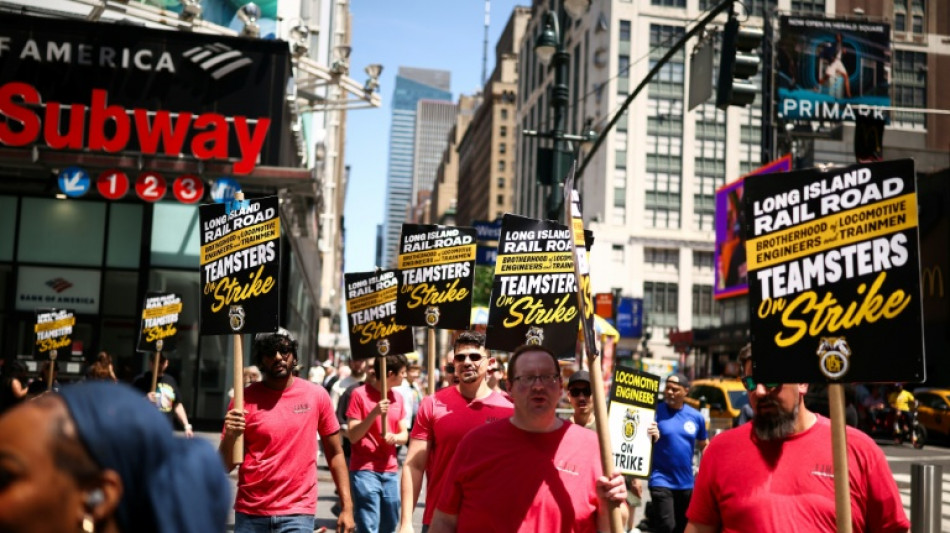
Top UN court says right to strike protected in key labour treaty / Photo: CHARLY TRIBALLEAU - AFP

Top UN court says right to strike protected in key labour treaty

The top United Nations court ruled Thursday that the right to strike was protected in a key treaty of the International Labour Organisation (ILO), a decision that could have profound implications for global labour relations.

Text size:

The International Court of Justice had been asked to deliver a so-called advisory opinion on whether an ILO treaty from 1948, known as Convention 87, implicitly enshrined workers' right to strike.

ICJ president Yuji Iwasawa said the court was "of the opinion that the right to strike of workers and their organisations is protected" under that convention.

However, judges said their opinion, which is not binding, should not be understood as laying out any other ground rules for strike action.

The conclusion "does not entail any determination on the precise content, scope or conditions for the exercise of that right", said Iwasawa.

ILO Convention 87 is an agreement between unions and employers including the right "in full freedom, to organise their administration and activities".

- Heated legal battle -

Unions at the ILO had argued that this by extension enshrined the right to industrial action, but employers disagreed, so they took the fight to the ICJ.

Behind the dry legal interpretation of a decades-old treaty lay a heated battle between unions and employer groups at the ILO, which played out in hearings in October 2025.

"This case is about more than legal abstractions," Harold Koh, representing the International Trade Union Confederation (ITUC), told the judges.

"It will affect the real rights of tens of millions of working people around the world," he added.

Koh warned that if the ICJ ruled the right to strike was not inherent in the Convention, companies and governments could start to unpick labour deals around the world.

"National employer groups would contest the right to strike country by country, focusing first on nations with compliant courts, weak civil societies and ineffective media," said Koh.

- 'Inflammatory and alarmist' -

On the other side of the argument, Roberto Suarez Santos, from the International Organisation of Employers, said the 1948 convention "neither explicitly nor implicitly covers the right to strike."

Santos noted that the rules surrounding industrial action varied widely from country to country -- whether emergency services were excluded, for example.

These differences "cannot be resolved by simply reading an abstract right to strike into Convention No.87 and trying to impose it on employers, workers and governments", said Santos.

Rita Yip, also representing the employers' groups, dismissed the union arguments as "inflammatory and alarmist".

The right to strike is still protected in national laws, argued Yip, and does not need to be enshrined in "boilerplate norms, imposed at the highest level".

Urging the court to answer "no" to the question before it, Yip said the case "goes to the credibility of the entire international labour system".

Both sides at least agreed on the importance of the case for labour relations.

"At first blush, this case may not seem momentous," said Koh from the trade union confederation.

"But your decision here will affect every worker in the world," he told the judges.

K.Yoshida--JT