Rituals of resilience: how Afghan women stay sane in their 'cage' / Photo: - - AFP

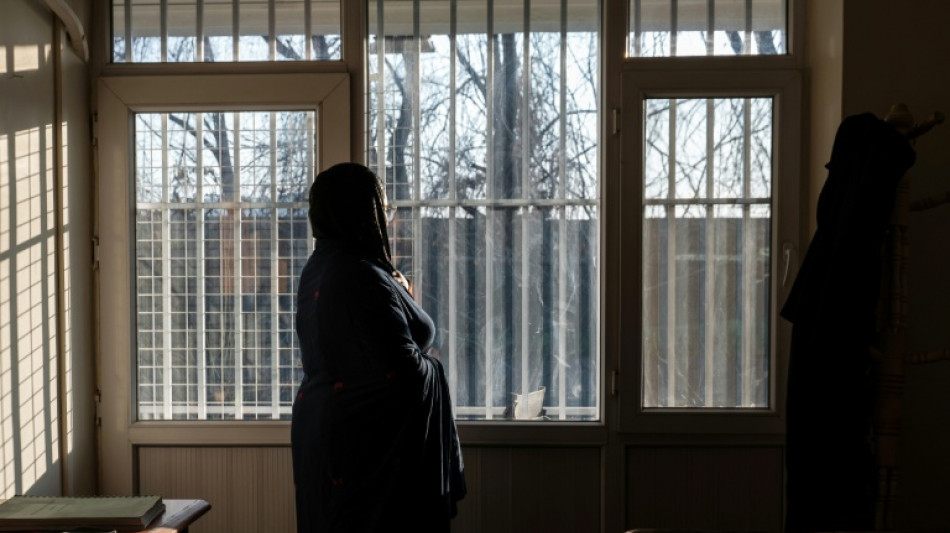
They feel imprisoned "like a bird whose wings have been torn off" but struggle on, defiant in their own way.
Five Afghan women talked to AFP about the things that help them cope with their lives tightly controlled by Taliban government rules, from singing to going up into the mountains to scream.
They are banned from education beyond the age of 12 and from a host of public places, including parks, pools, gyms and beauty salons.
They have to cover up when outside the home, with only their hands and eyes visible. Those who break the law risk imprisonment.
Supreme Leader Hibatullah Akhundzada insists women have been rescued from oppression since the Taliban authorities returned to power in 2021, enforcing their strict interpretation of Islamic law.
The United Nations says women are facing "gender apartheid".
The feeling of being trapped has grown as Europe and the United States further tighten entry rules, with neighbouring Iran and Pakistan forcing out 2.5 million Afghans last year alone.
"All doors are closed," said one of the women, who were drawn from across the country and whose identities AFP has disguised for security reasons.
- Blue notebook -
Sanam, 25, wanted to study medicine but lost her chance when universities were shut to women in 2022.
"I feel disenfranchised and angry because our rights have been taken away from us," she said.
"I feel like a bird whose wings have been torn off."
She lives in a very poor village but feels she is making a difference by teaching 30 girls and young women online.
Every day, they "are waiting for me to say good morning to them and teach them a new lesson".
"Teaching is not allowed and is a crime. I accept this risk because I know it's valuable and I feel valuable."
She also treasures a blue notebook.
"To cheer myself up, I write memories in my notebook every day. I keep the notebook in my closet, among my clothes, so that no one can access it," she said.
"Girls my age are free outside Afghanistan," she said.
"We are in a cage, we can't study, but we still try and have hope, and we continue despite all the dangers."
- Screaming in the mountains -
Sayamoy, a 34-year-old widow, lives in a two-room home in one of Afghanistan's biggest cities.
Her husband was a military officer who was killed by Taliban fighters before they took power.
"I feel very sad and I wish I wasn't a woman," she said.
"But when I see my children, I find hope again."
"Even if my eyes are filled with tears, I still smile for my children."
"I tell my children imaginary stories. I try to make the stories motivating and uplifting," she said, such as tales of a new home with separate rooms and beds.
She earns her living as a cleaner but also teaches primary school children in her home, pointing to a small whiteboard on the wall.
With women expected to be accompanied in public by a man they are related to, she remembers being turned away from an estate agent's office.
"They said: 'Go away auntie. We don't have any house for rent,'" she recalled.
When she sought help from the government, she was told to marry a Taliban fighter.
"The armed man (the fighter) was there too... I was scared and didn't go again," she said.
But she finds relief by her husband's isolated grave, on a plain between high mountains.
"There is no one to hear my voice. There, I scream a lot," she said, feeling the mountains share her pain as they echo back her cries.
"Then my heart is emptied of sorrow and I feel relieved."
- Dressing up -
Hura, 24, wanted to be a diplomat and was studying public relations and journalism before universities were closed to women.
"All doors are closed to girls. Only the door to getting married is open. I'm afraid of this door," she said, fearing being forced to stay at home.
"What makes my mood so much better is that I take videos and photos of myself and post them," she said, her nose piercing visible.
She appears in a low-cut blue velvet dress, her hair down and singing in a country where music is effectively banned.
Another post shows her in a colourful traditional dress, smiling and wearing make-up.
"I feel free because that photo is my reality. It's who I want to be.
"I feel free but I'm also scared," she said, having heard of women being imprisoned for social media posts.
She still dreams of being a diplomat and wants women abroad to help her access online courses to resume her studies.
"(Even) if my hair turns white like my teeth, I won't give up till I get my master's degree."
- Music of exiled stars -
Shogofa, 22, lives in a major city with her parents and eight siblings.
She was supposed to become a teacher.
"I pray that one day I will be free and can study without fear. I hope that one day all girls can laugh freely."
She misses studying and her classmates.
"I'd like to go back to those days, to be able to walk, see my friends," she said.
"I was very happy then and had hope for the future. Now, I'm in the corner of my house and only study online."
Shogofa suffers from arthritis. Music helps her keep her spirits up.
"To cheer myself up, I listen to music and watch cooking shows. I listen to songs by Aryana Sayeed and Farhad Darya," she said, of stars who left Afghanistan.
Darya's "Kabul Jaan" was the first song played on national radio after the Taliban government was ousted from its first stint in power in 2001.
Sayeed, meanwhile, was a judge on the TV show "Afghan Star".
She is known for songs denouncing violence against women and received death threats even before 2021.
- Reading women's stories -
Mohjeza, 30, was an NGO worker who supported women farmers but lost her job last year because of President Donald Trump's cut to US aid.
She lives in a mountainous region with her mother and five siblings, relies on solar power and had to leave home in search of a phone signal to speak to AFP.
"I feel like a prisoner because I can't even go to the market alone," she said.
"There is no public place for us to breathe fresh air for a few minutes," she added.
She volunteers to teach girls in her community -- which "motivates me to keep going" -- and still offers advice to farmers she helped previously.
"I exercise for half an hour in the morning," she said.
She also loves reading books, which she downloads and shares with other women.
"The books I usually read are about women who have seen a lot of hardships... Their stories motivate me to keep going."
For the moment, she remains stuck in the mountains after a visa application to study in China was rejected.
"I made an asylum claim for the US but since Trump came, everything has been scrapped.
"My message to those outside Afghanistan is to never lose hope because the world I'm in is very dark," she said.
"Your world has light and if you follow that light, you will definitely achieve your dream."
K.Okada--JT