Squeezed by urban growth, Nigerian fishermen stick to tradition / Photo: OLYMPIA DE MAISMONT - AFP/File

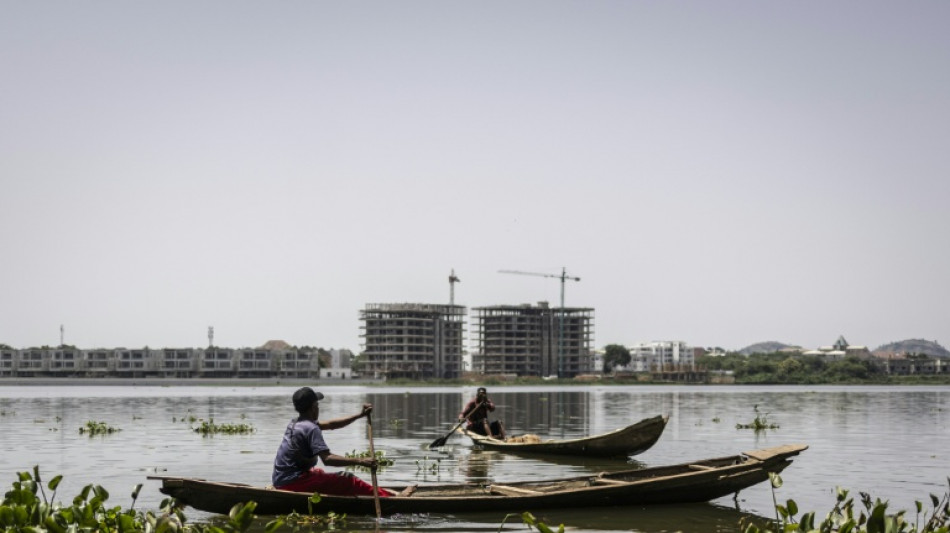
In the shadow of luxury apartment buildings under construction on the shores of the reservoir, Maniru Umar dips his oar into the water, pushing his shallow, wooden canoe forward through thick reeds.
Out of a mix of pride and necessity, Umar and his fellow fishermen in Nigeria's rapidly expanding capital still do things the old-fashioned way, two-men crews working in a deft balancing act as they throw out nets over the side.
"I grew up fishing with my father," said Umar, 20. "As long as I'm still fishing, I'll teach my son how to fish as well."
Across Africa's most populous nation, city living isn't easy. Despite vibrant tech, oil and finance sectors, Nigeria's graft-plagued economy has long struggled to provide enough jobs for its more than 200 million-strong population.
As the country rapidly urbanises, passing down their craft has become both a cultural lifeline and economic lifeline for Abuja's fishermen.
"We only focus on primary and secondary school," said Kabir Suleiman, chairman of the fishermen's village, a settlement of one-room shacks tucked on the rocky shore of Jabi Lake, around 10 minutes drive from downtown Abuja.
Sending children to university is seen as a waste, he said, in a country where graduates often trickle back into the informal sector anyway.
According to the World Bank, Nigeria only tipped into a majority-urban population in 2019 -- a marker the United States passed about a century ago.
On the whole, only sub-Saharan Africa and south Asia have yet to tip from majority rural to majority urban -- and into the drastically different economy that shift brings.
"Nigeria could do a better job of utilising the intellectual, the physical, the behavioural strength of its young and urbanising population," said Ikemesit Effiong, a partner at SBM Intelligence, a Lagos-based consultancy, noting more than half the country is under the age of 30.
Nigeria's urban poor are increasingly made up of people moving from the countryside, he said -- but due to lacklustre public service delivery, they're often unable to access the fruits of urbanisation, from paved roads to clinics and schools.
- Evicted for luxury housing -
The 200 or so fishermen's relationship with Abuja's growth has been mixed.
There are far more people to sell fish to in the capital than in the countryside. The city is also safe from "bandits", armed kidnapping gangs that rove the rural hinterlands.
It was urbanisation that brought them here in the first place: the government built the Jabi reservoir dam in 1981. Fishermen from the countryside soon followed.
But regular check-ins from the agriculture ministry have been replaced by the government selling off plots of land for development, Suleiman said.
Nigeria's staggering economic inequality looms over them as luxury housing goes up just feet away from their settlement, which has been displaced twice in three years.
Construction workers have at times cleared paddies and other vegetation -- key fish habitats, Umar said.
But he also wondered if the growing population of fishermen is leaving less fish to catch.
Modern boats dot the lake, rented out by revellers keen for a cruise.
In recent weeks, the fishermen say, surveyors have come to the village, saying it too is being sought by property developers.
Next door is a new restaurant, gated off from the settlement.
Above the entrance gate is a sign: Fisherman Village, Jabi Lake Resort.
The actual Jabi fishermen, meanwhile, have their sights set on self-preservation, no matter what.
"This is our job," Suleiman said. "This is our business, this is the business our fathers have been doing, our parents have been doing."
H.Takahashi--JT